

How to Fade Acne Scars Naturally: Easy, Proven Tips for Clearer Skin
Fading acne scars naturally really boils down to two things: calming down that leftover hyperpigmentation and giving your skin the support it needs to repair collagen. It's a combination of using the right brightening ingredients, being gentle, and most importantly, protecting your skin from any more drama.
Just know this isn't a quick fix. Natural methods take time and consistency, but the results are absolutely worth the patience.
Understanding Why Acne Scars Form and How They Heal
Have you ever wondered why one pesky pimple vanishes without a trace, while another leaves behind a stubborn mark that just won't quit? It all comes down to your skin's inflammatory response.
When a pore gets clogged and angry, your body goes into repair mode, sending new collagen fibers to the scene. But sometimes, that repair job isn't exactly perfect.
If your body doesn't produce enough collagen, you might see a little dip or indent in the skin. We call these atrophic scars. On the flip side, if it goes into overdrive and produces too much, a raised bump, or hypertrophic scar, can form.
This is exactly why preventing that deep, painful inflammation in the first place is so critical. Creating a clean, protected healing environment can make all the difference. You can learn more about how do pimple patches work to create that ideal little bubble for your skin and stop a potential scar in its tracks.
The Difference Between Scars and Marks
First things first, let's clear something up. It's really important to know if you're dealing with a true scar or just a dark mark, because they need to be handled differently.
- Acne Scars: These are all about texture. They involve a physical change in your skin's surface, whether that's an indentation (atrophic) like an ice pick or boxcar scar, or a raised bump (hypertrophic). This happens when the deeper layers of your skin have been damaged.
- Dark Marks (PIH): This is Post-Inflammatory Hyperpigmentation. It’s that flat, discolored spot a pimple leaves behind. These aren't true scars because the texture of your skin is still smooth - it's just an overproduction of melanin that was triggered by the inflammation.
The great news? PIH is much, much easier to fade with natural, topical remedies than a textured scar. In fact, most of the time when people talk about "acne scars," they're actually dealing with these dark marks.
Setting Realistic Healing Expectations
When you're trying to fade acne scars naturally, you have to be in it for the long haul. Your skin has its own renewal cycle, and you won't see a dramatic change overnight. It’s a marathon, not a sprint.
For those dark marks (PIH), a consistent, targeted routine can show you some really nice fading within 3 to 6 months. For true, textured scars, natural methods can definitely help soften their appearance over 6 to 12 months, but getting them to disappear completely usually requires a trip to the dermatologist.
Patience and consistency are your two most powerful tools here. Stick with it, and you will see progress.
Powerful Natural Ingredients Backed by Science
When you're trying to figure out how to fade acne scars naturally, looking to nature is a great place to start. A lot of plant-based ingredients are packed with compounds that can gently calm inflammation, kickstart cell turnover, and brighten those stubborn marks left behind by breakouts. They work with your skin's own healing process, not against it.
Diving into these natural solutions isn't about some miracle cure; it's about understanding the specific properties of each ingredient that can help bring back your skin’s clarity and even texture over time.
This infographic breaks down the most common types of acne marks and, just as importantly, the mindset you need to treat them effectively.
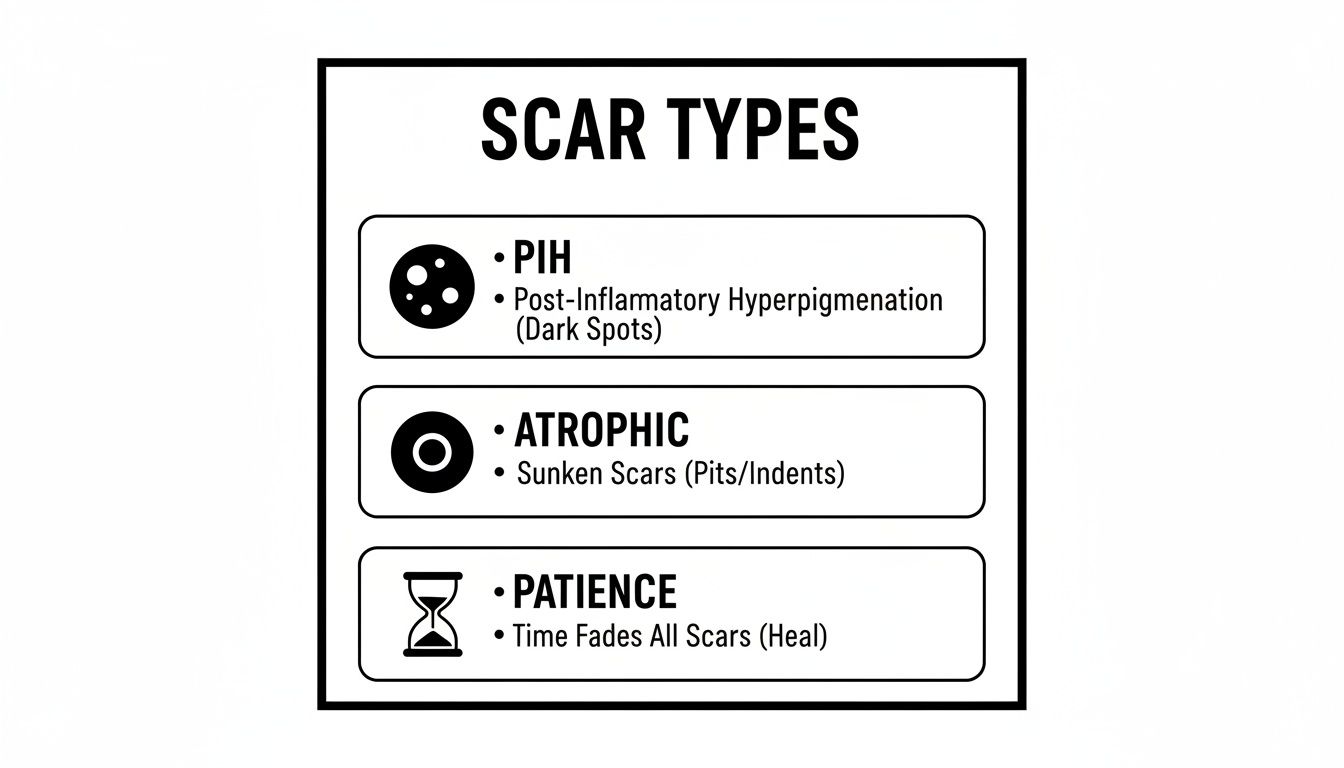
As the visual points out, while you’re actively working on dark spots (PIH) and texture changes (atrophic scars), patience is truly the most crucial ingredient in your routine.
Rosehip Oil for Skin Regeneration
There's a good reason rosehip oil is such a big deal in skincare. It's loaded with essential fatty acids plus vitamins A and C, which are absolute powerhouses for skin regeneration and repair. Think of it as fuel for your skin's cellular engines, helping to rebuild collagen and smooth out that uneven texture.
Its high concentration of antioxidants also helps fight off free radical damage, which can make scars look even worse. When you gently massage it onto the affected areas, it can improve both the discoloration and the flexibility of scar tissue.
The Soothing Power of Aloe Vera
Aloe vera is the undisputed champion of calming down angry, irritated skin. The gel is full of compounds that reduce inflammation and redness - two things that are major contributors to post-inflammatory hyperpigmentation (PIH).
By creating a soothing, hydrated environment, aloe vera supports the healing process right from the start. This helps keep your skin from overproducing the melanin that causes those frustrating dark spots. Applying pure aloe vera gel feels incredibly refreshing and gives your skin's recovery a gentle, much-needed boost.
Turmeric's Brightening Curcumin
The magic in turmeric comes from an active compound called curcumin, which has seriously impressive anti-inflammatory and antioxidant properties. What’s most important for scars, though, is that curcumin can inhibit tyrosinase, an enzyme that produces melanin. This directly helps lighten dark spots and even out your skin tone.
A simple homemade paste of turmeric mixed with a little honey or yogurt can be a potent spot treatment. Just be sure to do a patch test first! Turmeric is powerful and might not be a good fit for every skin type.
To help you choose the right ingredient, here's a quick comparison of some of the top natural remedies for acne scars.
Natural Ingredients for Fading Acne Scars
| Ingredient | Key Benefit | Best For Scar Type | How to Use |
|---|---|---|---|
| Rosehip Oil | Promotes skin regeneration & collagen production. | Atrophic (indented) scars and PIH (dark spots). | Gently massage 2-3 drops onto clean, damp skin nightly. |
| Aloe Vera | Soothes inflammation & hydrates the skin to support healing. | PIH (dark spots), especially fresh, red marks. | Apply pure gel directly to scars 1-2 times daily. |
| Turmeric | Brightens skin & inhibits melanin production. | PIH (dark spots) and uneven skin tone. | Use as a spot treatment in a DIY mask 1-2 times a week. |
| Honey (Raw) | Has antibacterial properties & gently moisturizes. | PIH (dark spots) and preventing new scars. | Apply a thin layer to scars for 15-20 minutes, then rinse. |
This table can act as your cheat sheet for incorporating these ingredients into your routine based on what your skin needs most.
Another fantastic natural approach is to stop scars before they even have a chance to form using hydrocolloid technology. Research has shown that hydrocolloid dressings are incredibly effective at calming down active acne. A 2006 study published in a leading dermatology journal found they decreased acne severity by 76% in just one week by dialing down inflammation, redness, and pigmentation - all of which lead to scarring. You can read the full study about hydrocolloid dressings on PubMed for the details. If you're curious, check out our infused pimple patches that leverage this science to get ahead of scarring.
Preventing Scars Before They Start with Hydrocolloid Patches
When it comes to acne scars, the best offense is a good defense. It’s far easier to stop them from forming in the first place than it is to fade them later. While all the topical treatments we've discussed are fantastic for existing marks, getting proactive the moment a new blemish shows up can change the game entirely.
This is where the humble hydrocolloid patch comes in.
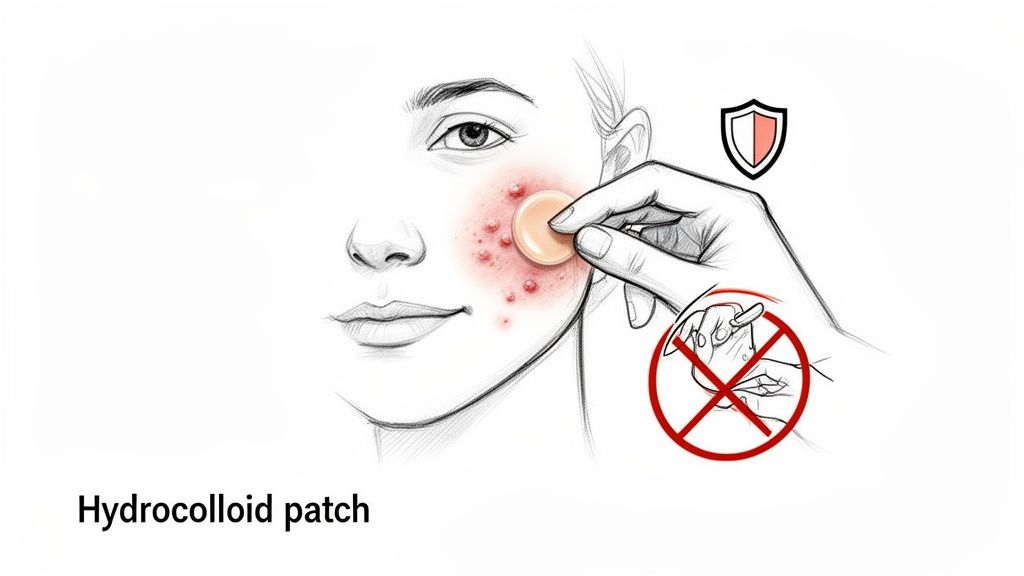
These little stickers are so much more than a simple cover-up. They’re designed to create the perfect little micro-environment for your skin to heal. A hydrocolloid patch works by gently pulling fluid and pus out of a blemish, absorbing all the gunk that can cause deeper inflammation and lead to scarring.
Creating the Ideal Healing Environment
I like to think of a hydrocolloid patch as a tiny, personal healing bubble for your skin. When you stick one on a clean, dry pimple (especially one that has come to a head), it seals the area off from everything else. This does two amazing things.
First, it keeps the spot moist, which is clinically proven to accelerate the skin's natural wound-healing process. This helps you avoid forming a hard, dry scab, which can slow down recovery and often leaves a dark mark behind.
The second, and arguably most important, benefit is that it forms a physical barrier. It literally stops you from picking, prodding, and squeezing the blemish - habits that are the number one culprit behind severe inflammation and permanent scarring.
This hands-off approach is a cornerstone of learning how to fade acne scars naturally because it lets your body do its own repair work without interference. If you want to get into the nitty-gritty, we have a whole guide on hydrocolloid pimple patches and the science behind them.
And the science really does back it up. A 2006 pilot study at Tri-Service General Hospital in Taipei looked at 20 patients with mild-to-moderate acne. The group that used hydrocolloid patches every two days for a week saw a 1.37-point drop in their overall acne severity. By the end of the week, they had significant reductions in redness, oiliness, and dark pigmentation. It’s pretty compelling stuff - you can learn more by exploring the market research on anti-acne dermal patches.
When and How to Use Patches Effectively
Timing is everything with these. For the best scar prevention, you want to apply a patch as soon as you feel a spot forming under the skin or right when it develops a visible whitehead. That’s the sweet spot where the patch can do its best work, pulling out impurities and calming inflammation before it spirals.
Here’s how to get the most out of them:
- Clean and Dry: Always start with a freshly washed and bone-dry face. A patch will slide right off damp or oily skin.
- Apply Gently: Peel the patch from its sheet and place it smack-dab over the blemish. Press down for a few seconds to make sure it’s sealed.
- Let It Work: Leave it alone for at least 6-8 hours. You’ll know it’s working when it turns an opaque white - that’s all the gunk it has absorbed.
- Remove and Repeat: Carefully peel the patch off. Clean the area again, and if the spot isn't totally flat, feel free to pop on another one.
By making this one simple step part of your routine, you’re not just treating a pimple. You’re actively preventing the dark marks and texture that can follow. It’s a small change that makes a huge difference in the long run.
Weaving a Simple Routine to Fade Scars for Good
Knowing all the right ingredients is great, but let's be real - it's the day-in, day-out consistency that actually gets you results. Building a simple, sustainable routine is the real secret weapon for fading acne scars naturally. We're not talking about a complicated, 10-step regimen that you'll ditch in a week. The goal here is a gentle, repeatable process that gives your skin the support it needs to heal.
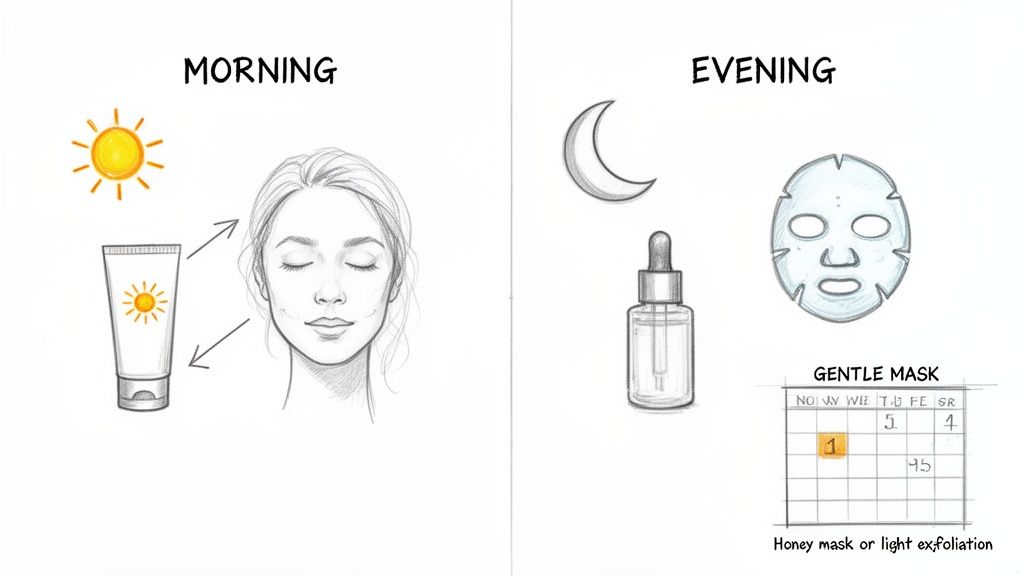
I like to think of it as having two different missions for your skin. Your morning routine is all about protection. It’s your shield against everything the day throws at you, especially things that can make scars darker. Your evening routine, on the other hand, is all about repair. This is when you deliver those powerful, healing ingredients while your body is already in its natural recovery mode.
Your Morning Shield: Keep It Simple
Mornings aren't the time for a heavy-handed treatment approach. The main goal is to create a defensive barrier, and your number one enemy is UV radiation. Sun exposure is the top reason those annoying red and brown marks (post-inflammatory hyperpigmentation) stick around and get darker.
- Gentle Cleanse: Kick things off with a mild, pH-balanced cleanser. You just want to wash away overnight buildup without stripping your skin’s protective barrier.
- Soothing Mist (Optional): If you wake up with any redness, a quick spritz of a facial mist with something like aloe vera or rosewater can be incredibly calming and preps your skin for the next step.
- Sunscreen Is Everything: If you do only one thing, make it this. Apply a broad-spectrum sunscreen with at least SPF 30 every single day. No exceptions. Not even on cloudy days or if you're "just inside." This one habit does more than anything else to stop existing marks from darkening, which allows all your other efforts to actually work.
Your Nightly Repair Ritual
Nighttime is your skin's primetime for healing. This is when cell turnover kicks into high gear, and your routine should be all about supporting that process with targeted ingredients.
Always start by double-cleansing, especially if you wear makeup or sunscreen. You need a clean slate so your treatment products can properly penetrate the skin. Once you're cleansed and patted dry, it's time to bring in the targeted treatments. This is the perfect moment to press a few drops of rosehip oil directly onto scarred areas.
My Two Cents: When you're applying a serum or oil, try gently patting or pressing it into the skin instead of rubbing. It minimizes friction on skin that's already sensitive and trying to heal, and I find it helps the product absorb better. It's a small tweak that makes a big difference.
The Weekly Boost: Accelerate Your Results
Once or twice a week, you can give your skin an extra push to speed up the fading process. These more intensive treatments help slough off the discolored surface cells to bring fresh, even-toned skin to the surface faster.
- Brightening Masks: A mask featuring manuka honey or turmeric is fantastic for this. They offer a one-two punch of anti-inflammatory and brightening benefits. Just apply to clean skin, relax for 15-20 minutes, and rinse.
- Smart Exfoliation: Please, step away from the harsh physical scrubs - they can cause tiny micro-tears and more irritation. A gentle chemical exfoliant is a much better choice. If you're looking for an effective at-home option, our 20% glycolic acid peel pads are a great way to carefully resurface the skin and tackle discoloration over time without being too aggressive.
By sticking to this simple daily and weekly rhythm, you create the perfect healing environment. You’re giving your skin exactly what it needs, when it needs it, to finally clear those stubborn marks.
Lifestyle Habits That Support Clearer Skin
What you do outside of your bathroom skincare ritual is every bit as important as the products you pat onto your skin. The journey to fading acne scars naturally is a holistic one, where your daily habits can either supercharge your progress or quietly sabotage it.
Think of your lifestyle as the foundation. Your topical treatments are the house you're building on top - without a solid base, things get shaky. True skin healing is a full-body effort, and simple, consistent choices in your diet, sleep, and sun exposure can make a huge difference in how quickly your skin repairs itself. These habits work from the inside out, calming inflammation and supporting healthy cell turnover.
Sun Protection Is Your Top Priority
If you only take one piece of advice from this entire guide, let it be this: sunscreen is non-negotiable. Seriously. UV exposure kicks melanin production into high gear, which is the very process that makes those dark spots (post-inflammatory hyperpigmentation) darker, deeper, and so much more stubborn.
A single afternoon without sun protection can undo weeks of diligent effort. Think of a broad-spectrum sunscreen with at least SPF 30 as your daily shield. It prevents existing marks from getting worse and gives your natural remedies a real chance to do their job. Make it the last step of your morning routine. Every single day. No exceptions.
Fuel Your Skin with an Anti-Inflammatory Diet
The gut-skin connection is real, and it's powerful. Foods that trigger inflammation can not only worsen breakouts but also slam the brakes on your skin's healing process. On the flip side, nutrient-dense foods provide the essential building blocks your skin needs to repair and regenerate.
Try to weave more of these skin-supporting foods into your meals:
- Antioxidant-Rich Berries: Blueberries, strawberries, and raspberries are loaded with antioxidants that help shield skin cells from environmental damage.
- Healthy Fats: Think avocados, walnuts, and salmon. They're packed with omega-3 fatty acids, which are crucial for maintaining a strong, healthy skin barrier.
- Leafy Greens: Spinach and kale are vitamin powerhouses, delivering nutrients that are essential for skin repair.
The goal here isn't perfection; it's balance. Swapping a sugary snack for a handful of berries or tossing some spinach into your smoothie are small, manageable changes. Over time, they add up and create a much better internal environment for your skin to thrive.
Manage Stress and Prioritize Quality Sleep
Ever notice you break out more when you're stressed? That's cortisol at work. High stress levels cause a spike in this hormone, which can ramp up oil production and inflammation - a nightmare for both active acne and old scars.
At the same time, your skin does its most important repair work while you're asleep. Aiming for 7-9 hours of quality sleep each night gives your body the time it needs for cell turnover and collagen production. Finding healthy ways to de-stress, whether it’s a quick walk, five minutes of meditation, or journaling, will have a visible impact on your skin’s clarity.
Finally, one of the most critical lifestyle habits is simply this: keep your hands off your face. Fading scars starts with preventing them in the first place, and this is where hydrocolloid patches are a game-changer. One clinical study found that these patches significantly slashed redness and dark spots by absorbing gunk and creating a protected healing environment. This is huge, especially when you consider that picking is linked to 70-80% of scarring. You can learn more about how pimple patches work to prevent scars at GoodRx.
Your Natural Scar Fading Questions Answered
When you start any new journey with your skin, questions are bound to pop up. It's completely normal to wonder about timelines, the safety of popular DIY remedies, and when it might be time to call in a professional. Getting clear, honest answers is the key to building a routine you can actually trust and stick with long enough to see results.
Navigating the world of natural skincare can feel a bit like the wild west, but a few core principles will always steer you right. Think consistency, patience, and choosing evidence-backed ingredients over questionable internet trends. Let's tackle some of the most common questions to clear up any confusion and get you moving forward with confidence.
How Long Does It Really Take to Fade Scars Naturally?
This is the big one, right? The honest, no-fluff answer is: it depends. Your unique skin type, your age, and the severity of the scar all play a huge role. Still, we can look at some general timelines to get a feel for what to expect.
For those stubborn dark spots, often called post-inflammatory hyperpigmentation (PIH), you could see significant fading in 3 to 6 months with a consistent routine. When it comes to textured, atrophic scars, natural methods can help soften their appearance and improve your skin's overall smoothness over 6 to 12 months, but they probably won't erase the indentation completely.
The single most important factor here? Consistency. Especially with daily sun protection, which is non-negotiable for stopping scars from getting darker and undoing all your hard work.
Key Takeaway: Patience is your best friend. Natural healing is a marathon, not a sprint. Focus on the daily habits, and trust that you're giving your skin the support it needs to repair itself over time.
Are DIY Remedies Like Lemon Juice Safe?
We’ve all seen it on blogs and social media, but slathering pure lemon juice on your face is a risky move that most dermatologists will warn you against. It's incredibly acidic, and that acidity can seriously disrupt your skin's protective barrier.
The fallout? Irritation, extreme dryness, and heightened sun sensitivity - which, ironically, can make your scars and dark spots even darker. It’s just not worth it.
You’re much better off sticking with well-researched natural ingredients that offer similar brightening benefits without the harsh side effects. Think rosehip oil, aloe vera, or a gentle turmeric mask. These ingredients have proven anti-inflammatory and healing properties that actually support your skin.
When Should I See a Dermatologist for My Scars?
Natural remedies can work wonders on hyperpigmentation and improving your overall skin texture. But there are definitely times when at-home care just won’t cut it, and seeking professional guidance is the next logical step.
Consider booking an appointment with a dermatologist if:
- You're dealing with deep, pitted scars like ice pick or boxcar scars. These often require professional treatments like microneedling or lasers to kickstart collagen production deep within the skin.
- You've seen absolutely no improvement after 6 months of a dedicated, consistent at-home routine.
- Your scars are causing significant emotional distress. Your mental well-being is just as important as your skin's physical health.
Of course, the best strategy is always prevention. If you're still struggling with active breakouts, you might find our guide helpful where we answer the question: do pimple patches work on unpopped pimples? They can be a fantastic first line of defense.
Ready to stop scars before they start? Livaclean offers a fun, effective, and affordable way to manage breakouts with our best-selling infused hydrocolloid pimple patches. Explore our collection and find your perfect patch today!