

How Do Pimple Patches Work to Heal Acne Overnight
Pimple patches work using a pretty clever material called hydrocolloid. Think of it as a tiny, targeted vacuum for your blemish. It gently draws out all the gunk - fluid, pus, and oil - and traps it inside the patch, all while creating a clean, moist little bubble over the skin. This protected space keeps you from picking at it and shields the spot from outside bacteria, which can seriously speed up the healing time.
The Science Behind Your Favorite Blemish Sticker
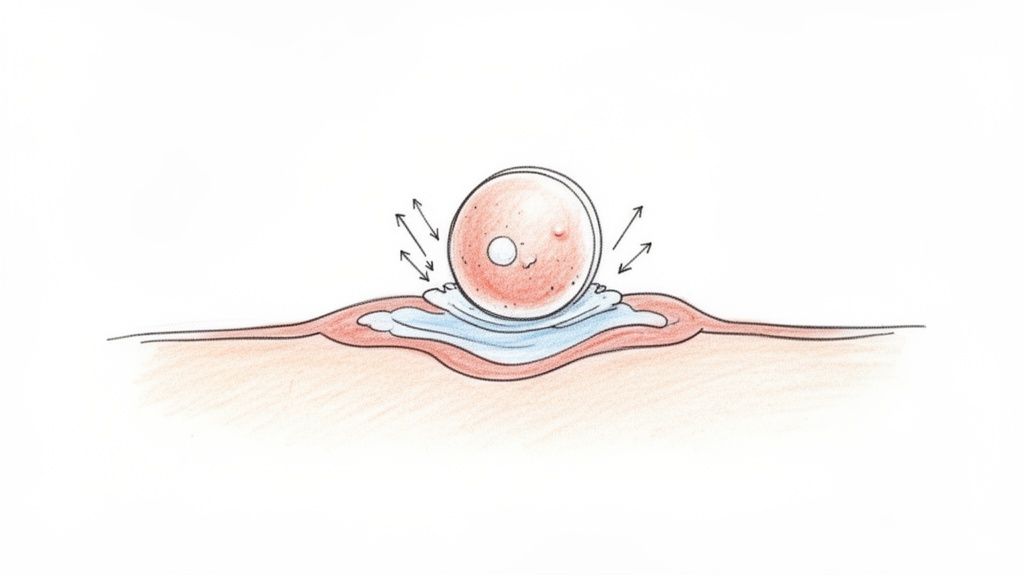
Ever wondered what’s really happening under that little sticker you pop on a breakout before bed? It feels a bit like magic, but the secret is actually rooted in some seriously effective wound-care technology. The core of how pimple patches work is all about that hydrocolloid material, which sets up the perfect conditions for your skin to heal itself without any fuss.
Imagine a hydrocolloid patch as a smart, selective sponge. When you stick one on a pimple that’s come to a head, it forms a tight seal over the skin. This seal is crucial because it does two things at once: it locks in the moisture your skin needs to repair itself and locks out external troublemakers like dirt and bacteria.
The real power of a pimple patch isn't just what it pulls out, but also the protective healing environment it creates. It stops the cycle of touching, picking, and introducing new bacteria, which is often the biggest obstacle to clear skin.
This simple process gives you a few key advantages for kicking a pimple to the curb:
- Absorption: The hydrocolloid actively soaks up pus, oil, and other fluids from the blemish. That’s why the patch turns white - it’s visible proof that it's doing its job.
- Protection: It’s a physical shield against your own fingers. This stops the picking and popping that can lead to nasty scarring and even more inflammation.
- Moist Healing: By keeping the area moist, the patch prevents a hard, crusty scab from forming. This lets the skin repair itself more smoothly and quickly underneath.
To put it simply, here’s how all those little mechanics work together to heal your breakout:
Pimple Patch Mechanics at a Glance
| Mechanism | How It Works | Primary Benefit |
|---|---|---|
| Occlusive Seal | Forms a barrier over the skin, locking out air and contaminants. | Protects the blemish from external bacteria and prevents picking. |
| Gelling Agents | Absorb fluid (pus and oil) from the pimple into the patch. | Drains the pimple without squeezing, reducing inflammation. |
| Moisture Retention | Creates a moist environment underneath the patch. | Prevents scab formation and promotes faster, scar-free healing. |
| Cushioning Effect | Provides a soft, physical layer over the inflamed area. | Reduces irritation from friction (e.g., from a pillowcase). |
This quick breakdown shows how a simple sticker can be such a powerful tool. It’s not just covering the spot; it’s actively creating the ideal healing zone.
From Medical Dressing to Skincare Staple
This technology wasn't actually invented for acne. Hydrocolloid dressings were first developed back in the 1990s by South Korean researchers for medical wound care, and they turned out to be incredibly good at helping skin heal faster. It wasn't until around 2015 that someone had the brilliant idea to adapt this concept for skincare, and the pimple patch was born.
The results speak for themselves. Studies have found this simple mechanism can shrink a pimple's size by up to 30% in just 24 hours for many people. Once you understand the science, it's easy to see why these patches are so much more than a cover-up - they're an active part of the healing process.
From basic hydrocolloid stickers to those infused with active ingredients, exploring the different types of pimple patches can help you find the perfect match for whatever your skin throws at you.
Understanding the Magic of Hydrocolloid
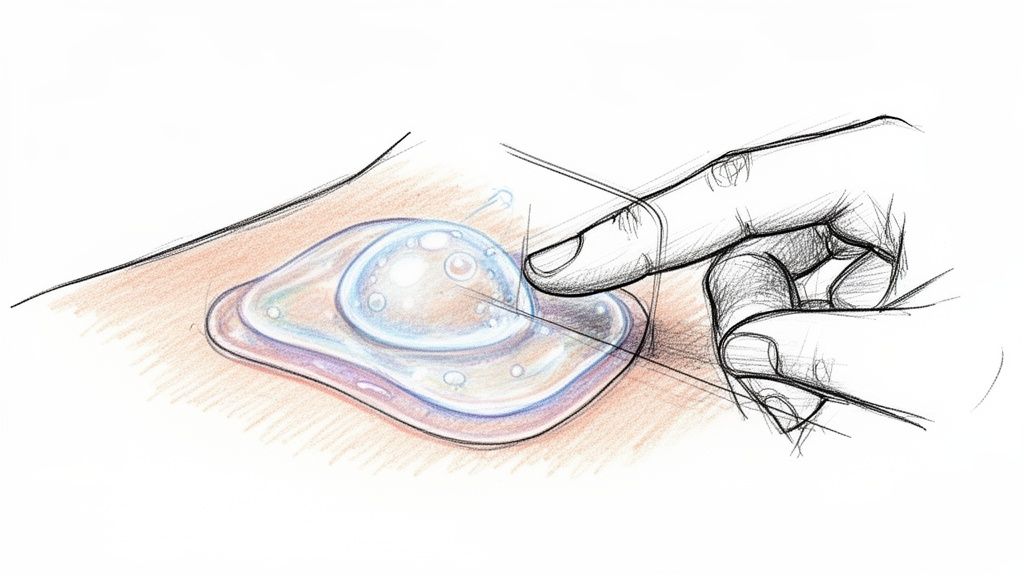
At the heart of every effective pimple patch is a surprisingly simple material with a powerful purpose: hydrocolloid. This stuff isn’t new; it has its roots in the medical field, where it’s been trusted for years to help heal wounds. Now, it’s the undisputed hero of spot treatments.
Think of the hydrocolloid material as a super-smart sponge. It's made from moisture-absorbing agents like pectin or gelatin, which are naturally designed to draw in water-based fluids.
When you stick a patch over a pimple that has surfaced (you know, the kind with a visible whitehead), the hydrocolloid immediately gets to work. It gently starts pulling all the gunk - the pus and excess fluid trapped inside the blemish - out from the pore and into the patch. That satisfying moment when you peel it off and see a white spot? That's all the impurity it has successfully absorbed.
Creating the Perfect Healing Bubble
But drawing out the gunk is only half the story. The real genius of a pimple patch is the environment it creates. Once applied, the patch forms an airtight, sealed bubble over the spot, and this is where the healing truly accelerates.
- It keeps the area moist. Unlike letting a pimple "breathe," which often just leads to a dry, flaky scab, this moist environment helps your skin repair itself faster and more effectively.
- It's a physical shield. The patch blocks out dirt, bacteria, and other irritants that could make the inflammation even worse.
- It stops you from picking. Let's be honest, we're all tempted. By covering the pimple, the patch removes the urge to touch, poke, or pop, which is one of the biggest culprits behind acne scars.
This protected little microclimate is what makes patches so effective. They don't just cover up a blemish; they create the ideal conditions for it to heal cleanly and quickly, dramatically reducing the risk of a dark spot or scar being left behind.
Hydrocolloid works by creating a 'second skin' - one that absorbs impurities while giving your real skin the protected, moist space it needs to repair itself without interruption.
The Two-Fold Action of Hydrocolloid
So, it all comes down to a simple but brilliant one-two punch. First, the patch acts like a tiny vacuum, pulling out all the inflammatory fluid from the pimple. Second, it serves as a protective bodyguard, letting your skin’s natural healing process do its job without interference.
This is exactly why a pimple looks so much flatter and less angry after you take off a patch. It’s not just a trick of the light; the contents of the blemish are literally gone, and the inflammation has had a chance to calm down in a clean, controlled space. For single spots or even larger clusters, using something like large hydrocolloid acne patches gives you the coverage needed to tackle breakouts head-on.
Boosting Your Patch with Active Ingredients
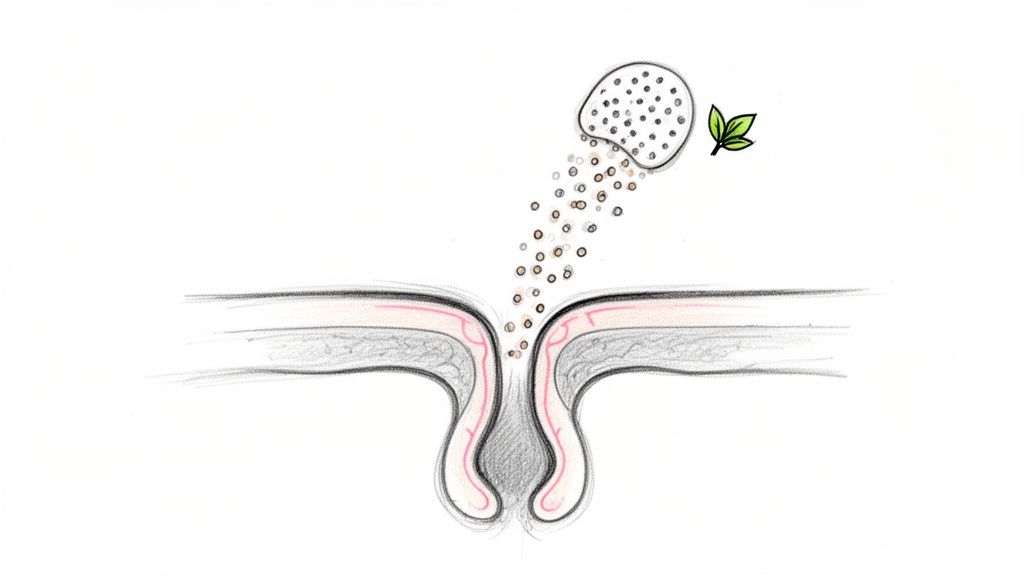
While a standard hydrocolloid patch is a superstar at drawing out all that gunk, the next evolution of pimple patch tech infuses that same material with powerful, acne-fighting ingredients. This creates a treatment that delivers a serious one-two punch against stubborn blemishes.
Think of a basic patch as a goalie - its main job is to block and protect. An infused patch, on the other hand, plays both offense and defense. It still gives you that crucial protective barrier, but it's also actively treating the blemish from underneath.
This approach is a lifesaver for those frustrating, under-the-skin spots or more inflamed pimples that need a little extra push to go away.
How Active Ingredients Supercharge Your Patch
The real magic of a medicated patch is its targeted delivery system. Once you stick it on, the hydrocolloid seal creates a stable, locked-in environment over the pimple. This simple action prevents the active ingredients from just evaporating into the air, allowing them to penetrate deeper and work more effectively right where they're needed most.
Two of the most common and effective ingredients you'll find are:
- Salicylic Acid: This is a beta-hydroxy acid (BHA) famous for its ability to exfoliate inside the pore. It gets to work dissolving the mix of oil and dead skin cells causing the clog in the first place, helping clear the blemish from within.
- Tea Tree Oil: A natural antimicrobial and anti-inflammatory, tea tree oil helps knock down the amount of acne-causing bacteria on the skin. It also works to calm the redness and swelling that comes with an angry pimple.
The sealed environment created by a hydrocolloid patch is a game-changer for active ingredients. It concentrates their power directly on the blemish, preventing evaporation and maximizing absorption for faster, more noticeable results.
The Amplified Healing Effect
This combination of absorption and active treatment is what makes infused patches so powerful. By delivering ingredients like salicylic acid and tea tree oil directly to the sealed-off acne site, they can get to work killing bacteria and reducing inflammation without interruption. This occlusive barrier can boost ingredient effectiveness by as much as 50% compared to just dabbing a cream on top, often reducing redness in just 8-12 hours. You can discover more insights about pimple patch market trends on marketsandata.com.
This means you’re not just passively absorbing the pus; you’re actively dismantling the pimple at its source. That's why medicated patches are the perfect choice when you need to shut down a blemish, fast. Products like the Livaclean variety pack with tea tree oil and salicylic acid offer this dual-action approach, ensuring you have the right tool for whatever kind of breakout comes your way.
A Practical Guide to Using Pimple Patches
Knowing how these little dots work is one thing, but actually getting the best results comes down to using them correctly. The right application is really what unlocks their full blemish-busting power. If you follow a few simple steps, you can make sure the patch sticks properly, works its magic, and helps your skin heal as fast as possible.
Just think of your skin as a canvas and the patch as a high-tech bandage. For that bandage to stick and do its job, the canvas has to be perfectly prepped.
Step 1: Prepare Your Skin
This is easily the most critical part, and it happens before you even touch the patch. You have to start with a completely clean, dry face. Grab a gentle cleanser and wash away any of the dirt, oil, or makeup that could get in the way of the patch's adhesive.
Once you're done cleansing, pat your skin totally dry with a clean towel. This is key: don't apply any toners, serums, or moisturizers to the area where you're putting the patch. These products create a slippery barrier that stops the hydrocolloid from getting a secure grip, making it way less effective.
The golden rule of pimple patches is clean and dry. Any leftover moisture or product will stop the patch from forming that crucial airtight seal it needs to pull out gunk and protect the blemish.
Step 2: Apply the Patch Correctly
With your skin prepped and ready, pick out a patch that’s just a little bigger than the blemish itself. This makes sure the entire pimple is covered with a small border around it, which really helps the edges stick firmly to the healthy skin.
Carefully peel the patch from its backing, doing your best not to touch the sticky side with your fingers. Center it right over the pimple and gently press it down for a few seconds, paying extra attention to the edges. This creates that secure seal, giving the hydrocolloid the green light to start working.
Step 3: Let It Work and Remove Gently
Now for the easy part: just leave it alone. Pimple patches are meant to be worn for a good while, usually at least 6-8 hours or overnight. This gives the hydrocolloid plenty of time to absorb all that fluid from the pimple.
You'll know it's done its job when you see a cloudy white spot in the middle of the patch. That's the satisfying, visible proof that it has successfully pulled out the pus and oil.
When it's time to take it off, gently peel it back from one edge. Don't just rip it off like a bandage - that can irritate the delicate, healing skin underneath. After you've removed it, give the area another quick cleanse before moving on with your normal skincare routine.
Following these steps will help you get the absolute most out of every single patch. For even more detailed tips, you can check out our guide on how to use Livaclean pimple patches to really maximize your results.
Choosing the Right Pimple Patch for Your Acne
Not all pimples are created equal, and neither are pimple patches. Walking down the skincare aisle can feel a bit overwhelming with all the options, but figuring out which patch to use is actually pretty simple once you know what you're looking for.
Making the right choice means you're not just slapping a sticker on a blemish and hoping for the best. You're actively treating it in the smartest way possible, matching the tool to the specific type of breakout you're dealing with.
As the flowchart below shows, the one non-negotiable step is always starting with clean, dry skin.
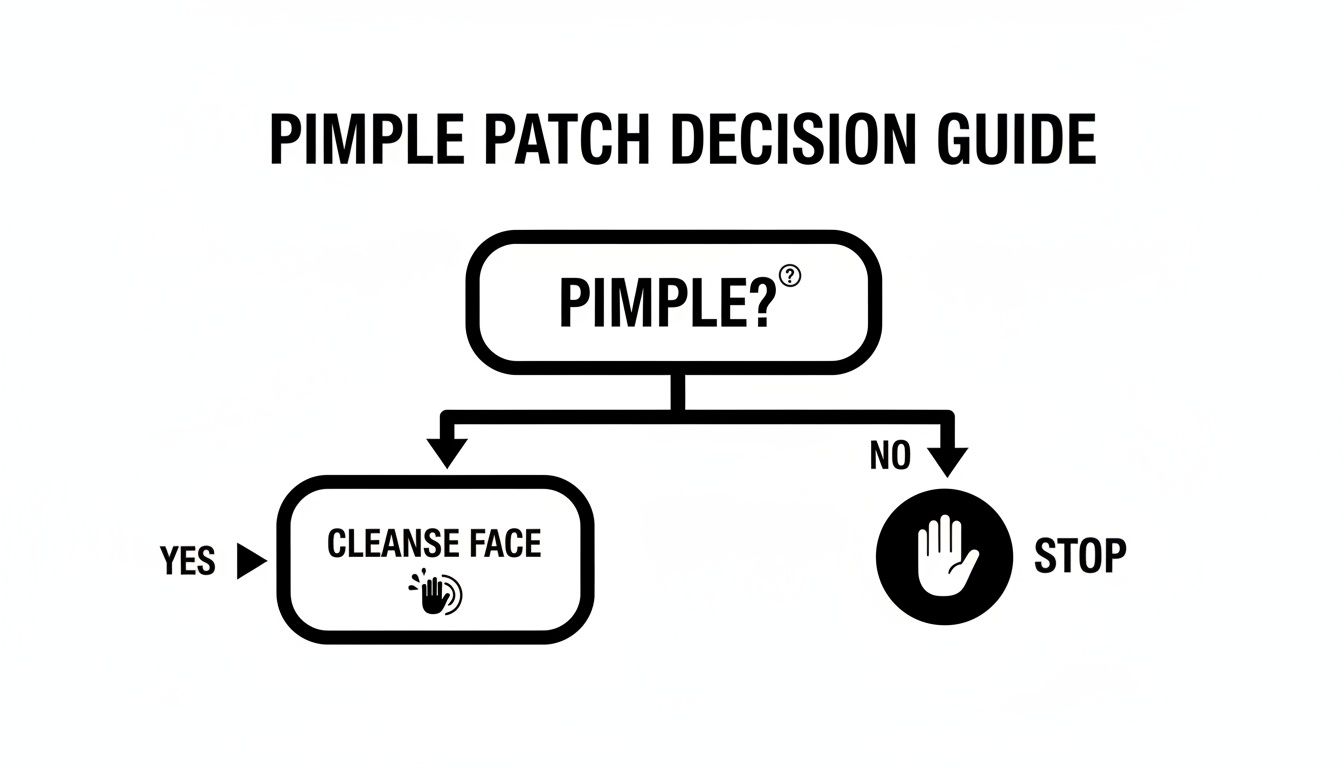
This is the golden rule. No matter which patch you grab, it needs a clean, dry surface to stick properly and do its job. Skipping this step means you're just trapping oils and bacteria underneath, which defeats the whole purpose.
Matching the Patch to the Pimple
With so many patches on the market, it helps to know which one to reach for when a new spot appears. Here’s a quick guide to help you choose the best patch for your pimple.
Which Pimple Patch Is Right for You?
| Patch Type | Best For | Key Feature | Example Use Case |
|---|---|---|---|
| Plain Hydrocolloid | Whiteheads & surface pimples with pus | Absorbs gunk and protects the spot | You wake up with a ripe whitehead that needs to be flattened by morning. |
| Medicated (Infused) | Inflamed, stubborn, or early-stage spots | Delivers acne-fighting actives directly | A red, angry pimple is forming, and you want to calm it down and stop it from growing. |
| Microneedle | Deep, under-the-skin "blind" pimples | Penetrates to deliver ingredients deeper | You feel a painful, underground cyst forming that hasn't surfaced yet. |
Let's break these down a bit further.
Plain Hydrocolloid Patches are your classic, tried-and-true option. Think of them as tiny sponges for whiteheads that have already come to a head. Their main gig is absorption - they are fantastic at pulling out all that pus and fluid, which is why a pimple can look dramatically flatter overnight. They're gentle, simple, and perfect for those straightforward blemishes.
Next up, you have Medicated Patches. These are basically hydrocolloid patches that got an upgrade. They’re infused with active ingredients like salicylic acid or tea tree oil to give stubborn spots an extra kick. While the hydrocolloid material pulls out impurities, the actives get to work underneath, helping to clear out the pore and calm inflammation. You can find some great deep-treatment medicated pimple patches that are perfect for this.
Finally, there are the high-tech Microneedle Patches. These are really cool. They have tiny, dissolvable darts made of concentrated ingredients that gently prick the top layer of skin. This makes them ideal for those frustrating, early-stage pimples that are lurking under the surface but haven't come to a head. The microneedles deliver calming, anti-inflammatory ingredients right to the source of the problem.
It’s no surprise the global anti-acne patch market is booming, from USD 0.54 billion in 2023 to a projected USD 0.97 billion by 2033. Studies and millions of users have found they can speed up a pimple's healing time by 25-50% compared to just leaving it alone.
By knowing which patch works for which pimple, you can build a small but mighty arsenal to tackle any breakout that comes your way, leading to much faster healing and clearer skin.
Answering Your Pimple Patch Questions
Even after you get the hang of how pimple patches work, a few questions always seem to pop up. Let's run through some of the most common ones so you can feel totally confident every time you stick one on.
Think of this as the ultimate FAQ for your face - quick, clear answers to help you handle any spot that makes an appearance.
Can I Use Pimple Patches on Blackheads or Cystic Acne?
This is a great question because the type of blemish you're dealing with really changes the game. Pimple patches are absolute superstars for pimples that have come to a head - you know, the ones with visible fluid like whiteheads. They're designed to pull out all that pus and gunk, flattening the spot impressively fast.
But they definitely aren't a one-size-fits-all fix for every kind of breakout.
- For blackheads: A standard hydrocolloid patch won’t really do anything. Blackheads are just clogged pores that are open to the air; there's no fluid for the patch to draw out.
- For cystic acne: This is where it gets tricky. Those deep, painful, under-the-skin bumps that don't have a "head" are a different beast. A basic patch will mostly just act as a protective barrier, which is still great for keeping your hands off a sore spot. But it won't treat the root of the problem.
For those deeper, angrier spots, you'll want to look into microneedle patches. These are the real game-changers for cystic blemishes. They use tiny, dissolvable darts to deliver anti-inflammatory ingredients like salicylic acid straight to the source, helping to calm things down from the inside out.
How Do I Know When a Pimple Patch Is Done Working?
The patch itself gives you a pretty obvious visual cue. As the hydrocolloid material works its magic, absorbing fluid and impurities from your pimple, you’ll see the clear center of the patch turn a cloudy, opaque white.
Once you see that solid white spot in the middle, the patch has done its main job. It's the satisfying proof that all the gunk has been successfully pulled out.
This usually takes about 6 to 8 hours, which is exactly why so many people just pop them on before bed. Once it’s turned white, you can gently peel it off. Leaving it on much longer won't really do anything extra, so it's best to remove it, clean the area, and stick a fresh one on if the spot still needs a little help healing.
Are Pimple Patches Safe for Sensitive Skin?
For the most part, yes! They are actually an amazing option for sensitive skin. The most basic hydrocolloid patches are incredibly gentle because they don't contain any active ingredients that could cause irritation. Their only job is to absorb and protect.
This makes them a much kinder choice than a lot of traditional spot treatments, which are often loaded with high concentrations of benzoyl peroxide or alcohol that can leave your skin red and flaky.
Of course, if you're reaching for a medicated patch with added ingredients like salicylic acid or tea tree oil, it’s always smart to do a quick patch test on your arm first, just to make sure your skin is on board. But on the whole, they're one of the gentlest spot-fighting tools you can find.
Ready to tackle any blemish with the right tool? Livaclean offers a range of hydrocolloid and infused patches to handle everything from pesky whiteheads to stubborn spots, giving you effective, gentle care when you need it most. Explore the full collection of Livaclean pimple patches and find your perfect match.
Enhanced by Outrank tool