

Your Ultimate Guide to Hydrocolloid Pimple Patches
Hydrocolloid pimple patches are a total lifesaver. Think of them as tiny, adhesive bandages specifically designed to tackle whiteheads. They act as a protective cover, creating a moist healing environment while pulling out all the pus and oil. Most importantly, they shield the blemish from bacteria and - let's be honest - our own picking fingers.
The Simple Science Behind Pimple Patches
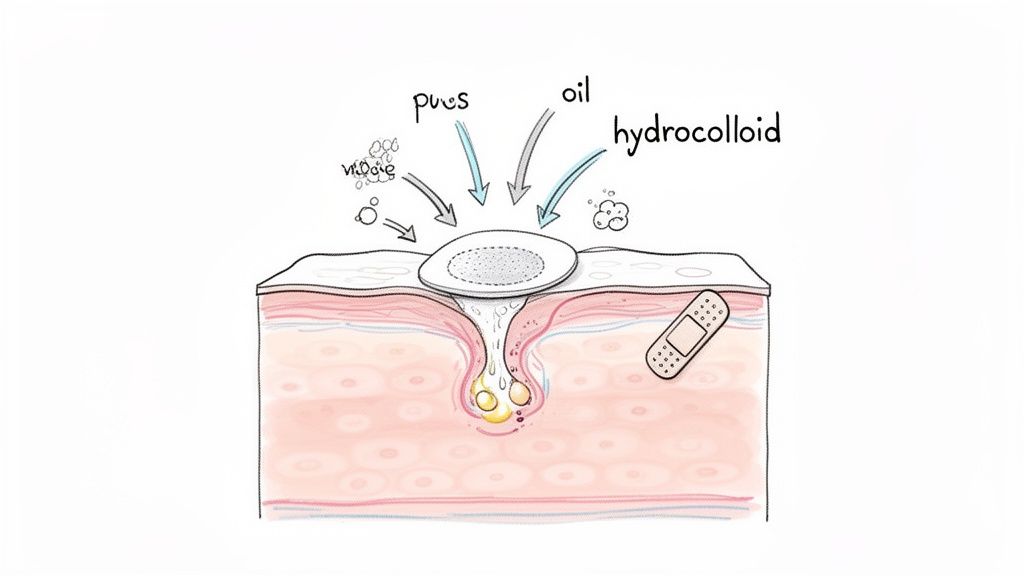
So, how do these little stickers work their magic? Imagine a tiny, super-powered sponge for your zits. That’s pretty much it.
The technology isn't actually new - it’s been a trusted staple in medical wound care for decades because of its incredible healing properties. It wasn't until the early 2010s, thanks to the massive influence of K-beauty, that this material was adapted into the discreet patches we use today.
The secret is the hydrocolloid itself, a gel-forming agent that is drawn to moisture like a magnet. When you place a patch over a juicy whitehead, it gets right to work.
- It draws out the gunk: The patch gently pulls all the fluid - pus, oil, and other impurities - from inside the pimple.
- It changes color: As it absorbs this moisture, the hydrocolloid material swells and turns into a soft, whitish gel. That's how you know it's working!
- It creates a healing bubble: This whole process forms a clean, moist, and protected space over the blemish. This little bubble keeps the spot from drying out, which helps it heal faster and seriously reduces the chance of scarring.
This gentle vacuum effect is what makes hydrocolloid patches so brilliant. They don’t just cover the problem; they actively absorb the source of the inflammation. The result is a visibly flatter, less angry-looking spot, often overnight.
To help set your expectations straight, here’s a quick rundown of what these patches are amazing at - and what they're not designed for.
Hydrocolloid Pimple Patch At-a-Glance
| What Patches Do | What Patches Don't Do |
|---|---|
| Absorb fluid and pus from surface-level whiteheads | Treat deep, cystic, or hormonal acne |
| Create a moist environment to speed up healing | Prevent future breakouts from happening |
| Protect blemishes from bacteria and dirt | Replace a consistent, daily skincare routine |
| Stop you from picking, which prevents scarring | Work on pimples that haven't come to a head (blind pimples) |
| Visibly flatten pimples in 6-8 hours | "Cure" acne or address its underlying causes |
Essentially, hydrocolloid patches are fantastic for spot-treating individual blemishes that have already surfaced, but they aren't a magical cure-all for more complex acne issues.
From Medical Staple to Skincare Star
This leap from professional wound dressings to mainstream skincare has completely changed the game. The entire pimple patch market skyrocketed to USD 601.8 million in 2023, with hydrocolloid technology owning a massive 62% of that share because of how well it works. You can read more about the pimple patch market growth on marketsandata.com.
Brands like Livaclean have taken this proven science and created solutions that are both effective and accessible. By offering high-quality options like their 50-count large hydrocolloid acne patches, they put professional-grade healing power right into your hands, making it a simple part of anyone's routine.
How to Use Pimple Patches for the Best Results
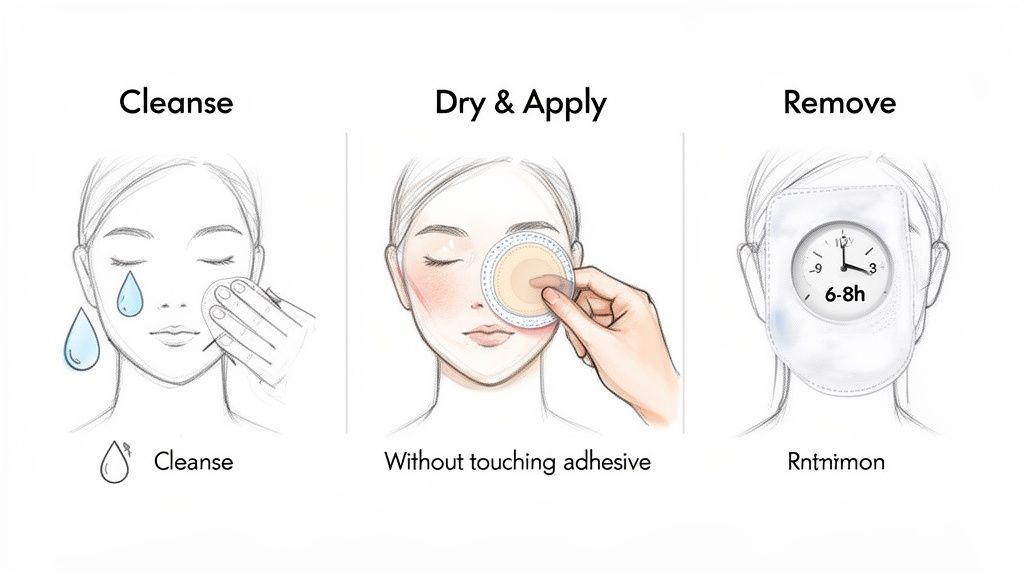
Getting the most out of a hydrocolloid pimple patch isn't magic - it all comes down to technique. Just a few simple steps can be the difference between a patch that works like a charm and one that just... doesn't. It's all about creating the perfect little environment for that hydrocolloid to get to work.
Think of it this way: your skin is the canvas. Before you even think about sticking a patch on, that canvas needs to be squeaky clean and bone-dry. Any leftover oil, dirt, or skincare gunk creates a barrier, stopping the patch from sticking properly and doing its gunk-sucking job. Honestly, this is the number one rule for success.
Your Simple Pimple Patch Routine
For consistent, can’t-mess-it-up results every single time, this is the process to follow. It takes less than a minute but makes sure your patch stays put and works its magic overnight or through the day.
- Cleanse and Dry Thoroughly: Start by washing your face with a gentle cleanser to get rid of any makeup, oil, or grime. Then, pat the area completely dry with a clean towel. And I mean completely dry. No lingering dampness!
- Apply Before Other Products: This one is non-negotiable. Your patch goes on before any toner, serum, or moisturizer. Skincare products will mess with the patch's adhesive, causing it to slide around or fail to get a good seal over the blemish.
- Handle with Care: Gently peel a patch off its sheet, trying your best not to touch the sticky side. The oils on your fingers can make it less tacky. Pop it right over the whitehead and press down for a few seconds, making sure the edges are sealed tight against your skin.
This simple prep work is what allows the patch to form a tight seal, which is crucial for the hydrocolloid to start pulling all that fluid out of the blemish. For a more detailed look, check out our complete guide on how to use Livaclean pimple patches.
Knowing When to Remove the Patch
One of the most satisfying parts of using a pimple patch is seeing the proof that it's working. You never have to guess when it's time to swap it out for a new one.
The patch will tell you when its work is done. As it absorbs pus and fluid from the pimple, the center of the patch will turn a noticeable, opaque white. This is the hydrocolloid transforming into a gel-like substance, locking the impurities away from your skin.
Once you spot that distinct white dot, you know the patch has done some heavy lifting. The sweet spot for removal is usually around 6 to 8 hours, or whenever you wake up in the morning. To take it off, just gently peel it from one edge - no need to rip it off like a band-aid! If you want, you can cleanse the area again and pop on a fresh patch to continue the healing.
So, why grab a little hydrocolloid sticker instead of reaching for that harsh spot cream or - we’ve all been there - giving in to the urge to pop? The reasons go way beyond just slapping a cover over a blemish. These patches are a smarter, gentler, and frankly, more effective way to deal with breakouts.
One of the biggest wins is how they speed up healing. By creating a moist, sealed little bubble over the pimple, the patch stops a dry, crusty scab from forming. This is the perfect environment for your skin to do its repair work, letting it heal faster and more efficiently. You'll literally see the lifespan of that pimple get cut down.
A Protective Shield for Your Skin
This might be the most important job a pimple patch has: acting as a physical barrier. Everyone knows how tough it is to keep your hands off a pimple, but that picking habit is the number one culprit behind acne scars and can shove even more bacteria into the area.
A patch simply makes picking impossible. It stands guard, protecting that delicate spot from:
- Your own fingers: It breaks the cycle of poking, squeezing, and making things a whole lot angrier.
- Outside germs: It seals the pimple off from everyday dirt, grime, and whatever else is floating around.
- Accidental rubbing: No more irritation from your pillowcase, a stray scarf, or your face mask.
This is a game-changer, especially for teens who are trying to build good skincare habits. By shielding the blemish, you're not just letting it heal in peace; you're also dramatically lowering the risk of post-inflammatory hyperpigmentation - those stubborn dark spots that hang around long after the pimple is gone.
Gentle, Soothing Relief
Unlike a lot of old-school acne treatments that can leave your skin feeling dry and irritated, standard hydrocolloid patches are incredibly gentle. They don’t contain harsh chemicals, which makes them a safe bet for pretty much all skin types, even sensitive and reactive skin.
Instead of waging war on a pimple with aggressive ingredients, a patch works with your body’s natural healing process. It helps calm inflammation, brings down the redness, and just feels soothing, making the whole situation way less stressful for your skin.
This gentle approach turns dealing with a breakout from a frustrating chore into a moment of self-care. Brands like Livaclean have leaned into this, offering fun, colorful shapes that let you show off a bit of personality. Wearing a cute star or heart can make you feel more confident and positive, transforming a bummer of a skin day into something more manageable - and maybe even a little fun.
Choosing Between Classic and Infused Pimple Patches
Walking down the skincare aisle, you've probably noticed that pimple patches aren't a one-size-fits-all solution anymore. So, how do you choose? Think of it like picking a superhero for your skin - do you need a classic defender, or one with extra powers? The choice between a standard, plain hydrocolloid patch and an infused one really just depends on the kind of pimple you’re up against.
A classic hydrocolloid patch is your best friend for those surface-level whiteheads. You know the ones - they’ve already come to a head and you can see the gunk right under the surface. A simple hydrocolloid patch is a master at its one job: creating a protected, moist little bubble to gently suck out all that fluid, flattening the spot quickly and cleanly without a fight.
The Power of Infused Ingredients
But sometimes, a pimple is a little more stubborn. It might be lurking under the skin, feeling sore and looking angry. That's where infused patches come into play. These are pimple patches that have been soaked with active ingredients to give them an extra kick, helping to tackle blemishes that haven't quite surfaced or are particularly red and inflamed.
Two of the most common (and effective) ingredients you'll find are:
- Salicylic Acid: This is a beta-hydroxy acid (BHA), and its superpower is that it's oil-soluble. That means it can dive deep into your pores to break up the gunk - oil, dead skin cells, you name it - that's causing the clog in the first place. It’s a fantastic gentle exfoliator that helps clear out the pimple from the inside.
- Tea Tree Oil: Famous for its natural anti-inflammatory and antimicrobial properties, tea tree oil is great for calming down redness and fighting off acne-causing bacteria. It's a go-to for soothing those really angry, irritated spots.
Infused patches are perfect for those early-stage pimples that you can feel but can't quite see a head on yet.
So, when that moment of panic hits - should you pop it or patch it? - this handy guide can help you make the right call for your skin.
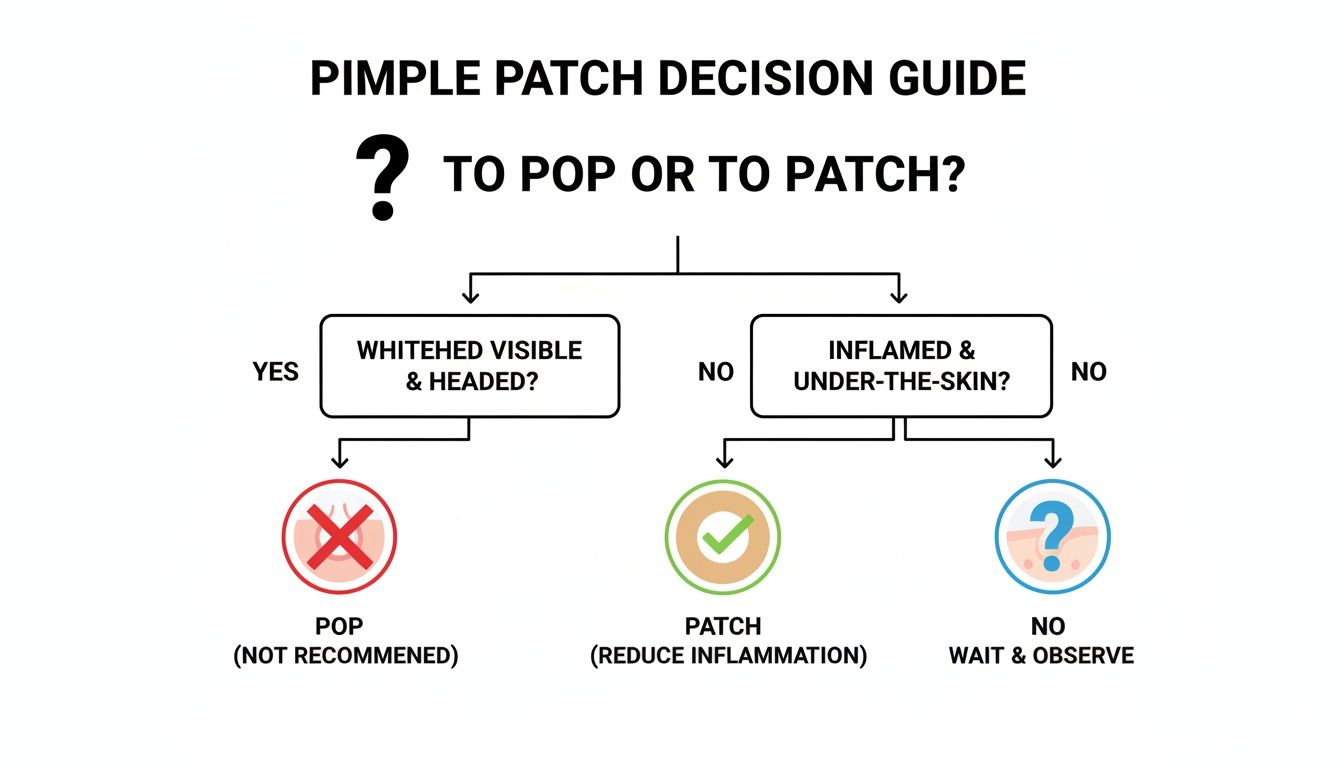
As you can see, patching is almost always the safer, smarter route. It stops you from picking, which prevents scarring, and speeds up the whole healing process.
Classic Hydrocolloid vs. Infused Patches Which One Is for You?
Still not sure which to grab from your stash? The right patch depends entirely on the pimple you're dealing with. This table breaks it down.
| Patch Type | Best For | Key Benefit |
|---|---|---|
| Classic Hydrocolloid | Pimples that have a visible whitehead. | Gently absorbs pus and fluid to flatten the spot quickly. |
| Infused Patches | Early-stage pimples, red or inflamed bumps without a head. | Delivers active ingredients to calm inflammation and clear pores from within. |
Ultimately, a simple whitehead just needs the gentle vacuum effect of a classic patch. A deeper, more stubborn spot will benefit from the targeted punch of an infused one.
The best strategy is to have both on hand. This way, you're prepared for any type of blemish that appears, ensuring you can give your skin exactly what it needs, right when it needs it.
Having a variety pack means you can customize your approach to every single breakout. That's why Livaclean offers a smart, value-driven option that combines both types in one box. Check out our infused hydrocolloid patches with Salicylic Acid and Tea Tree Oil to see how having a multi-action pack can cover all your bases. You get the most effective treatment for every situation without having to buy a bunch of different products - it’s the easiest way to make a smart choice for your skin.
Common Pimple Patch Mistakes to Avoid
Hydrocolloid pimple patches are pretty simple to use, but a few small missteps can keep you from seeing those amazing overnight results. If you’ve ever had a patch fall off mid-sleep or felt like it didn't do much, there’s a good chance a tiny tweak is all you need.
The biggest culprit is applying a patch to skin that isn’t completely dry. Think of the patch’s adhesive side as a magnet that only works on a perfectly clean, dry surface. Any bit of leftover water, serum, or moisturizer acts like a slippery barrier, preventing a tight seal and basically making the patch useless.
Bottom line: your patch should always be the very first thing that touches your clean, bone-dry skin.
Another common slip-up? Using a patch on the wrong kind of pimple. These little dots are specialists - they’re designed for a specific job and a specific kind of blemish.
Using the Right Patch for the Right Pimple
Hydrocolloid patches are the heroes for surface-level zits that have something gross inside them to absorb. They literally need a "head" to work their magic.
- Perfect for Patches: Whiteheads and pustules - those angry-looking pimples with a visible dot of white or yellow gunk - are the ideal candidates. The patch can easily pull out all that pus and oil.
- Not a Match: Deeper, under-the-skin bumps like nodules or painful cystic acne won't get any help from a standard patch. There’s just no fluid near the surface for it to grab onto. Blackheads are also a no-go; they're clogged pores that need exfoliation, not fluid absorption.
Trying to use a patch on a deep cyst is like trying to vacuum a spill through a sealed lid - it just can’t get to the source of the problem. For those more severe types of acne, your best bet is always a trip to the dermatologist.
It's all about matching the tool to the task. Using a hydrocolloid patch on the right kind of pimple is how you get those satisfying, flattening results they're famous for. Sticking one on a deep blemish is only going to lead to disappointment.
Avoiding Skin Irritation
While these patches are known for being super gentle, a couple of mistakes can cause some irritation. The first is getting too aggressive with removal. Never rip a patch off like a bandage! Instead, gently and slowly peel it back from one edge. If it feels really stuck, a splash of warm water will help loosen the adhesive.
Another potential issue is leaving a patch on for too long. Stick to the recommended 6-8 hour window. It's tempting to leave it on until you think every last bit of gunk is gone, but swapping it for a fresh one daily keeps the area clean and minimizes any tiny risk of irritation from the adhesive.
By sidestepping these common mistakes, you’ll make sure your pimple patch experience is nothing but smooth sailing.
Why Livaclean Offers Unbeatable Value
Let's be honest: the market for pimple patches is crowded. When you're dealing with a breakout, the last thing you want is to feel overwhelmed by choices. Many brands offer a basic product, but real value isn't just about effectiveness - it's about getting plenty of patches, having the right options, and maybe even having a little fun with your skincare. That’s exactly where Livaclean comes in. We started with a simple mission: make top-tier skincare that actually works without costing a fortune.
Today’s skincare buyer knows their stuff. With over 39% of 18-30-year-olds regularly using acne patches and 48% of them shopping online, people know a good deal when they see one. You can dive deeper into these acne patch market trends on gminsights.com. While a few big names might get all the attention, it’s brands like Livaclean that are connecting with people by simply offering more.
More Patches, More Possibilities
One of our biggest promises is generosity. Have you ever opened a box of pimple patches only to find a measly little sheet inside? It’s frustrating and forces you to keep buying more. We pack way more high-quality patches into every single package, so you're always stocked and ready for whatever your skin throws at you. It’s all about giving you better value, patch for patch.
But it isn't just about quantity - it’s about having options. Breakouts don't come in one standard size, so why should your patches?
Livaclean's philosophy is straightforward: provide the right tool for every single blemish. Our variety packs come loaded with multiple sizes, from tiny dots for small whiteheads to larger patches for those bigger, more stubborn spots. You should never have to compromise on coverage.
Fun Meets Functionality
Skincare shouldn't feel like a medical procedure; it should be an act of self-care. We believe in adding a bit of joy to the healing process with options like our colorful rainbow packs. These playful designs turn a pesky pimple into a fun statement piece, empowering everyone - especially teens - to feel confident instead of wanting to hide.
This blend of thoughtful design, generous counts, and powerful formulas is what sets us apart. When you need a reliable solution for any and every kind of blemish, you can explore our complete range of variety pack bundles and find your perfect match. With Livaclean, you get a smarter, more enjoyable path to clear skin.
Got Questions About Pimple Patches? We’ve Got Answers.
Even after you get the hang of applying them, a few questions might pop up. That's totally normal. Let's walk through some of the most common ones so you can use your patches like a pro and get skin you feel great in.
Can I Use a Pimple Patch on a Pimple I Already Popped?
Yes, you absolutely can! In fact, this is one of the best things you can do for a popped pimple.
Once you’ve gently cleansed the spot, stick a hydrocolloid patch right on top. It will immediately get to work absorbing any gunk left behind and create a clean, sealed environment over the open skin. This little shield keeps out bacteria, which helps the area heal up much faster and seriously cuts down the risk of scarring.
How Do I Know When the Patch Is Done Working?
Your patch will give you a very obvious visual cue. As it pulls all that fluid and gunk out of the blemish, you'll see the clear patch turn a cloudy, opaque white in the center.
That white spot is your signal that the patch has done its job and is full. It's time for a change! You should gently peel it off after about 6 to 8 hours - or first thing in the morning if you wore it overnight. Just try not to leave a single patch on for more than 12 hours.
Are Hydrocolloid Patches Okay for Sensitive Teen Skin?
For the most part, they're a fantastic and safe option. Standard, plain hydrocolloid patches are incredibly gentle because they don't rely on harsh chemicals to work. Their magic is purely physical - they just soak up fluid, making them a go-to for easily irritated or younger skin.
If you’re thinking about trying a patch infused with an active ingredient like salicylic acid for the first time, it’s always a good move to do a little patch test first. Just stick one on a discreet patch of skin (like behind your ear) to see how your skin reacts. For more stubborn blemishes that need a little extra help, you can always explore deep treatment medicated pimple patches.
Quick tip: For super sensitive skin, the simplest patch is often the best. It creates that protective bubble, stops you from picking, and lets your skin’s natural healing process take over.
Will Pimple Patches Work on Deep Cystic Acne or Blackheads?
This is a really important distinction. Hydrocolloid patches are superstars for pimples that have surfaced and have a visible "head" (think whiteheads). They need that fluid to latch onto and draw out.
Because of how they work, they are not effective on a few specific types of acne:
- Blackheads: These are clogged pores that are open to the air, and they need exfoliating ingredients to clear out, not absorption.
- Cystic Acne: This type of acne involves deep, painful inflammation trapped far below the skin's surface. A surface patch just can't reach it.
For those tougher issues like cystic acne, your best bet is always to chat with a dermatologist who can create a plan just for you.
Ready to find the perfect patch for whatever pops up? Livaclean offers effective, fun, and affordable hydrocolloid solutions for everyone. Discover your new go-to for clearer skin at https://www.livaclean.com.