

Do Pimple Patches Work On Unpopped Pimples Uncovered
Let's get straight to it: Yes, the right kind of pimple patch absolutely works on unpopped pimples. But - and this is a big but - the type of patch you grab makes all the difference.
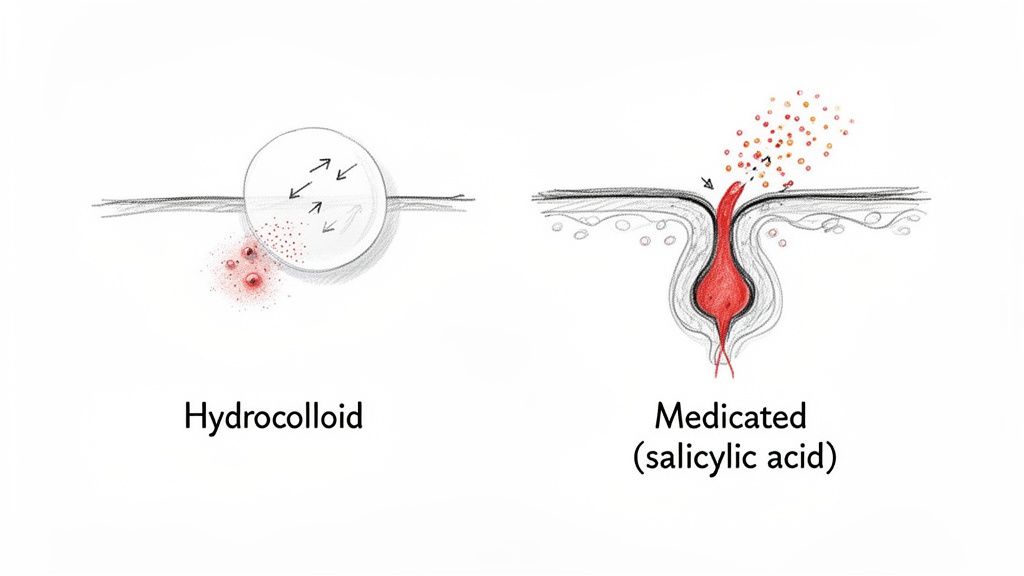
Think of it this way: for a blemish that’s just starting to brew under the surface, a simple hydrocolloid patch acts like a tiny sponge, gently coaxing out any early gunk. But for those deeper, angrier bumps that feel like they have a mind of their own, you need to bring in the big guns: a medicated patch with active ingredients to quiet the storm from the inside out.
Your Immediate Answer for Unpopped Pimples
We’ve all been there. You can feel that tell-tale pressure of a pimple forming deep under the skin, but there’s no head in sight. It’s frustrating, and it leaves you feeling pretty helpless.
This is exactly where modern pimple patches have completely changed the game. Instead of just waiting around for the inevitable eruption, you can get ahead of it and take control.
It’s like having a specialized toolkit for breakouts. Not every unpopped pimple is the same, and the patches designed to treat them aren't either. Knowing which tool to use is the secret to getting quick, noticeable results.
The Two Champions of Pimple Patches
Your strategy for tackling that unpopped pimple comes down to its stage and depth. The two main players in the patch world offer very different solutions:
-
Standard Hydrocolloid Patches: These are your go-to for those early-stage pimples that are close to the surface but haven't quite broken through. They create a clean, protected healing space, shield the spot from bacteria (and your fingers!), and gently draw any initial fluid upwards.
-
Medicated (Infused) Patches: These are the heavy hitters for deeper, more painful blemishes like papules that have zero intention of forming a head. They come infused with acne-fighting ingredients like salicylic acid or tea tree oil, delivering the treatment directly to the source of the inflammation.
The goal here isn't just to cover up the pimple; it's to deploy a targeted strike that stops it in its tracks. A medicated patch sends those calming ingredients deep into the pore to dial down the swelling and redness before it becomes a full-blown crisis.
By choosing the right patch for the job, you’re actively managing the pimple’s lifecycle instead of just being a bystander. This proactive approach can shrink a blemish and reduce its severity way faster than just waiting it out.
Pimple Patch Cheat Sheet for Unpopped Pimples
Feeling a little overwhelmed by the options? Don't be. This little cheat sheet breaks down exactly which patch to reach for based on what's happening with your skin.
| Pimple Stage | Best Patch Type | How It Works | Best For |
|---|---|---|---|
| Early & Under-the-Skin | Medicated Patch | Delivers ingredients like salicylic acid to reduce inflammation deep down. | Painful, red bumps (papules) with no head. |
| Almost Surfaced | Hydrocolloid Patch | Creates a moist seal to gently absorb early fluid and protect the area. | Small bumps that are close to the surface but not yet open. |
| Deep & Cystic | Microneedle Patch | Tiny dissolvable darts deliver actives deeper than surface patches can go. | Very deep, stubborn, and painful cystic spots. |
| Cluster Breakout | Large Hydrocolloid Patch | Covers a wide area to absorb gunk from multiple pimples at once. | When you have a group of pimples in one area, like on your chin or cheek. |
Think of this table as your quick-glance guide. Matching the patch to the pimple is the most important step in getting the results you want and clearing up that spot fast.
The Hidden Science of Healing Blemishes Under the Skin
So, what’s really going on when you stick a patch over a pimple that hasn't even come to a head yet? It might feel like you're just putting a sticker on it and hoping for the best, but there's some clever science at play creating an active healing environment right where you need it.
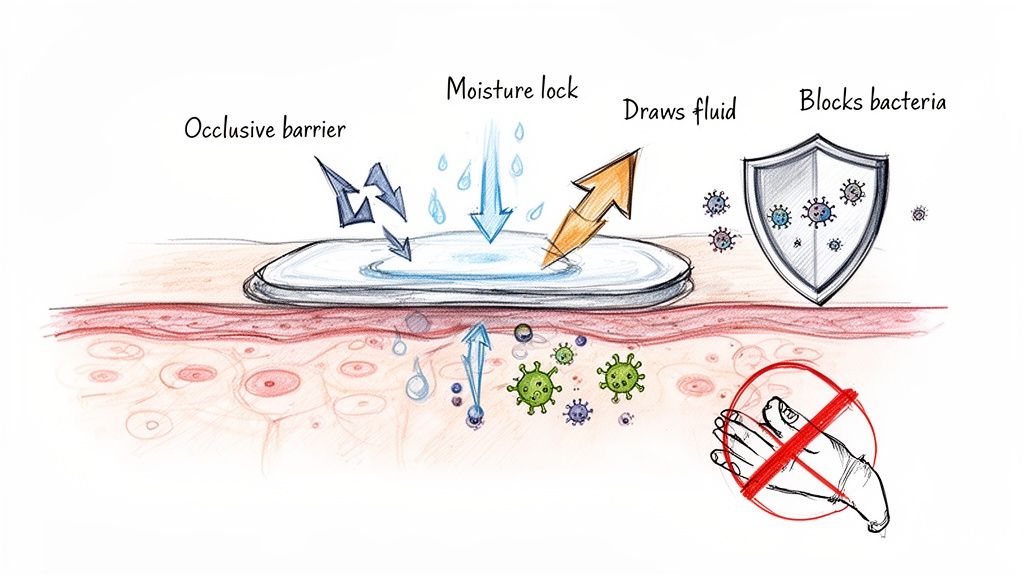
Think of a standard hydrocolloid patch as a tiny, personal greenhouse for your skin. It creates what skin experts call an occlusive barrier. This simple seal is a game-changer because it does two critical things at once: it locks in your skin’s own moisture to help it repair itself faster, and it blocks outside gunk like bacteria and dirt from making things worse.
Plus, and this is a big one, it physically stops you from picking. That alone is a massive win against future acne scars.
The Power of the Occlusive Barrier
This barrier is the secret sauce for how pimple patches work on those stubborn, under-the-skin spots. By creating a moist, protected space, the patch gives your skin a leg up, helping it heal from the inside out.
The hydrocolloid material also has a gentle drawing power. It starts pulling inflammatory fluids and pus toward the surface, even from blemishes that are still deep. This is what helps relieve that painful pressure, which is why a pimple often feels less tender and looks way less angry after you’ve worn a patch overnight.
It’s not just about hiding the spot; it's an active process that helps calm down the inflammation before it has a chance to blow up.
Medicated Patches: The Targeted Strike Force
While a basic patch sets up the perfect healing stage, medicated patches bring in the reinforcements. They’re built as a delivery system, sending potent acne-fighting ingredients straight to the heart of the problem.
Think of a medicated patch like sending a tiny team of specialists directly into the pore. Instead of slathering a cream all over your face, you get a concentrated dose exactly where it counts.
This targeted strategy means you get maximum impact on the pimple with minimal risk of drying out or irritating the healthy skin around it.
Here’s a breakdown of how the most common ingredients get the job done under the skin:
- Salicylic Acid: This is a beta-hydroxy acid (BHA) that’s brilliant at dissolving the gunk - oil and dead skin cells - clogging your pores. On an unpopped pimple, it works deep down to break apart the blockage, helping the blemish shrink and fade much faster.
- Tea Tree Oil: Famous for its natural antimicrobial and anti-inflammatory gifts, tea tree oil goes after the acne-causing bacteria right at the source. It helps knock out the infection brewing inside the pore, which is key to reducing all that redness and swelling.
- Microneedles: This is where patches get really high-tech. Some of the most advanced ones use tiny, dissolvable darts to push active ingredients even deeper into the skin. These microdarts painlessly get past the skin's surface, making sure the treatment reaches the core of a deep, stubborn blemish. You can see how these microdart needle pimple patches are designed to tackle the most frustrating underground spots.
By combining the protective, healing bubble of a hydrocolloid with powerful, targeted ingredients, these patches deliver a serious one-two punch. They don’t just cover up the symptom - the pimple itself - they actively treat the cause, stopping an unpopped pimple in its tracks before it can ruin your week.
Real Proof That Patches Tame Unpopped Pimples
The idea that a little sticker can calm down an angry, under-the-skin pimple feels a bit like magic, doesn't it? But this isn't just wishful thinking or clever marketing. The effectiveness of these patches is actually backed by some pretty solid science. When you stick on the right patch, you're not just covering up a spot - you're using a proven treatment.
This takes us beyond the theory of how patches should work and into how they perform in real-world, clinical tests. The results are often seriously impressive, showing they can significantly speed up the healing of those frustrating bumps that haven't come to a head.
What does this mean for you? It means you can actually do something about those deep, painful pimples. Instead of waiting around for days, hoping it will either surface or fade, you can actively shrink its size, calm the redness, and shorten its lifespan. The proof is in: modern pimple patches are a legitimate first line of defense.
Clinical Trials Tell the Story
The best evidence always comes from controlled studies where these patches go head-to-head with active acne. One standout trial, published in ACS Applied Materials & Interfaces, looked at a specialized two-step patch system on people with inflamed, unpopped pimples. The results were pretty dramatic.
After just three days, the pimples treated with the patch showed an 81% greater reduction in size compared to the pimples that were left alone. By the end of the first week, an incredible 95% of participants said they were completely satisfied because their spots had totally vanished. You can dig into the pimple patch research yourself to see the data.
This isn't just a small improvement. It’s a powerful demonstration of how a targeted treatment can stop a deep pimple in its tracks. The right patch actively speeds up healing and dramatically cuts down how long a blemish hangs around.
This kind of clinical backing confirms that pimple patches work on unpopped pimples by delivering active ingredients exactly where they need to go. This targeted approach is what makes them so much more effective than slathering a cream all over your face, which can often dry out the perfectly healthy skin around the pimple.
Why This Matters for Your Skin
Knowing that these patches are backed by real science gives you the confidence to use them as your go-to spot treatment. The evidence simply validates what tons of people have already discovered on their own - that slapping a patch on at the first sign of trouble can make a huge difference.
Here’s what these findings mean for you in simple terms:
- Faster Healing: The patch creates the perfect little healing bubble that helps your skin’s natural repair process kick into high gear.
- Less Redness and Swelling: Medicated ingredients like salicylic acid go straight to the source of the inflammation, calming things down quickly.
- No More Picking: A patch acts as a physical shield, keeping your fingers off the spot. This is huge for preventing more bacteria from getting in and avoiding scars.
Ultimately, the proof is clear. Using deep treatment medicated pimple patches is a smart, science-backed strategy for handling those deep, annoying pimples before they can turn into a bigger, more visible problem.
How to Choose the Right Patch for the Job
Stepping into the skincare aisle and seeing a wall of pimple patches can feel like a pop quiz you didn't study for. With so many options, how do you know which one will actually get rid of that angry red spot on your face? The secret is matching the patch to the pimple.
Think of it like being a mechanic for your face. You wouldn’t use a wrench to hammer a nail. In the same way, using the wrong type of patch won't get you the results you’re hoping for. But once you know what you’re looking at, making the right call is actually pretty simple.
Plain Hydrocolloid for Surface-Level Bumps
Plain hydrocolloid patches are your go-to, your first line of defense. These simple, non-medicated stickers are perfect for those pimples just starting to brew near the surface. You know the ones - small red bumps that you can tell have a little something in them, but they haven't formed a full-blown whitehead yet.
The main job of a classic hydrocolloid patch is to create a sealed, moist little bubble over the spot. This protective shield keeps out bacteria (and wandering fingers!) while the hydrocolloid material gently pulls in excess fluid and oil. This process is what helps flatten the bump and calm the redness, sometimes in a single night.
This simple decision tree is a great visual for figuring out when to grab a patch.
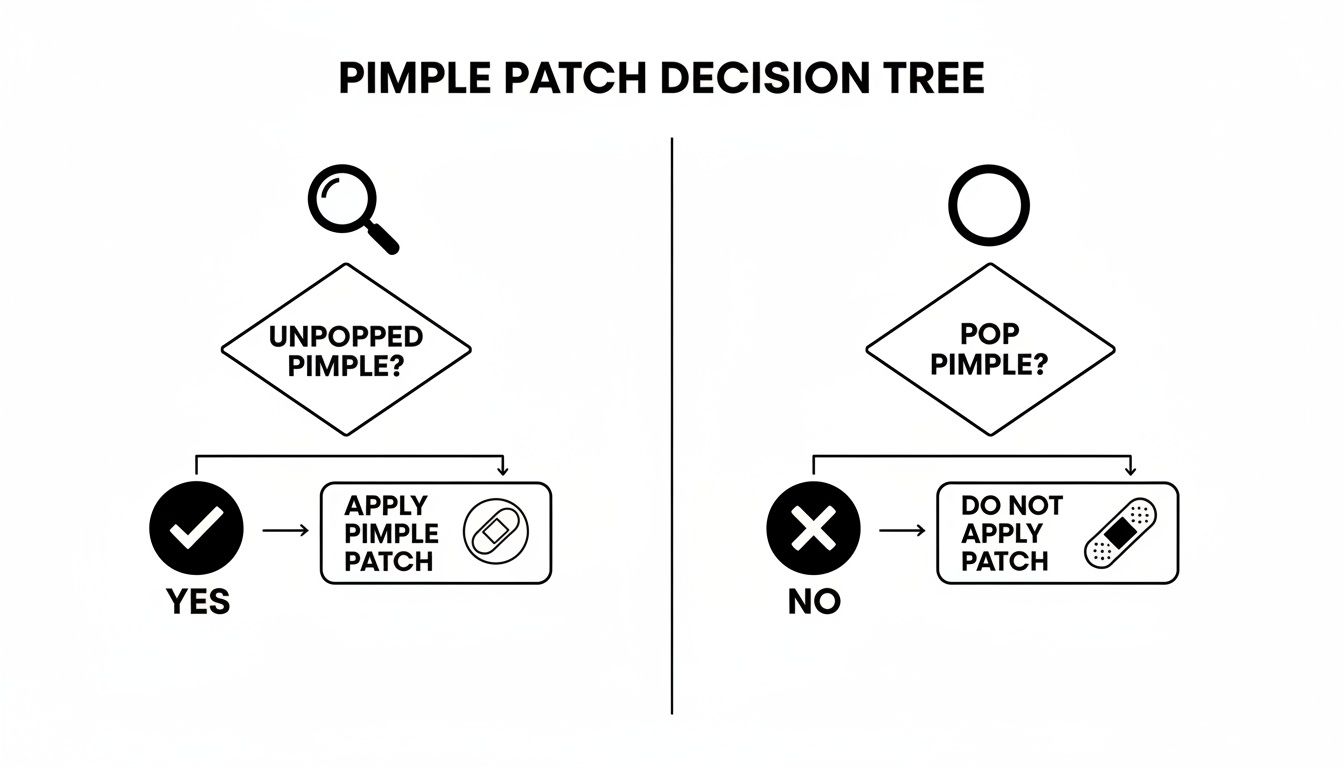
As you can see, an unpopped pimple is the ideal candidate for a patch. It's the green light to stick one on.
Medicated Patches for Deeper Troubles
So what about those deeper, more painful bumps that feel like they're staging a rebellion miles under your skin? We're talking about papules - those inflamed blemishes that have no visible head. A plain hydrocolloid patch won’t do much here because there's no pus near the surface for it to grab onto.
This is exactly where medicated patches come into play. These are a whole different beast, infused with active ingredients designed to get down into the skin and tackle the inflammation at its source.
- Salicylic Acid: This is a classic for a reason. It’s a master at dissolving the oil and dead skin cells clogging the pore from deep within.
- Tea Tree Oil: Famous for its natural anti-inflammatory and antimicrobial powers, it helps soothe redness and fight off acne-causing bacteria.
When you stick on a medicated patch, you're essentially delivering a super-concentrated dose of treatment right where it's needed most. This targeted strike helps shrink the pimple, knock down the swelling, and ease the pain way faster than just waiting it out. For a great option that combines these powerhouse ingredients, check out our pimple patches variety pack.
To make it even clearer, here’s a quick breakdown of which patch to reach for and when.
Plain Hydrocolloid vs. Infused Patches: Which One to Use?
| Feature | Plain Hydrocolloid Patch | Infused Medicated Patch (e.g., Livaclean) |
|---|---|---|
| Best For | Pimples with a visible head or just about to form one (pustules). | Deep, inflamed, under-the-skin bumps with no head (papules). |
| Main Job | Absorbs pus and fluid from a surface-level blemish. | Delivers active ingredients to reduce inflammation and unclog pores. |
| Key Mechanism | Creates a moist healing environment and physically draws out gunk. | Ingredients like Salicylic Acid and Tea Tree Oil penetrate the skin to treat the source. |
| Effectiveness | Very effective for surfaced pimples, often showing results overnight. | More effective for deep pimples where plain patches can't reach the problem. |
Basically, if you can see the "gunk" or it feels very close to the top, go for a plain hydrocolloid patch. If it's a deep, angry, and blind pimple, a medicated patch is going to be your best bet to calm it down from the inside out.
Mastering Your Pimple Patch Application Technique
Getting the best results from a pimple patch isn't just about what's in the patch - it's about how you put it on. The application is everything. Think of it like a high-performance tire; it can only grip the road and do its job if it makes perfect, secure contact.
The most critical step happens before the patch even touches your skin: prepping the area.
You have to create a completely clean and dry canvas. Start by washing your face with a gentle cleanser to get rid of any oil, makeup, or daily grime. Then, and this is the part people often rush, completely dry the area. Pat it gently with a clean towel until there’s zero moisture left.
Any lingering water, toner, or serum creates a barrier that stops the patch from forming a tight seal. Without that seal, it can’t stick properly, and its healing power is seriously compromised.
Your Step-By-Step Application Guide
Once your skin is prepped and ready, the process is simple, but it does require a light touch. Follow these steps to make sure your patch stays put all night (or day) and can actually get to work on that spot.
- Handle with Care: Gently peel a single patch from its sheet. Try your best not to touch the sticky side with your fingers - the oils on your skin can make the adhesive less effective.
- Center and Press: Carefully place the patch so the blemish is right in the middle.
- Secure the Seal: Now, gently press down on the patch for about 5-10 seconds. This little bit of pressure warms up the adhesive, helping it form a strong bond with your skin and locking it in place.
A proper seal is non-negotiable. It creates that isolated, moist environment that lets the hydrocolloid or active ingredients work their magic without interruption, speeding up the healing process.
Let the Patch Work Its Magic
Okay, the hard part is over. Now, you just need a little patience. For a patch to do its thing, it needs time. You should plan on leaving it on for at least six to eight hours. This gives it enough time to absorb all that gunk or deliver its medicated ingredients deep into the pore.
Putting one on right before bed is the easiest way to hit that time window. You go to sleep, and it goes to work.
Even early research showed how powerful this prolonged contact is. A 2006 pilot study found that acne dressings significantly reduced inflammation and redness compared to just using simple skin tapes. It was clear proof of what a well-applied patch could do. You can read more about these early findings on acne dressings if you want to geek out on the science.
For a complete walkthrough, check out our detailed guide on how to properly use pimple patches and become a true spot-treatment pro.
Understanding the Limits of Pimple Patches
Look, while pimple patches can feel like a magic wand for your skin, it's time for some honest talk. They’re fantastic tools, but they have a specific job description and some very real limitations. Knowing when to reach for one is just as important as knowing when you need something else entirely.
For a small, unpopped red bump, a good medicated patch can often shrink it down and calm the redness in a day or two. But that deeper, more stubborn blind pimple? It might take a few nights of back-to-back treatment before you see a real difference. Patience is everything with those underground spots.
When a Patch Is Not the Answer
It’s crucial to know that patches won't work on every single blemish. They are specifically designed for inflammatory acne, not other common skin frustrations.
- Blackheads and Whiteheads: These are basically non-inflammatory, clogged pores. A patch just can't pull out that hardened plug of gunk.
- Widespread Cystic Acne: Patches are for individual spots. They aren't meant to tackle severe, widespread, or deep cystic acne, which almost always needs a dermatologist's game plan.
Think of a pimple patch as a specialized spot treatment - your go-to for a targeted strike on an isolated, angry pimple. It's not designed to manage persistent or severe acne conditions all on its own.
The Timeline for Unpopped Pimples
The newer patches with microneedles are showing some impressive speed. For instance, a 2023 study on magnesium microneedle patches for inflammatory acne showed acne scores dropping from an average of 8.22 to 2.5 by day three.
This is great news because it shows how effective medicated patches can be, but it also sets a realistic timeline. We're talking a few days for noticeable results on unpopped pimples, not a few hours. If you want to dive deeper, you can explore more about how pimple patches work to really get why these timelines make sense.
Your Pimple Patch Questions Answered
We’ve covered a lot of ground, but you probably still have a few specific "what if" scenarios running through your mind. Let's tackle the most common questions people have when they're staring down a blemish that hasn't come to a head.
Think of this as your personal FAQ for becoming a true pimple patch pro. The goal is to give you the confidence to grab the right patch and use it correctly for calmer, clearer skin.
Can I Use a Patch on a Deep, Painful Pimple with No Head?
Yes! In fact, this is the perfect time to bring out a medicated patch. A standard hydrocolloid one won't do much good here because there's no fluid on the surface for it to absorb.
But a patch infused with something like salicylic acid or tea tree oil? It’s made for exactly this situation. It works by delivering those calming, anti-inflammatory ingredients deep into the blemish to reduce the swelling and pain from the inside out. This helps the spot resolve much faster, often without it ever needing to surface.
How Do I Know a Patch Is Working on an Unpopped Pimple?
It’s easy to tell when a patch works on a whitehead - you see the gunk pulled out. With a blind pimple, the signs are a bit more subtle, but they're definitely there if you know what to look for.
Keep an eye out for these improvements:
- The bump is visibly smaller and less raised.
- The angry redness around the area has started to fade.
- It's less painful or tender when you gently touch the spot.
After a night or two of consistent use, you should see a real difference. The whole point here is to calm the inflammation, and these signs tell you that's exactly what's happening.
Unlike a hydrocolloid patch turning white, success with a medicated patch on a deep pimple is measured by how much the blemish shrinks and how quickly the pain subsides. It’s all about de-escalating the situation under the skin.
Is It Okay to Wear Pimple Patches During the Day?
Absolutely. Many of the newer patches are incredibly thin and translucent, making them almost invisible for daytime wear.
Their biggest daytime benefit is acting as a physical shield. This little barrier stops you from unconsciously touching, poking, or picking at the spot - a habit that's a one-way ticket to more inflammation and potential scarring. It just keeps the blemish clean, protected, and on the path to healing.
What Should I Do After Removing a Pimple Patch?
Once you gently peel the patch off, just wash the area with a mild cleanser. Take a second to assess the spot. If the pimple is still hanging around but looks smaller and less angry, feel free to pop on a fresh patch to continue the treatment.
If it has calmed down significantly, you can just carry on with your normal skincare routine. The key is to be gentle and stick to non-comedogenic products while that patch of skin finishes healing.
Ready to stop unpopped pimples in their tracks? Equip your skincare toolkit with Livaclean's effective, value-packed pimple patches.
Shop the Livaclean collection and take control of your breakouts today!