

Pimple Patch for Cystic Acne: A Complete Guide to Clearer Skin
When you’re dealing with a deep, painful blemish, the big question is always: can you actually use a pimple patch for cystic acne? The short answer is yes, but with a major asterisk - only specific types are going to make a real difference.
While your standard hydrocolloid patches are heroes for surface-level zits, they just can't reach the inflammation brewing deep under the skin with a cyst. That's where more advanced options, like patches with microneedles or active ingredients, come into the picture.
Do Pimple Patches Really Work on Cystic Acne?
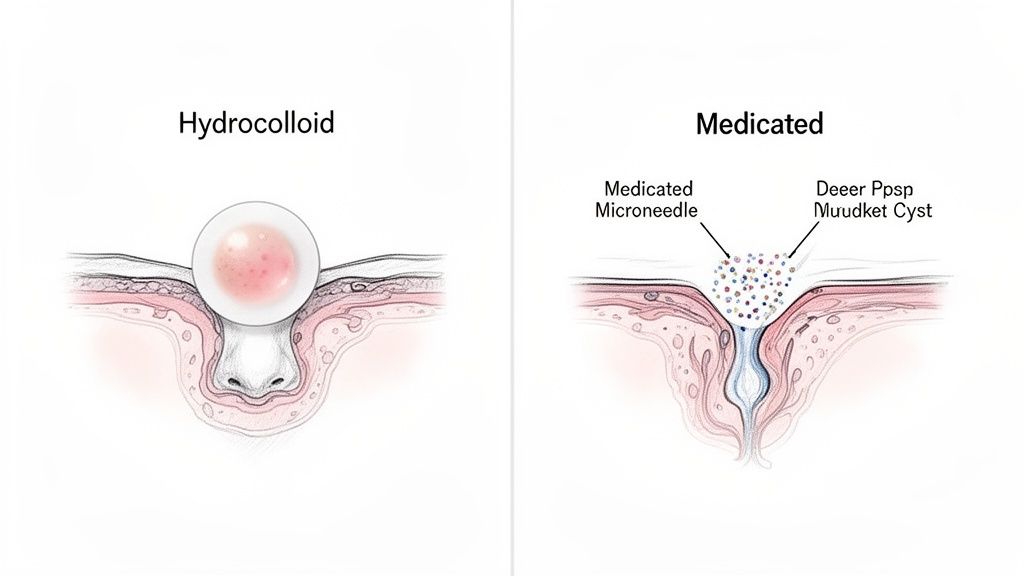
If you've ever had a stubborn cyst, you know it feels less like a simple pimple and more like a painful, underground problem. These deep lesions are a completely different beast than the whiteheads that pop up on the surface, which is exactly why your game plan has to be different, too.
The effectiveness of a pimple patch for cystic acne really boils down to its design and what's inside it.
Your everyday hydrocolloid patches are fantastic for pimples that have come to a head. Think of them as tiny, powerful sponges. They create a moist, protected seal over the spot to gently soak up all the pus and fluid. But since cystic acne forms way down deep and often doesn't have a "head," these patches can't pull out gunk that isn't even close to the surface.
This is where the more advanced patches step in, engineered specifically to tackle these deeper issues.
Microneedle Patches: The Deeper Solution
For an early-stage, under-the-skin cyst, microneedle patches can be a total game-changer. These patches are covered in tiny, dissolvable darts made from crystallized acne-fighting ingredients like salicylic acid or tea tree oil. It sounds intense, but it's not.
When you press the patch onto the blemish, those little microneedles gently create micro-channels in the top layer of your skin. This clever delivery system sends the active ingredients directly to the source of the inflammation, helping to calm the lesion from the inside out.
They don't "pop" the pimple, but they can soothe it before it gets bigger and more painful. If you're curious about the science, our guide on how pimple patches work on unpopped pimples breaks it down even further.
Medicated Patches for Inflammation Control
Medicated patches are another solid option. These are usually hydrocolloid patches that have been infused with active ingredients. While they don't penetrate as deeply as microneedles, they can still bring a lot of relief by working on the skin's surface to reduce redness and swelling, especially for cysts that are starting to make their way up.
The key takeaway is this: A pimple patch for cystic acne works best as a supportive treatment. It helps manage inflammation, prevents picking (which is a major cause of scarring), and can speed up the blemish's lifecycle.
To make it easier, here’s a quick-glance table to help you match the right patch to the right pimple.
Patch Suitability for Different Acne Types
| Acne Type | Patch Effectiveness | Best Patch Type to Use |
|---|---|---|
| Whitehead | High | Standard Hydrocolloid |
| Pustule (Pus-filled) | High | Standard or Medicated Hydrocolloid |
| Early-Stage Cyst | Moderate to High | Microneedle or Medicated Patch |
| Deep, Painful Cyst | Low to Moderate | Microneedle Patch for inflammation |
As you can see, choosing the right tool for the job makes all the difference, particularly when you're up against something as stubborn as a deep cyst.
Understanding Why Cystic Acne Is So Stubborn
Before you can figure out how a pimple patch might help with cystic acne, you have to know what you’re really up against. A regular whitehead? That’s like a minor plumbing problem right at the surface - you can see it, and it's usually straightforward to deal with. Cystic acne, on the other hand, is a whole different beast. It’s more like a burst pipe hidden deep inside a wall.
This kind of acne doesn’t even start on your skin's surface. It kicks off way down in the dermis, the deeper layer of your skin. It’s a nasty mix of oil, dead skin cells, and bacteria getting trapped far down in a hair follicle, which quickly spirals into a major infection and a whole lot of inflammation.
Because these blemishes are buried so deep, they rarely form a "head" or that visible white center you see with other pimples. This is the number one reason why dabbing on a surface cream or slapping on a standard hydrocolloid patch often feels like you’re doing absolutely nothing. You're trying to fix the roof when the real problem is in the foundation.
The Anatomy of an Underground Blemish
Picture a cystic blemish as a tiny, underground volcano. It all begins with a blockage deep inside the pore, trapping sebum (your skin’s natural oil) and bacteria. Your body’s immune system goes into attack mode, sending white blood cells to fight the infection. The result? A tender, swollen, pus-filled sac that can stick around for weeks.
This intense inflammatory response is what makes cystic acne so painful and difficult to get rid of. The pressure from all that swelling can even rupture the follicle wall underneath the skin. When that happens, the inflammation spreads, potentially triggering more breakouts and leading to scarring.
A cystic lesion isn’t just a pimple; it’s a deep-seated inflammatory event. The goal isn't just to dry it out. It's to calm the intense inflammation from within - a totally different mission than treating a surface-level whitehead.
The challenge of treating this condition has pushed the skincare world to find better solutions. Cystic acne affects millions, and the demand for effective spot treatments is undeniable. The global market for anti-acne dermal patches hit USD 571.2 million in 2023 and is expected to climb to USD 870.3 million by 2030. Considering severe forms like cystic acne impact about 20.5% of people worldwide, patches that can deliver active ingredients deep into the skin offer a promising way to manage these tough blemishes. You can learn more about the growing market for acne patch innovations on Grand View Research.
Why Picking Is So Dangerous
The depth of a cystic pimple is also exactly why trying to pop it is a terrible, terrible idea. With a surface pimple, the pus is close to an exit. But the contents of a cyst are trapped far below. Squeezing it almost never brings anything to the surface.
Instead, all that pressure often causes the inflamed sac to burst underneath the skin. This shoves the bacteria and pus even deeper into the surrounding tissue, making the inflammation way worse and dramatically increasing your risk of permanent scars, like "ice pick" or "boxcar" scars.
- Worse Inflammation: Pushing the infection deeper just makes the blemish bigger, redder, and more painful.
- Longer Healing Time: A spot that might have cleared in a week can turn into a month-long battle.
- Permanent Scarring: The trauma from picking destroys your skin's collagen, leaving behind marks that can last a lifetime.
This is where a pimple patch for cystic acne offers one of its most important benefits: it acts as a physical shield. It keeps your hands off the blemish, preventing the picking that causes most of the long-term damage. While it’s working to treat the spot, it’s also protecting it from your own worst impulses. Understanding this helps you see the patch not just as a treatment, but as a critical protective tool.
How Pimple Patches Target Stubborn Blemishes
Pimple patches might look like simple little stickers, but there's some real science behind how they work - especially when you're up against something as stubborn as a cystic pimple. It’s important to know what you’re grabbing, because not all patches are created equal. Different types are designed for very different jobs.
At its core, a pimple patch for cystic acne creates a tiny, controlled micro-environment right on top of the blemish. Think of it less like a bandage and more like a targeted treatment chamber. This little bubble either gently pulls gunk out or delivers active ingredients straight to the source of the inflammation.
The flowchart below shows just how a cyst gets started deep inside the pore. It’s a messy mix of oil, dead skin cells, and bacteria.
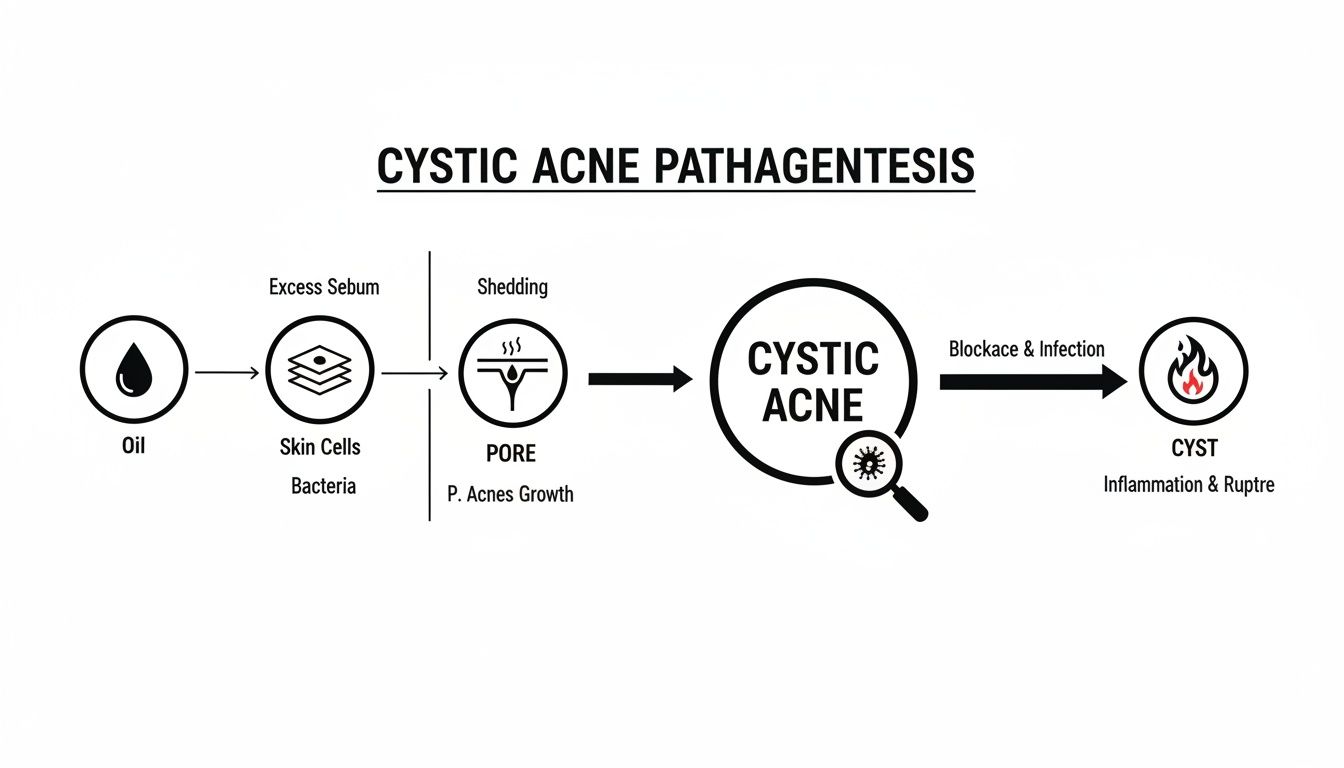
This visual makes it pretty clear why dabbing something on the surface often doesn't cut it. The real problem is way down below, so you need a solution that can either draw the fluid up or send help down.
The Original Solution: Hydrocolloid Patches
The most common patches you'll see are made from a material called hydrocolloid. This stuff was originally used in medical settings to help heal wounds, and it’s a total game-changer for pimples that have come to a head. The best way to think of a standard hydrocolloid patch is as a tiny, super-gentle vacuum cleaner.
When you stick one over a pimple with a visible whitehead, the hydrocolloid gets to work. It creates a moist, sealed space that softens the skin, while its gel-like structure actively sucks up all the fluid - we're talking pus and oil - from the blemish. You know it's working when the patch turns white. It's a pretty satisfying sign that it's pulling out all that gunk.
For a cystic pimple that’s finally starting to surface, this can be incredibly helpful. It not only speeds up the healing process but also puts a physical barrier between your fingers and the spot. That’s huge, because picking is one of the fastest routes to scarring.
The Next Level: Medicated and Microneedle Patches
Plain hydrocolloid is great for absorption, but it can’t do much for a deep, painful cyst that's still hiding under the skin with no head in sight. That’s where the more advanced tools come in: medicated and microneedle patches.
Medicated patches are basically hydrocolloid patches that have been supercharged with acne-fighting ingredients. You'll commonly find:
- Salicylic Acid: A classic exfoliant that helps dissolve the gunk clogging your pores.
- Tea Tree Oil: A natural ingredient famous for its anti-inflammatory and antibacterial muscle.
These patches deliver a low and slow dose of these ingredients right where you need it, helping to calm down swelling and redness without nuking the surrounding skin with harsh chemicals.
Microneedle patches take things one step further. These aren't your average sticker. They're covered in hundreds of tiny, dissolvable darts made from crystallized active ingredients.
When you press one onto your skin, these little darts painlessly break through the outermost layer to deliver ingredients directly to the source of the inflammation. This gets them working on a much deeper level than any cream or gel ever could.
This direct-delivery system is what makes them a powerful ally against an early-stage, "blind" pimple. Instead of just waiting around for it to surface, you can start tackling the inflammation from the inside out, potentially stopping it from blowing up into a bigger, more painful problem. You can dive deeper into how different pimple patches work in our dedicated guide.
The Market and Innovations
The huge demand for effective spot treatments has really pushed the patch market forward. Standard hydrocolloid patches are still the undisputed champs, holding about 65% of the market share because they’re so good at creating that moist healing environment to draw out impurities. This is a huge win for cystic spots that have finally surfaced. In skincare-savvy regions like Asia Pacific, these patches are an absolute staple thanks to the influence of K-beauty trends.
Newer innovations, like microneedle patches, are now being designed specifically to hit deep cystic acne by getting active ingredients right into the dermis. For anyone dealing with frequent breakouts, brands like Livaclean are offering affordable value packs infused with salicylic acid and tea tree oil, giving you a discreet and effective treatment that actually stays put.
The Best Way to Use a Pimple Patch on a Cyst
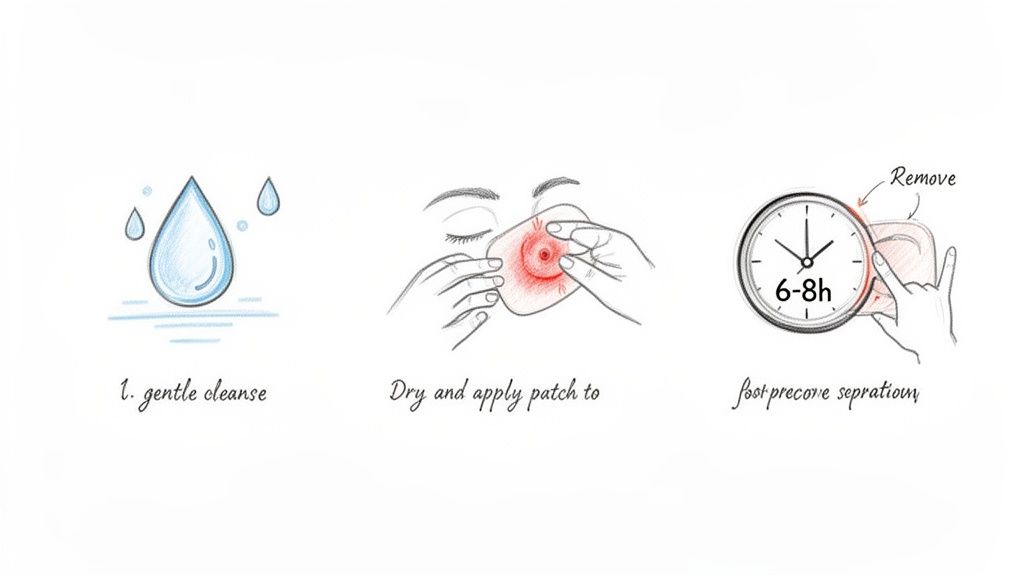
Using a pimple patch for cystic acne is about more than just peeling it off the sheet and hoping for the best. To really get results from these little blemish heroes, your technique matters - a lot.
Think of it this way: you wouldn't slap a fresh coat of paint on a dusty, dirty wall. The same idea applies here. Proper prep is what separates a patch that works wonders from one that just… sits there. When you get it right, you’re giving that deep, angry blemish a fighting chance to calm down and heal.
The Prep Work: Building a Foundation for Success
Before a patch even thinks about touching your skin, you need a clean, dry canvas. Any leftover oil, makeup, or moisturizer will act like a shield, stopping the patch from sticking properly and doing its job.
First, gently wash the area with a mild cleanser and pat it completely dry. No rubbing! That’ll just aggravate an already-sore spot. If you have a multi-step skincare routine, the patch goes on before any serums or moisturizers. Those goodies are for the rest of your face, but they’ll make your patch slide right off.
Pro-Tip: The patch should always be the very first thing to touch your clean, dry blemish. This simple rule is the key to making it stick and work its magic.
By making sure the area is pristine, you’re not just helping the patch adhere for the long haul; you’re also keeping new bacteria from getting trapped underneath. For a full rundown, check out our guide on how to use our pimple patches to get the most out of every single one.
Perfect Application for Maximum Impact
Once your skin is prepped, it's go-time. This part is easy, but it pays to be gentle. I've put together a quick checklist to make sure you nail it every single time.
Step-by-Step Patch Application Guide
| Step | Action | Pro-Tip |
|---|---|---|
| 1 | Select the Right Size | Choose a patch that completely covers the cyst with a small border to spare. This ensures a good seal. |
| 2 | Apply with Clean Hands | Peel the patch from its backing, avoiding touching the sticky center. Gently place it over the blemish. |
| 3 | Secure the Edges | Press down gently around the edges for 5-10 seconds. The warmth from your fingers helps create a strong seal. |
And that’s it. Now, just let the patch do its thing. It's officially on duty.
Timing Is Everything When Treating a Cyst
The last piece of the puzzle is knowing when to use a patch and how long to leave it on. Most patches work best when left on for 6 to 8 hours (or overnight). If you’re using a classic hydrocolloid patch, you’ll know it’s working when the center turns a cloudy white - that’s all the gunk it has absorbed.
But when in the cyst’s lifecycle should you stick one on?
-
For Microneedle Patches: The moment you feel that deep, painful bump starting to form is the perfect time to act. Applying a microneedle patch early delivers those calming ingredients right to the source, helping knock down swelling and pain before the cyst gets a real foothold.
-
For Hydrocolloid Patches (Plain or Medicated): These are your go-to once a cyst has come to a head or has started to drain on its own. The patch will soak up any remaining fluid, flatten the spot faster, and create a protective barrier against bacteria.
Whatever you do, resist the urge to swap out the patch too often. Leaving it on for the full recommended time creates a stable, healing environment. Constantly ripping it off and putting on a new one will just irritate the skin more. Trust the process, and give your skin the time it needs to heal.
Knowing When to See a Dermatologist
While a high-quality pimple patch for cystic acne can be a lifesaver for managing a surprise blemish, it’s critical to understand their role in the bigger picture. Think of a pimple patch like a firefighter for a single, small blaze - it’s fantastic for spot-treating one problem area.
But if your whole house is on fire? That’s when you call in the experts.
Pimple patches are designed for targeted, temporary relief. They’re brilliant at calming down the inflammation of a single cyst, speeding up its healing journey, and - most importantly - keeping your fingers off of it. What they don't do, however, is get to the root cause of your acne, like hormonal shifts or bacteria living deep under the skin.
Knowing the limits of at-home care isn't just smart; it's a crucial part of any good skincare strategy. Relying only on patches for persistent or severe acne is like putting a cute band-aid on a wound that really needs stitches. It might hide the problem for a bit, but it won't actually solve it.
Signs Your Acne Needs Professional Care
So, how do you know when it’s time to look beyond the patch and make an appointment with a dermatologist? There are a few very clear signs that your acne has moved into territory that needs a more powerful, comprehensive treatment plan.
Keep an eye out for these patterns:
- Your Acne Is Widespread: If you're fighting more than just the random deep pimple and instead see clusters of cysts along your cheeks, chin, or jawline, it points to a bigger issue. Patches just aren't practical or effective for covering large areas.
- The Cysts Are Extremely Painful: All cystic acne is uncomfortable, but blemishes that throb or ache with the slightest facial movement are a major red flag. That level of inflammation needs medical intervention to prevent lasting damage.
- Over-the-Counter Products Aren't Working: You’ve given it a real shot. Medicated cleansers, different spot treatments, all types of patches - and after several weeks, you’re seeing zero improvement. If your best efforts aren’t making a dent, it’s time for a professional opinion.
Catching these signs early can save you a world of frustration, time, and potential skin damage down the line.
Seeing a dermatologist isn't a sign of failure; it's a proactive step toward getting the right treatment for your skin's long-term health. A pro can offer prescription-strength topicals, oral medications, or in-office procedures that at-home care simply can't compete with.
The Emotional and Physical Toll
It’s never just about the physical blemishes. The impact of cystic acne runs much deeper, and honestly, this is often the most compelling reason to get professional help.
The Risk of Scarring
Cystic acne is notorious for leaving its mark. We’re talking about permanent scars, like atrophic (indented) scars or post-inflammatory hyperpigmentation (those stubborn dark spots). The longer severe acne goes untreated, the higher the risk of lasting textural changes to your skin. A dermatologist can build a plan to get the inflammation under control fast, dramatically lowering the chances of scarring.
Impact on Mental Health
Let’s be real: persistent, painful acne can take a massive toll on self-esteem. If you find yourself dodging social events, feeling anxious about your appearance, or just feeling emotionally drained because of your skin, that is an absolutely valid reason to seek medical help. Your mental well-being is every bit as important as your physical health.
Ultimately, a pimple patch for cystic acne is a fantastic supporting player in your skincare routine. It's the perfect tool for managing a pop-up blemish and protecting it while it heals. But for a winning strategy against persistent, severe acne, you need a dermatologist - they’re the head coach your team needs.
Choosing the Right Pimple Patch for Your Skin
With so many different pimple patches out there, trying to pick the right one for a monster cystic spot can feel like a guessing game. But here’s the secret: it’s all about matching the patch to your skin’s specific needs at that moment. You wouldn’t use a hammer to fix a leaky faucet, right? Same idea.
Think of it like building a skincare toolkit. A basic hydrocolloid patch is your trusty screwdriver - perfect for simple, surface-level jobs. But for those deep, painful under-the-skin bumps, you’ll need to bring in the heavy-duty gear.
Match the Patch to the Problem
When you feel that familiar, deep pain of a cyst starting to form, grabbing the right patch early can make all the difference. This is where you want to look beyond the basic hydrocolloid and find something with a little more oomph.
- Infused Patches: Patches with ingredients like salicylic acid or tea tree oil are fantastic for early-stage inflammation. They get to work calming redness and swelling before the blemish fully surfaces.
- Microneedle Patches: For those really stubborn, painful cysts that haven’t come to a head, microneedle patches are a game-changer. Their tiny, dissolving darts deliver healing ingredients deeper into the skin than a standard patch ever could. Check out how Livaclean’s microneedle pimple patches are designed to take on these tougher spots.
This targeted approach means you’re not just hiding the spot - you’re actively treating it where it starts.
Getting the Best Value for Your Money
Good acne care shouldn’t cost a fortune, especially when you’re dealing with breakouts on the regular. Being smart about how you buy your patches means you can stay on top of your routine without stressing your wallet.
Buying a higher-count pack is almost always the way to go. It drops the cost per patch way down, making it a much more budget-friendly choice in the long run. This is a lifesaver for teens or anyone managing consistent flare-ups.
Variety packs are another brilliant buy. They usually come with a mix of sizes, so you have the perfect patch whether you’re dealing with a tiny whitehead or a larger cystic area. No more wasting a giant patch on a little spot. It’s all about having the right tool ready for whatever your skin throws at you.
Frequently Asked Questions About Pimple Patches
Got questions? You're not the only one. When you're trying to use a pimple patch for cystic acne, knowing a few key things can make all the difference. Let's clear up some of the most common questions we hear.
Can I Put a Pimple Patch on a Cyst That Has No Head?
This is the big one, and the answer really comes down to which type of patch you grab. A classic hydrocolloid patch won’t do much for a "blind" pimple. Why? Because its job is to absorb fluid, and if there's no opening, it has nothing to pull from.
But this is exactly where an advanced patch - one infused with active ingredients or featuring microneedles - comes in. These are designed specifically for under-the-surface spots. They work by delivering anti-inflammatory ingredients like salicylic acid directly to the source of the problem, helping to calm swelling, redness, and pain before the blemish ever comes to a head.
How Do I Know if the Pimple Patch Is Working?
You'll see a couple of tell-tale signs that your patch is on the job. The most obvious is the patch turning a satisfying white or cloudy color. That change means it's successfully pulling out pus and fluid from the blemish.
Once you peel it off, the spot underneath should look noticeably calmer. The goal isn't an overnight vanishing act, but you should see a real reduction in redness and swelling. That's how you know the healing process is in full swing. To get the full picture, you can learn more about how hydrocolloid pimple patches create the perfect healing zone for your skin.
Is It Safe to Use Pimple Patches Every Night?
For the most part, yes. Your standard hydrocolloid patches are non-medicated and super gentle, making them totally fine for nightly use on any active spots. They just create a clean, protected bubble for your skin to do its thing.
If you’re reaching for patches infused with active ingredients, just listen to your skin. If you start seeing any serious dryness or irritation, it’s a smart move to switch back to a plain hydrocolloid patch for a night or two to give your skin a little break.
The real magic of a pimple patch isn't just what it puts in, but what it keeps out. By acting as a physical shield, it stops you from picking - and picking is the number one cause of acne scars.
This protective role is easily one of its biggest benefits. It lets the blemish heal in peace, free from the trauma of being squeezed, poked, or touched. This dramatically cuts down the risk of post-inflammatory hyperpigmentation (those annoying dark spots) or permanent scarring. Think of it as a tiny, dedicated bodyguard for your blemish.
Ready to find the right patch for any spot? Check out the Livaclean collection. We've got hydrocolloid patches in multiple sizes and options infused with skin-calming ingredients to help you take on everything from simple whiteheads to those stubborn, deep-down cysts.