

Your Guide to an Overnight Acne Spot Treatment That Works
An overnight acne spot treatment is your secret weapon for those sudden, unwelcome breakouts. It works by applying a concentrated dose of healing ingredients directly onto the blemish while you sleep, which helps slash inflammation and seriously speed up the healing process. The dream is to wake up to a pimple that’s calmer, smaller, and way less angry than it was the night before. It’s a super-targeted approach that lets you zap a single spot without messing with the rest of your skincare routine.
The Secret to Waking Up With Clearer Skin
We’ve all been there - that sinking feeling when a huge pimple decides to show up right before a big day. It feels like the worst timing, but the fix is probably easier than you think. A good overnight spot treatment is designed to work in sync with your skin’s natural repair cycle, doing the heavy lifting while you get your beauty rest.
This isn't just another list of generic tips. Think of this as your practical, real-world guide to getting nighttime blemish control down to a science. We'll get into exactly how to prep your skin, pick the perfect treatment for whatever kind of spot you're dealing with, and apply it the right way for the best results.
Why Overnight Treatments Are So Effective
Your skin kicks into major repair mode while you're asleep, making it the absolute best time for targeted treatments to work their magic. By applying a spot treatment before bed, you're essentially giving your skin’s natural healing process a supercharged boost.
Here’s why it works so well:
- Uninterrupted Contact: The treatment stays put for a solid 6-8 hours, safe from the sweat, makeup, and daily grime that would otherwise get in the way.
- Enhanced Absorption: Without daytime products or environmental pollutants competing for attention, the active ingredients can sink deep into the pore and get straight to work.
- Reduced Inflammation: Key ingredients like salicylic acid or tea tree oil are fantastic for calming down redness and swelling, so you wake up to a visibly less noticeable blemish.
A great overnight acne spot treatment doesn’t just cover a blemish; it creates a sealed, healing environment that actively works to resolve the breakout from the inside out.
Take Livaclean's infused hydrocolloid patches, for instance. They’re a perfect example of this in action, combining a protective physical barrier with powerful active ingredients to hit breakouts with a one-two punch. If you're curious about the nitty-gritty, we break down how do pimple patches work in another detailed guide.
With the right strategy, you can finally win the war against those surprise pimples.
How to Prep Your Skin for Maximum Overnight Success
Think of your skin like a canvas. If you're going to put a masterpiece on it - in this case, an overnight spot treatment - you need to prep it first. Without the right prep, even the most powerful treatment won't stand a chance. The goal here is simple: get the skin perfectly clean and dry so the active ingredients can get straight to work on the blemish, no obstacles allowed.
Your first move is a good, thorough cleanse. It’s got to be gentle, though. All day long, your skin collects a mix of oil, makeup, sunscreen, and grime from the air. Slapping a spot treatment on top of that mess just traps all the gunk and stops the product from ever reaching the pore. This is where a double cleanse really shines. Start with an oil cleanser to dissolve all the stubborn, oily stuff, then follow it up with a simple, water-based cleanser to rinse it all away.
The All-Important Dry-Down
Okay, your face is clean. Now for what is arguably the most critical step for making an overnight treatment work: making sure the area is completely dry.
Gently pat your skin with a fresh, clean towel - don’t rub! - and then just wait. Give it a few minutes. Any lingering moisture is the arch-nemesis of adhesion, especially if you're using a hydrocolloid patch. A damp surface will make that patch slip and slide all night, rendering it totally useless by morning.
Seriously, don't rush this part. I'd say the number one reason a pimple patch fails is because it was applied to skin that wasn't totally dry.
Pro Tip: If you use a hydrating toner or a facial mist after cleansing, you absolutely have to let it sink in. I mean, give it at least five full minutes to absorb and dry down before you even think about putting a patch or gel on top. This way, you get the hydration benefits without messing up your treatment's ability to stick and stay put.
Give Your Prep a Soothing Boost
Want to take your prep to the next level? A calming facial mist can be a fantastic addition right after you cleanse. A quick spritz can help take the edge off any redness and irritation that comes with a fresh breakout. It just helps create a calmer, happier environment for your spot treatment to do its thing.
For instance, something like Livaclean’s Thermal Spring Water Hydrating & Soothing Face Mist is made to calm and hydrate without leaving any heavy film behind. But just remember the golden rule: let it dry completely. You can also explore the benefits of a hypochlorous acid mist for face and body to see how it can fit into your routine.
It might seem like a small, fussy detail, but getting the prep right truly makes all the difference. A clean, bone-dry surface is your ticket to letting that patch or gel work its magic, giving you the best possible shot at waking up to a much calmer, less angry blemish.
Choosing Your Acne-Fighting Champion
Stepping into the skincare aisle can feel like preparing for battle. With so many products promising to be the ultimate overnight acne spot treatment, picking the right one is everything. Not all blemishes are created equal, and that angry red bump on your chin requires a totally different strategy than the whitehead on your forehead.
The first step is simply understanding the main players. In the world of spot treatments, you've really got three heavy hitters: hydrocolloid patches, salicylic acid, and benzoyl peroxide. Each one targets acne in a unique way, which is why what works for one person (or one pimple) might not work for another.
Before you even think about applying a treatment, though, your skin prep has to be on point. A clean, completely dry surface is the non-negotiable foundation for any of this to work.
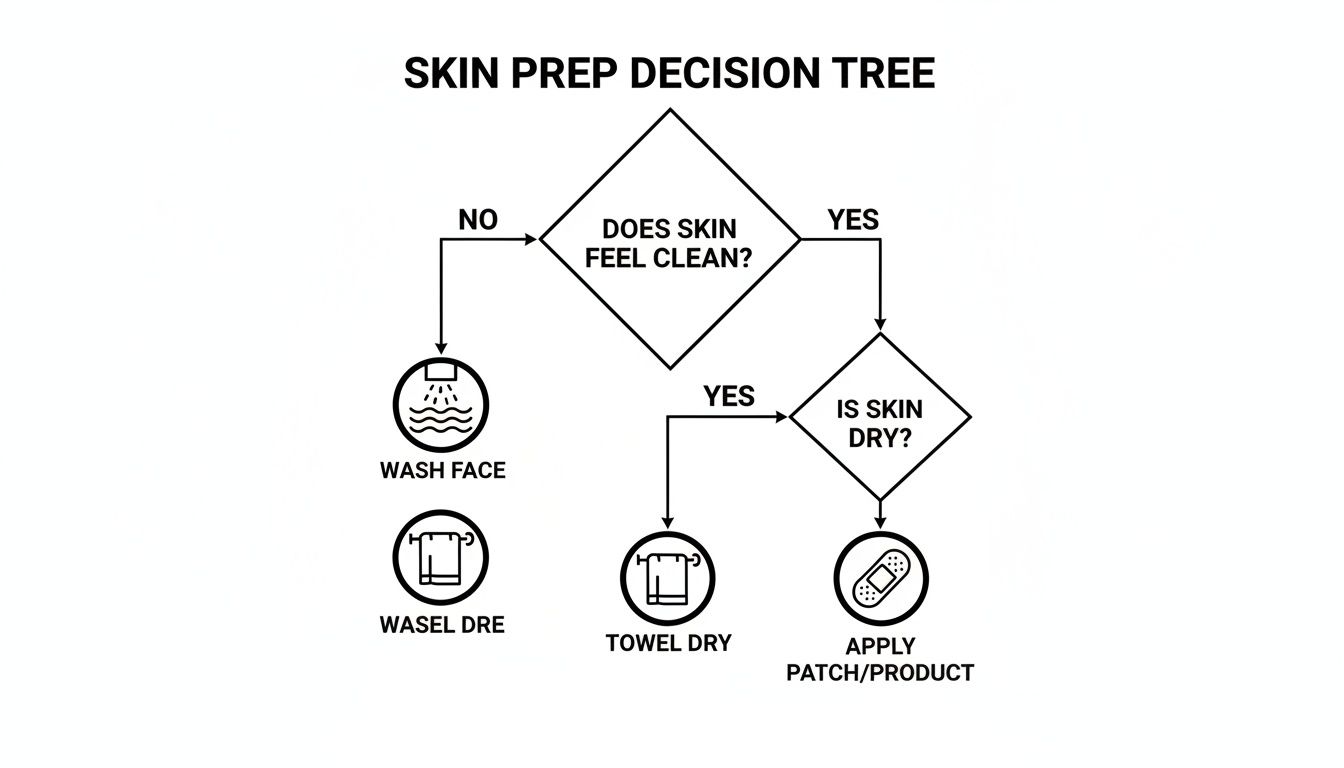
This flowchart breaks down the initial steps, but the key takeaway is simple: get your skin clean and bone-dry before you do anything else.
Hydrocolloid Patches: The Gunk Pullers
You’ve definitely seen these little adhesive bandages everywhere. Hydrocolloid patches work by absorbing excess fluid and pus directly from a pimple that’s come to a head (a whitehead). They create a moist, protected bubble around the blemish that speeds up healing and - maybe most importantly - prevents you from picking at it.
Their popularity has absolutely exploded for a reason. In fact, the global market for anti-acne dermal patches jumped from USD 451.2 million in 2023 to USD 490.6 million in 2024. It’s even projected to hit USD 1.4 billion by 2035. This boom is being driven by the 20.5% of people worldwide dealing with acne who just want simple, effective overnight solutions.
Brands like Livaclean are taking this a step further with infused patches. These combine the physical gunk-pulling power of hydrocolloid with active ingredients like salicylic acid or tea tree oil, giving you a powerful 2-in-1 treatment. You can dive deeper into the science behind how hydrocolloid pimple patches work over on our blog.
A standard hydrocolloid patch is like a tiny protective shield that just absorbs. An infused patch is an active fighter that both absorbs and treats the blemish from within, making it a smarter choice for stubborn spots.
Salicylic Acid: The Pore Cleaner
Salicylic acid is a beta-hydroxy acid (BHA), and its superpower is dissolving the oil and dead skin cells that clog pores. Think of it as an exfoliant that can get deep inside the pore to clear out blockages. This makes it fantastic for blackheads and stubborn whiteheads.
You'll usually find it in gels or serums. A tiny dab can help shrink a pimple and reduce redness overnight, but it can be drying, so don't go overboard. A little goes a long way.
Benzoyl Peroxide: The Bacteria Killer
When you're dealing with those deep, painful, under-the-skin pimples (think cysts and nodules), benzoyl peroxide is often the go-to recommendation. It works by killing the acne-causing bacteria right inside the pore and is incredibly effective at bringing down that severe inflammation.
But with great power comes great responsibility. It's the strongest of the three and carries a higher risk of side effects:
- Dryness and peeling: It can seriously dry out the skin around the blemish.
- Irritation: Redness and itching are pretty common, especially if you have sensitive skin.
- Bleaching: Be warned! It can bleach fabrics, so use old pillowcases and towels.
Overnight Spot Treatment Comparison
Choosing the right treatment really comes down to matching the weapon to the specific blemish you're fighting. This table breaks down the key differences to help you decide what you need.
| Treatment Type | Best For | How It Works | Potential Downsides |
|---|---|---|---|
| Hydrocolloid Patches | Pimples with a visible head (whiteheads) and surface-level blemishes. | Creates a moist seal, absorbs pus and fluid, and protects from bacteria and picking. | Not effective on deep, under-the-skin pimples like cysts. |
| Salicylic Acid | Blackheads, whiteheads, and small, non-inflamed pimples. | Exfoliates inside the pore to dissolve oil and dead skin cell plugs. | Can cause dryness and mild irritation if overused. |
| Benzoyl Peroxide | Inflamed, red pimples and deep, painful cysts or nodules. | Kills acne-causing bacteria deep within the pore to reduce inflammation. | Can be very drying, cause irritation and peeling, and may bleach fabrics. |
For surface-level pimples that are ready to pop, a hydrocolloid patch like Livaclean's is a gentle yet effective choice. But for those deeper, more inflamed spots, a targeted dab of a medicated gel might be what you need to calm things down.
The Art of Applying Your Overnight Spot Treatment
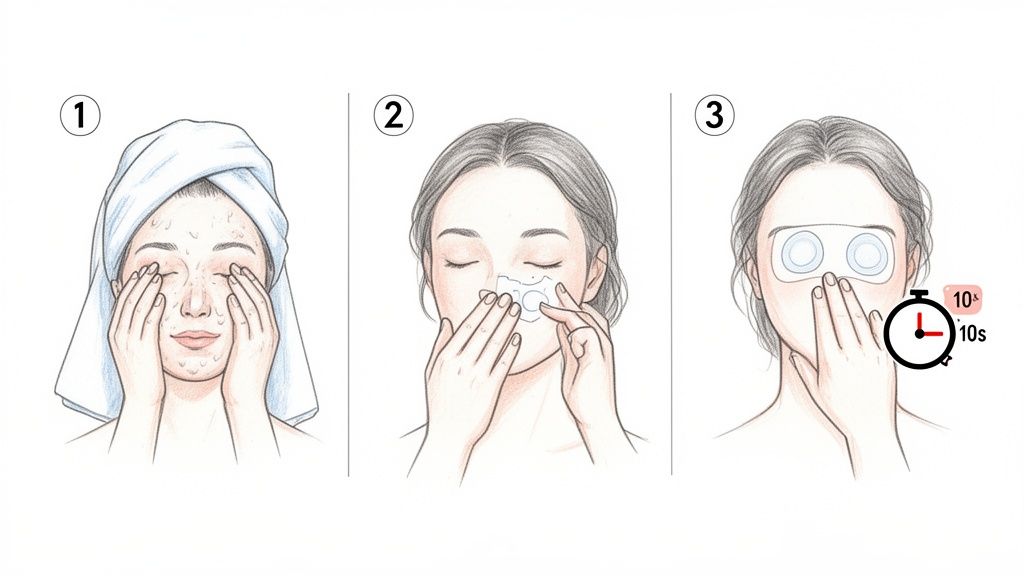
When you're launching an overnight assault on a pimple, your technique is everything. You can have the best product in the world, but if you don't apply it correctly, you're not going to see the results you're hoping for. Let's get into the nitty-gritty of how to apply different treatments for maximum impact.
Picture this: you have a huge job interview tomorrow, and a brand-new blemish has decided to make a grand entrance. This is no time for guesswork. The right application method can be the difference between waking up to a calmer, flatter spot versus one that's still angry and irritated.
Perfecting Your Pimple Patch Application
Hydrocolloid patches are a skincare staple for a reason, but their success hinges entirely on getting a perfect seal. If that patch isn't stuck on just right, it can't do its job of drawing out gunk or shielding the blemish from the outside world.
Here’s how you get it right, every single time:
- Choose the Right Size: This is key. Pick a patch that’s slightly larger than the blemish itself. You need a little border of adhesive to stick firmly to the healthy, clear skin around the pimple.
- Peel Cleanly: Try to handle the patch only by its very edges. You want to avoid getting any fingerprints or oils from your skin onto the sticky center.
- Press and Hold: Place it squarely over the blemish and press down gently but firmly with your fingertip for at least 10 seconds. This little bit of warmth from your finger helps the adhesive create a secure seal that won’t budge while you sleep.
This is exactly why variety packs, like the ones from Livaclean, are so handy. Having multiple sizes on hand means you're always prepared, whether you're dealing with a tiny whitehead or a more substantial spot. For a great visual walkthrough, check out our guide on how to use our pimple patches.
Applying Gels and Creams with Care
When you're using a liquid or cream-based overnight acne spot treatment, just remember the golden rule: less is more. Drowning the pimple in product won't make it vanish any faster. In fact, you'll probably just irritate the healthy skin around it, leaving you with dryness and flakes.
Use a clean finger or a cotton swab to dab on a thin, even layer that just covers the blemish. The goal is to deliver a concentrated dose of active ingredients directly on target without causing any collateral damage to the surrounding skin.
The anti-acne patch market is exploding for a reason. Valued at USD 534.2 million in 2025, it's projected to more than double to USD 1.4 billion by 2035. This boom is driven by the 20.5% of people globally dealing with acne who need effective overnight solutions that show real results in as little as 6-8 hours. You can find more insights into the acne treatment market on strategicmarketresearch.com.
Where Spot Treatments Fit in Your Evening Routine
Think of your overnight spot treatment as the final, strategic move in your evening skincare game. It's a targeted player, and its success really depends on putting it on the field at exactly the right time. Nailing the order of operations can make or break your results - get it wrong, and you might as well not have bothered.
Applying products out of order can dilute their power or, even worse, render them completely useless. You want each step to prepare the skin for the next. The general rule of thumb is to build from your thinnest to your thickest products to give everything a chance to absorb properly.
Your spot treatment, however, is the one big exception. It always goes on dead last, creating a concentrated, undisturbed attack on the blemish overnight.
Building Your Routine for Maximum Impact
Here’s the game plan for a routine that actually gets results:
- Cleanse First: It all starts with a clean slate. Wash your face to get rid of makeup, excess oil, and all the grime from the day.
- Tone (If That's Your Thing): If you use a toner, now’s the time. A quick swipe can help balance your skin’s pH and prep it for what’s next.
- Layer Your Serums: Gently pat in any lightweight serums you're using. This is where your hyaluronic acid or niacinamide formulas come in.
- Lock it in with Moisturizer: Next, apply your favorite moisturizer all over to hydrate your skin and seal in those serums.
The Final, Game-Winning Step
After your moisturizer has had a minute or two to sink in, it's time for the main event. This is when you apply your chosen spot treatment directly onto the blemish. Why last? Because this way, it sits right on top of the pimple without being smeared around or weakened by other products you rub on top of it.
A Quick Note on Patches: If you're using a hydrocolloid patch, especially one like Livaclean's infused options, you might need a slight adjustment. Try to avoid slathering a heavy or oily moisturizer directly on the blemish itself. A thick cream can create a slick barrier that stops the patch from sticking properly, and you’ll just find it on your pillow in the morning. If you need to, just gently wipe the immediate area with a damp cotton swab before sticking it on.
This deliberate layering is about more than just zapping one pimple. It creates a complete support system for your skin, fortifying its natural barrier and helping prevent future issues from popping up. It’s a smarter, more targeted approach to skincare.
And it seems everyone is catching on. Topical treatments, including gels and patches, now command a massive 41% of the market share in 2024. While oral medications held 40% of the prescription share in 2023, the clear shift toward targeted overnight solutions shows people want effective treatments with fewer side effects. You can read more about these trends in the acne treatment market to see where things are headed.
Troubleshooting When Your Treatment Is Not Working
It’s the worst feeling: you wake up, rush to the mirror, and see that stubborn blemish is still holding on for dear life. You did everything right, but your overnight acne spot treatment didn't quite deliver the knockout punch you were hoping for.
Before you toss the product in the bin, let's walk through a few common reasons this happens. More often than not, the issue isn't the treatment itself but a tiny misstep in how it was applied or maybe even just a matter of managing expectations.
Why Your Pimple Patch Fell Off
Finding your pimple patch stuck to your pillow instead of your face is a classic (and annoying) problem. The culprit is almost always the same: leftover moisture or oil on your skin's surface.
Even the slightest bit of residue can prevent a patch from getting a good grip.
- Heavy Moisturizers: A thick, rich cream applied too close to the spot creates a slick barrier between the patch and your skin.
- Facial Oils: These are the number one enemy of patch adhesion. Oil and adhesive just don't mix.
- Bad Timing: If you slap a patch on right after your skincare routine, before everything has had a chance to fully sink in, it's bound to slide off.
The fix is simple. Make sure the blemish and the skin immediately around it are completely clean and bone-dry. I like to take a cotton swab dipped in a little water or toner, gently wipe the spot, let it air dry completely, and then apply the patch. It makes all the difference.
Quick reality check: An overnight treatment is meant to drastically cut down on inflammation and speed up healing. It's not a magic eraser. Aim for noticeable progress, not an overnight miracle.
Managing Dryness and Irritation
Sometimes the treatment works a little too well, leaving you with a dry, flaky patch of skin in its place. This is pretty common with strong active ingredients like benzoyl peroxide or high-concentration salicylic acid.
If this happens, take a break from the spot treatment for a night or two. Give the area some TLC with a gentle, non-comedogenic moisturizer to soothe the skin and restore its barrier.
It's also a good reminder not to use a drying treatment too early in a pimple's life. Blasting an under-the-skin bump can sometimes just trap the inflammation under a layer of dead, dry skin, making it worse. For more on that, you might want to read our guide on whether pimple patches work on unpopped pimples.
When to Call in a Professional
While at-home treatments are fantastic for tackling the occasional breakout, some situations are best left to a dermatologist. It's probably time to book an appointment if you're dealing with any of these:
- Painful, recurring cystic acne that never seems to form a head.
- Severe irritation, a burning sensation, or what looks like an allergic reaction to a product.
- Widespread acne that just isn’t getting better with any over-the-counter options you've tried.
A professional can offer prescription-strength solutions and build a personalized plan to finally get your skin clear.
Your Top Questions About Overnight Acne Treatments, Answered
Even when you've got your routine down, questions still come up. It's totally normal. Let’s tackle some of the most common ones I hear so you can use your overnight treatments with total confidence.
Can I Use a Spot Treatment Every Single Night?
It's so tempting, right? You see a spot, and you just want to blast it into oblivion. But hold on - more isn't always better here.
If you're using medicated gels with salicylic acid or benzoyl peroxide, hitting the same spot every night is a recipe for trouble. You're likely to end up with flaky, irritated, and overly dry skin. That kind of stress on your skin barrier can actually make the healing process take even longer.
Hydrocolloid patches are a different story. They're much gentler, so using them on the same blemish for a few nights in a row is usually fine. The key is to pay attention to your skin. If you start seeing any unusual redness or irritation, give it a break for a night. Your skin will tell you what it needs.
What’s That White Gunk on My Pimple Patch When I Take It Off?
Seeing that white dot on your patch in the morning is the best part! It’s the moment of truth. That "gunk" is exactly what you want to see - it's a mix of pus, oil, and fluid that the patch has successfully sucked out of the pimple.
Think of it as visible proof that your patch did its job. It created the perfect moist environment to speed up healing while literally pulling all the bad stuff out from the source. That’s the magic of a great hydrocolloid patch at work.
Is It Okay to Wear Makeup Over a Pimple Patch?
Absolutely! This is one of the best things about modern hydrocolloid patches. The good ones are so thin and discreet that you can easily wear them during the day under makeup, turning an angry red spot into a smooth, concealable surface.
Here’s the best way to do it:
- Start with clean, totally dry skin. Apply the patch before any serums, moisturizers, or primer.
- Use a makeup sponge or your fingertip to gently pat your foundation or concealer over the patch.
- The key is to pat, not rub. Rubbing can make the edges of the patch peel up.
This little trick not only camouflages the blemish but also keeps it protected and healing underneath your makeup all day long. It's a total game-changer.
Ready to finally win the battle against breakouts while you sleep? Livaclean’s infused hydrocolloid patches are designed to draw out impurities and soothe inflammation overnight. Discover your perfect solution and wake up to calmer, clearer skin at https://www.livaclean.com.