

How to Get Rid of Pimples Overnight A Realistic Guide
We've all been there. You're getting ready for a big day - a date, a job interview, a wedding - and you spot it in the mirror. A red, angry bump that seems to have appeared out of nowhere, determined to steal the spotlight.
That feeling of dread is universal. But while you can't just wave a magic wand and make a pimple disappear completely, you can absolutely take strategic steps to calm it down. Knowing how to get rid of pimples overnight is less about magic and more about a smart, immediate response that can drastically reduce redness and swelling, making it a whole lot easier to manage by morning.
This is your emergency game plan.
Your Immediate Action Plan for a Surprise Pimple
The second you spot a new blemish, your first instinct might be to go on the attack. You want to pick at it, squeeze it, or douse it in the harshest spot treatment you own. Resist that urge.
The most effective approach is actually the total opposite: be gentle. Think of that angry pimple as a tiny, inflamed wound. Your body is already working hard to heal it, and your job is to help that process along, not sabotage it with force. The goal in that first hour is simple: soothe, calm, and reduce irritation. Get that right, and you've set the stage for a much better morning.
First Steps Versus Common Mistakes
What you do in the first few moments after discovering a pimple can make all the difference. The right moves will calm things down, but the wrong ones will only make it angrier, bigger, and more likely to leave a mark.
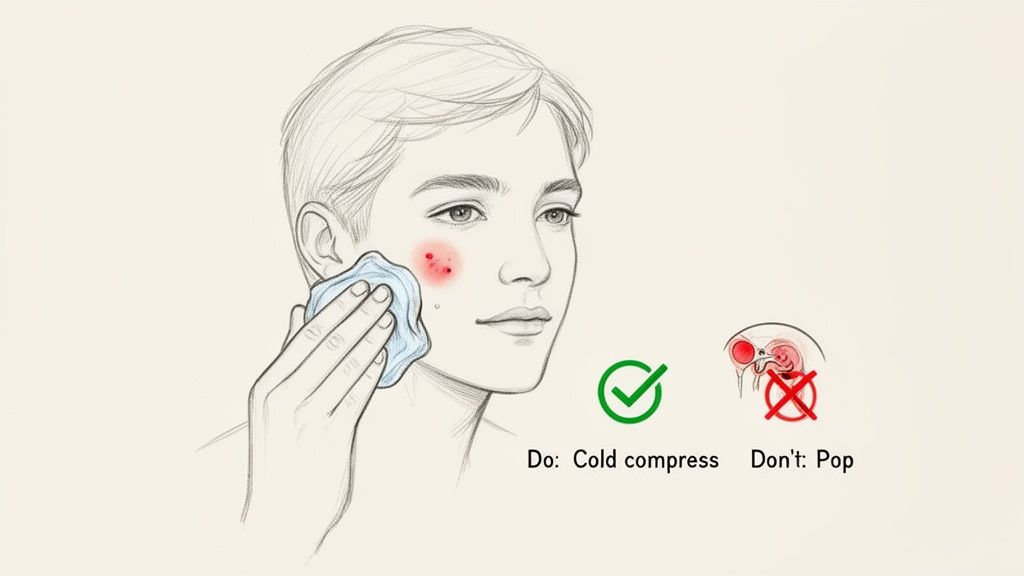
One of the easiest and most effective first steps? Grab some ice. Wrap an ice cube in a paper towel or a thin, clean cloth and gently hold it against the spot for a few minutes at a time. It’s a simple trick, but it works by constricting the blood vessels, which immediately dials down the swelling and that tell-tale redness. It's free, fast, and gives you a sense of control.
This simple "Calm, Treat, Cover" process is your blueprint for handling a breakout emergency without making it worse.
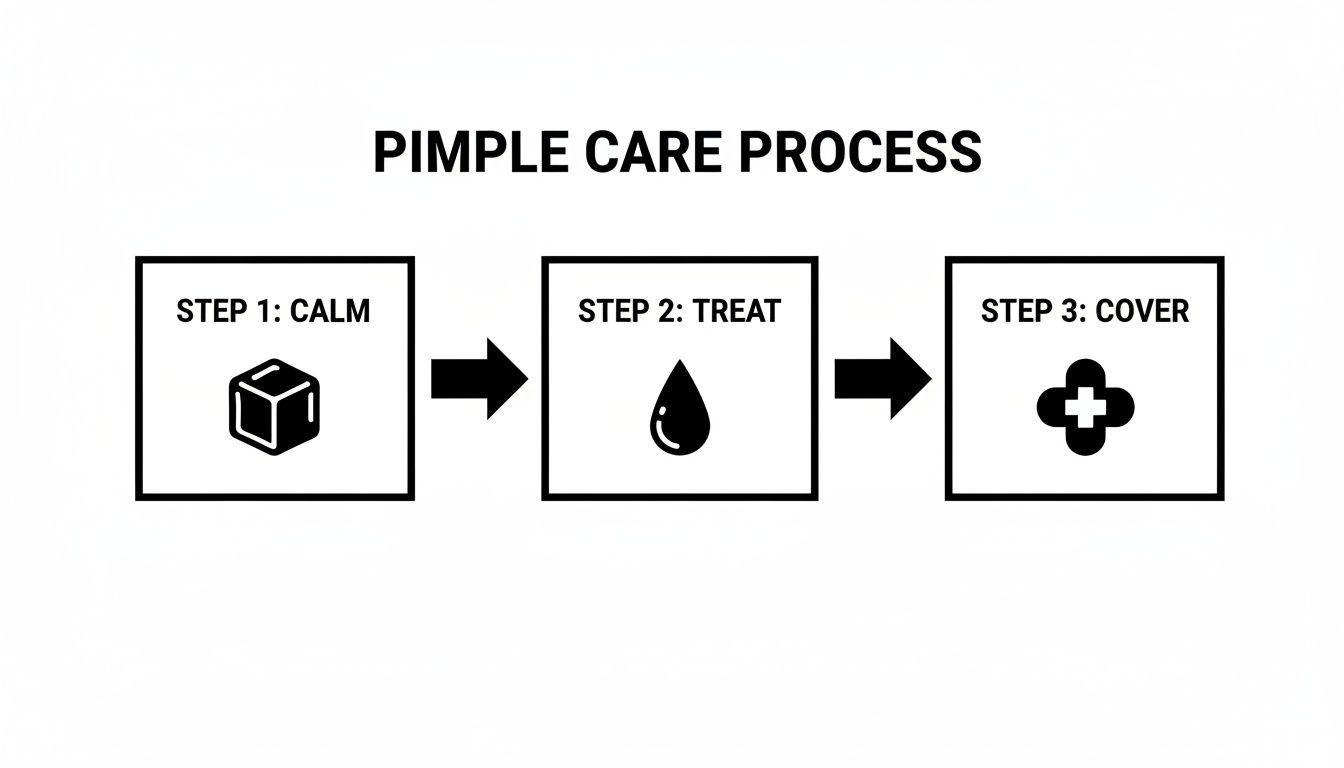
Following this flow keeps you from making impulsive mistakes and gives the blemish the best chance to heal quickly.
To help you navigate that critical first hour, here’s a quick rundown of what to do - and what to absolutely avoid.
Pimple Emergency Dos and Don'ts
| Do This Instead | Why It Works | Avoid This Mistake | Why It's Harmful |
|---|---|---|---|
| Apply a cold compress | Constricts blood vessels, reducing immediate redness and swelling. | Squeezing or popping | Pushes bacteria deeper, causes scarring, and can make the pimple much larger. |
| Gently cleanse the area | Removes surface oil and bacteria, preparing it for treatment. | Scrubbing aggressively | Irritates the inflamed skin, increasing redness and delaying healing. |
| Apply a spot treatment | Uses targeted ingredients to fight bacteria and reduce inflammation. | Piling on harsh products | Can dry out and damage the surrounding skin, making the blemish more obvious. |
| Cover with a hydrocolloid patch | Protects the area, absorbs fluid, and creates a healing environment. | Picking at the skin | Creates an open wound, invites infection, and leads to hyperpigmentation. |
Once you've successfully calmed the initial inflammation, you're ready for the treatment phase. This is where knowing how to use pimple patches correctly becomes your secret weapon for seeing real improvement overnight.
Let’s Talk About the Magic of Hydrocolloid Patches
If you need a pimple to look better by morning, a hydrocolloid patch is probably the closest thing to a magic wand you'll find. Seriously. These little stickers aren't just for covering up a spot; they actively get to work while you sleep, pulling you back from the brink of a breakout disaster.
Think of them as tiny, super-powered vacuums for your pores.
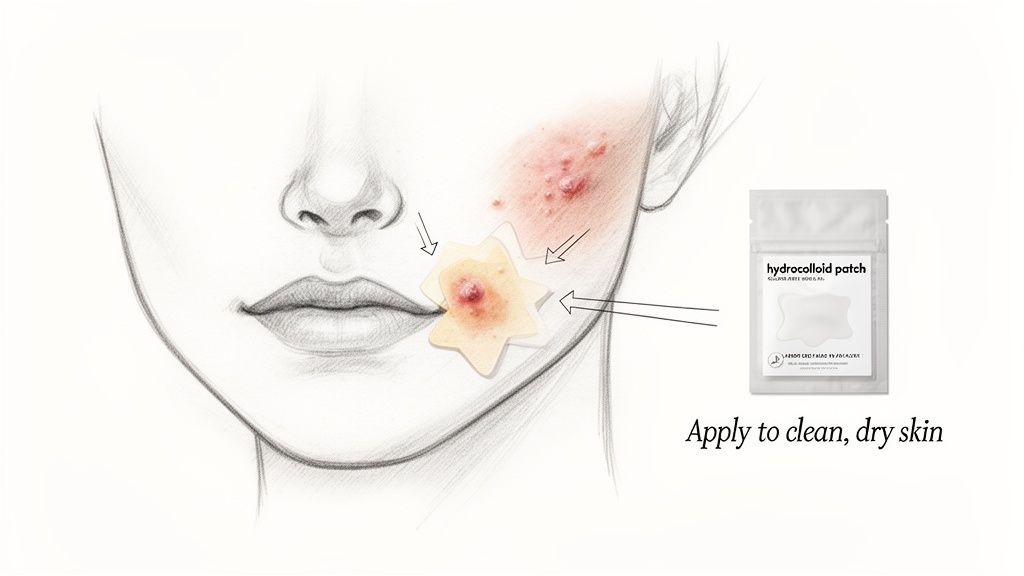
The secret is in the material itself. Hydrocolloid is a type of dressing that absorbs moisture, creating the perfect sealed, moist environment for healing. When you stick one on a pimple that’s come to a head, it gently starts drawing out all the gunk - the pus, oil, and fluid - that's trapped inside.
The result? The spot looks noticeably flatter and less angry overnight, all without you having to pop it or use any harsh, drying chemicals.
How to Get the Most Out of Your Pimple Patch
You can't just slap a patch on and expect miracles. A little prep work makes all the difference in whether it sticks properly and does its job.
- Start With a Clean Canvas: Gently wash your face with a mild cleanser and, this is key, pat your skin completely dry. Any leftover water, toner, or moisturizer will keep the patch from getting a good grip.
- Stick It On: Peel the patch from its backing and place it right over the center of the pimple. Press down gently for a few seconds, making sure the edges are sealed against your skin.
- Let It Work Overnight: Leave it on for at least six to eight hours. When you wake up, you’ll see a white spot in the middle of the patch. That’s not magic - that's all the gunk it pulled out of the pimple!
There's another huge benefit here: a patch acts as a physical shield. It literally stops you from picking, touching, or fiddling with the spot in your sleep, which is one of the fastest ways to make things worse and cause a scar.
Choosing the Right Patch for the Job
Not all patches are created equal. While a standard hydrocolloid patch is a fantastic starting point, some are supercharged with active ingredients for an extra boost. Brands like Livaclean offer patches that pack an extra punch.
- Salicylic Acid: This is a BHA that gets inside the pore to help dissolve the clog and calm inflammation from within.
- Tea Tree Oil: A well-known natural antibacterial that helps fight acne bacteria and reduce that angry redness.
The explosion in popularity of these patches isn't just a trend; the numbers are pretty staggering. The hydrocolloid patch market accounted for an 81.1% share of all anti-acne dermal patches in 2023. That market is expected to jump from USD 534.2 million to almost USD 1.4 billion by 2035. It makes sense, considering acne affects about one in five people globally.
These stats tell a story: people are moving away from aggressive, often irritating overnight "hacks" and toward smarter, gentler solutions that actually work. A patch protects your skin while it heals.
For a deeper dive into the science behind it all, check out our guide on how hydrocolloid pimple patches work.
Choosing the Right Spot Treatment for Your Blemish
We’ve all been there: a monster pimple shows up at the worst possible time, and the temptation is to throw every product in your cabinet at it. But not all pimples are created equal, and using the wrong treatment can make the situation a whole lot worse.
Think of it like being a detective. You need to identify the type of blemish you're dealing with before you can choose the right tool for the job. The potent cream that zaps a deep, painful cyst is totally different from what you'd use on a small whitehead. Learning to play matchmaker between your pimple and the right over-the-counter (OTC) active ingredient is the key to getting real results by morning.
Decoding the Actives
Let's break down the big three in the spot treatment world. Each one has a specific job, so knowing which to grab will save you a lot of frustration.
-
Benzoyl Peroxide: This is your go-to for angry, red, inflamed pimples (papules and pustules). It’s a beast at killing P. acnes, the bacteria that’s making that spot so sore and swollen. If you feel a tender bump forming under the skin without a visible head, a tiny dot of benzoyl peroxide can help stop it in its tracks.
-
Salicylic Acid: I like to call this one the "pore janitor." As an oil-soluble beta-hydroxy acid (BHA), it has a special talent for getting deep into your pores to dissolve the gunk - mostly dead skin cells and oil - that creates clogs. This makes it the champion for clearing out blackheads and whiteheads.
-
Sulfur: Don't sleep on sulfur! It's a bit of an old-school remedy, but it works. Often found in spot treatments and masks, it gently dries out the surface of a pimple and soaks up excess oil. It’s a fantastic option if your skin finds benzoyl peroxide too irritating but you still need to shrink a surfaced blemish.
A quick word of warning: stronger isn't always better. Drowning a pimple in a harsh active can easily lead to a chemical burn or a dry, flaky mess that’s even more difficult to cover with makeup. Trust me on this one.
A much smarter approach is to combine a gentle active ingredient with a protective barrier. This is where modern pimple patches have completely changed the game. The global market for these little wonders shot up from USD 601.8 million in 2023 and is expected to climb to USD 951.96 million by 2031. Why? Because they work, creating a perfect healing bubble while delivering ingredients exactly where they’re needed.
How to Use Spot Treatments Safely
Applying these ingredients correctly is everything. The goal is to treat the pimple without terrorizing the healthy skin around it.
Always, always apply a very thin layer directly onto the blemish itself. Avoid smearing it all over the place. Let it dry completely before you even think about putting on moisturizer or a pimple patch.
This targeted approach minimizes the risk of creating a bigger, flakier problem. For those early-stage, under-the-skin spots, you can get even more precise with something like microdart needle pimple patches, which deliver their ingredients right to the source before the pimple can fully erupt.
Safe Home Remedies That Actually Help
When a pimple crashes the party uninvited, our first instinct is often a frantic Google search that leads straight to the kitchen. But hold on before you reach for the toothpaste or a lemon. We need to talk about separating the helpful hacks from the genuinely harmful myths, because many popular DIY "cures" can make things so much worse.
Take toothpaste, for example. It's loaded with harsh ingredients like baking soda and hydrogen peroxide that have no business being on your delicate facial skin. This can easily lead to chemical burns and post-inflammatory hyperpigmentation - those stubborn dark spots that stick around long after the pimple is gone. Same goes for pure lemon juice; its high acidity can throw your skin's pH balance into chaos, leading to major irritation and redness.
Vetted Remedies to Try Instead
Instead of going to war with your skin, let's focus on gentle, proven ingredients that can calm inflammation without creating a bigger mess. The right at-home approach can be surprisingly effective.
Here are a few reliable options I've seen work:
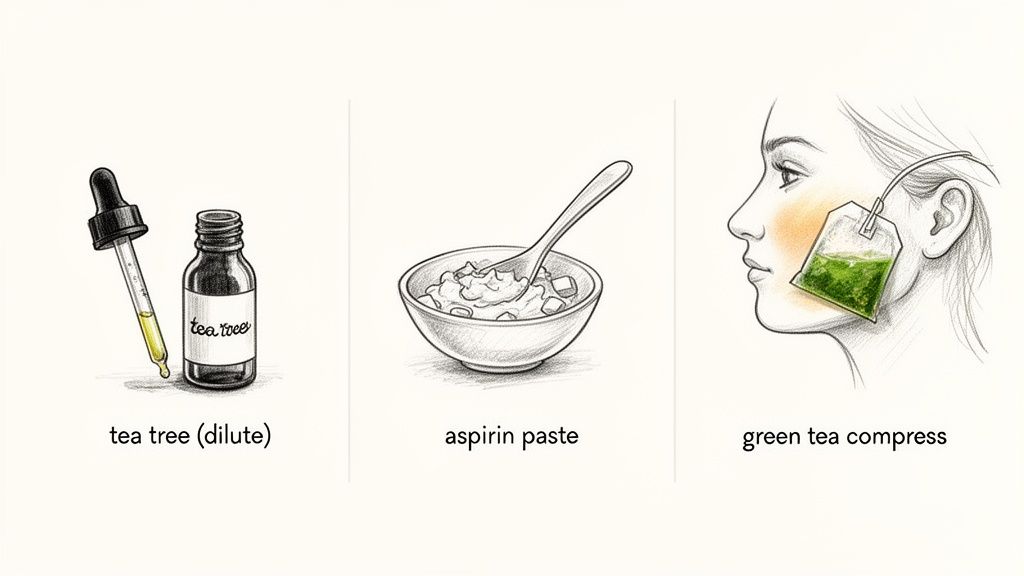
- Diluted Tea Tree Oil: This is a classic for a reason. Tea tree oil has natural antibacterial properties that can help knock out pimple-causing bacteria. The key word here is diluted. Never apply it directly to your skin, as its pure form is way too potent. Just mix one or two drops into a teaspoon of a carrier oil (jojoba or coconut oil work well) and dab it on the spot with a cotton swab.
- Green Tea Compress: The powerful antioxidants in green tea, especially one called EGCG, are fantastic for reducing inflammation and even oil production. It's simple: steep a green tea bag in hot water, let it cool down completely in the fridge, and then press the cool, damp bag against your pimple for a few minutes. It's surprisingly soothing.
- Crushed Aspirin Paste: This one might sound odd, but it makes sense when you remember that aspirin is a form of salicylic acid, a tried-and-true acne fighter. Just crush one uncoated aspirin tablet, mix it with a few drops of water to create a paste, and apply it directly to the pimple. Let it sit for about 10-15 minutes before rinsing it off.
Always - and I mean always - do a quick patch test on a small, discreet area of skin before putting any new home remedy on your face. This little step can save you from a major reaction and ensure your quick fix doesn't completely backfire.
Remember, the goal is to soothe, not scorch. Combining these gentle tricks with a solid skincare routine can make a real difference. For daily maintenance and keeping your skin's barrier happy and strong, a product like Livaclean's Hypochlorous Acid Mist is a great way to keep everything calm and balanced.
So, What Does "Getting Rid of a Pimple Overnight" Actually Mean?
Let's be real for a second. The idea of a pimple completely vanishing while you sleep is the dream, but it's not quite reality. True skin healing is a process, and no magic wand (or cream) can erase a blemish in just eight hours.
So, when we talk about getting rid of a pimple overnight, what we're really aiming for is a dramatic improvement. The goal isn't total disappearance. It's about waking up to a spot that's significantly less angry, swollen, and obvious.
Think of it as taking that big, painful, inflamed bump and shrinking it down to a small, flat mark that’s way less noticeable - and much easier to hide with a touch of concealer. That’s a huge win! Shifting your mindset this way is key. It helps you avoid frustration and steers you away from harsh, desperate measures that often just make things worse.
A Realistic "Before and After"
Picture this: You're getting ready for bed and spot a big, red, sore pustule setting up camp on your chin. It’s impossible to ignore. After a smart overnight routine - maybe a cold compress, a dab of spot treatment, and a hydrocolloid patch - you won't wake up to perfectly clear skin.
But what you will likely see is that the angry red has calmed down to a pale pink. The swelling will be noticeably down, leaving the spot much flatter. This is the realistic, achievable goal we're shooting for.
The true measure of success for an overnight treatment isn’t a miracle cure. It’s waking up feeling more confident because you’ve taken a pimple from a mountain to a molehill in just one night.
The Power of Smart, Targeted Care
Pulling off this kind of overnight transformation comes down to using the right tools for the job. Pimple patches are a perfect example of a product designed for exactly this kind of realistic, rapid result. They work by creating a moist, protected healing bubble over the blemish that pulls out fluid and gunk.
And people are catching on. The global pimple patch market is on track to hit USD 1.5 billion by 2032. Hydrocolloid patches are the fan favorite for a reason - they absorb pus, calm swelling, and act as a barrier to keep bacteria out. If you're curious, you can learn more about the science of pimple patches and what makes them so effective.
This incredible growth, detailed in recent market analyses, points to a major shift. We're all moving toward gentle yet powerful solutions that deliver visible improvements. By focusing on calming inflammation and protecting the blemish, you give your skin its best shot at looking dramatically better by morning.
Your Top Pimple Questions, Answered
When you're staring down a surprise pimple in the mirror, panic can set in, and a million questions start racing through your mind. It's totally normal. Let's walk through some of the most common "what if" scenarios so you can handle your next breakout emergency like a pro.
Can I Layer Different Spot Treatments for a Super-Powered Effect?
It's a tempting thought, isn't it? If one powerhouse ingredient is good, then two or three must be a knockout punch. Unfortunately, when it comes to potent acne actives, that logic can seriously backfire.
Think of it this way: ingredients like benzoyl peroxide and salicylic acid are designed to be effective on their own. When you start cocktailing them, you’re not speeding up healing - you’re basically creating a recipe for irritation. This often leads to excessive dryness, peeling, and redness, which can make the pimple look way worse and even damage your skin's protective barrier, prolonging the whole ordeal.
A much smarter approach is to stick with one targeted treatment. Apply a thin layer of your chosen product, let it dry completely, and then seal it in with a hydrocolloid patch. The patch creates a protected little healing bubble, letting that single active ingredient work its magic without any extra drama.
What Do I Do with a Pimple That Hasn't Come to a Head?
Ah, the dreaded "blind" pimple - that deep, sore, under-the-skin bump with no visible whitehead. These are usually cysts or nodules, and since popping is completely out of the question (seriously, don't even try), the goal shifts from extraction to calming things down.
Your first line of defense is a cold compress. Wrap an ice cube in a thin cloth and gently hold it against the spot for 10-15 minutes at a time, a few times throughout the evening. This is a game-changer for reducing swelling and taking the edge off the pain.
Next, reach for a hydrocolloid patch. While a plain patch won't be able to draw out pus that’s trapped deep down, a medicated one can be incredibly helpful. Look for patches infused with calming ingredients like salicylic acid to deliver soothing benefits right where they're needed. More importantly, the patch acts as a physical shield, keeping your fingers off the sore spot and preventing any mindless picking.
The key with a blind pimple is to play the long game. Your job is to reduce inflammation and let your body's healing process take over. Forcing it will only lead to damage and potential scarring.
What's the Safest Overnight Fix for Really Sensitive Skin?
If your skin throws a fit at the mere mention of new products, finding a spot treatment can feel like navigating a minefield. For you, the gentlest and safest overnight option is, without a doubt, a plain, non-medicated hydrocolloid patch.
This kind of patch works its magic purely through absorption. It creates a moist, clean environment over the blemish, gently pulling out fluid and gunk while shielding it from bacteria and your own wandering hands. It’s all the benefits of a healing environment without any active ingredients that could cause a reaction.
Just make sure to apply it to clean, completely dry skin. Any lingering moisture or product residue will keep the patch from sticking properly. And as always with sensitive skin, it’s a good idea to patch-test any new product on a small, hidden area first, just to be safe.
Is It Weird to Wear a Pimple Patch During the Day?
Absolutely not! In fact, wearing one during the day can be a huge boost to the healing process. Many of today’s pimple patches are designed to be ultra-thin and translucent, making them pretty discreet for daytime use.
Think about it: a patch creates a sealed barrier that protects the spot from makeup, pollution, and (most importantly) your fingers. This prevents further irritation and keeps new bacteria from getting in. Plus, some brands have even made them fun, turning a blemish into a style statement. Keeping a pimple covered 24/7 helps it stay in that perfect healing zone, which ultimately means it goes away faster.
Navigating surprise breakouts is so much easier when you have the right tools in your corner. For a gentle yet powerful solution that works day or night, Livaclean offers a range of hydrocolloid patches designed to calm, protect, and heal. Check out the full collection and be ready for your next pimple emergency.