

The Best Overnight Acne Treatment for Visibly Clearer Skin
Waking up to clearer skin isn't about some magic potion - it's about a smart, targeted approach using ingredients that work hard while you rest. The best overnight acne treatment is one that matches the right ingredient, like salicylic acid, benzoyl peroxide, or a hydrocolloid patch, to your specific type of pimple. This is how you calm things down and speed up healing for real results by morning.
Your Guide to Waking Up with Clearer Skin
We’ve all been there. You feel a new pimple brewing the night before a big presentation or a first date. That sinking feeling is universal. But what if you could fight back effectively while you sleep? This guide is your practical plan for doing just that - calming down inflammation and kickstarting the healing process overnight.
We're going to cut through the marketing noise and get straight to what actually works. From picking the right active ingredient for that specific breakout to mastering the art of the pimple patch, the goal is simple: avoid waking up to a bigger, angrier blemish.
Why Overnight Treatments Are So Popular
The desire for a quick fix has turned skincare into a massive industry. The global acne treatment market is booming, hitting USD 11.6 billion recently and on track to reach USD 16.3 billion by 2030. Topical treatments are leading the charge, grabbing a huge 41% market share because they're so easy to dab on before bed. You can explore more details on the acne treatment market to see just how big this trend is.
This guide will show you how a targeted nighttime routine, built around heroes like salicylic acid, benzoyl peroxide, and hydrocolloid patches, can genuinely change your skin.
You'll learn how to layer products for the biggest impact without causing irritation, ensuring you treat the spot effectively. This isn't about miracle cures; it's about smart, science-backed strategies that deliver visible results.
Get ready to build a simple but powerful overnight arsenal that puts you back in control of your skin. We'll get into:
- How to prep your skin so treatments can actually sink in and work.
- Which active ingredient is the right choice for your specific pimple.
- The correct way to use pimple patches for the best results.
To make things even easier, here's a quick cheat sheet on the most effective overnight treatments and what they're best for.
Quick-Action Overnight Acne Treatment Options
| Treatment Type | Best For | How It Works Overnight |
|---|---|---|
| Salicylic Acid Spot Treatment | Blackheads, whiteheads, and small red pimples | Exfoliates inside the pore to dissolve oil and dead skin, reducing clogs while you sleep. |
| Benzoyl Peroxide Cream/Gel | Inflamed red pimples (papules and pustules) | Kills acne-causing bacteria and helps reduce the swelling and redness of angry breakouts. |
| Hydrocolloid Patches | Pimples that have come to a head (with visible pus) | Creates a moist healing environment, absorbs pus and oil, and protects the spot from bacteria and picking. |
| Sulfur or Clay Masks | Oily T-zones and multiple small breakouts | Draws out excess oil and impurities from the pores, calming inflammation and drying up surface-level spots. |
This table should help you quickly pinpoint the best battle plan for whatever pops up, so you can go to bed feeling confident you’re on the right track.
Prepping Your Skin for Nightly Treatment
Think of it this way: an amazing overnight spot treatment is only as good as the canvas it’s applied to. If you just slap a potent formula onto unwashed, irritated skin, you're likely setting yourself up for more trouble.
The absolute first step - the foundation of any good acne routine - is starting with a gentle, pH-balanced cleanser. This isn't just about washing your face. It’s about clearing away the day's grime, oil, and makeup without stripping your skin's protective barrier, which is working overtime to heal that blemish.
So many of us make the mistake of trying to aggressively dry out a pimple. We reach for the harshest scrub or the most astringent toner we can find. But this almost always backfires. Your skin panics, produces even more oil to compensate, and you get stuck in a frustrating cycle of breakouts and inflammation.
Creating a Calm Canvas for Treatment
The goal here is to create a calm, balanced, and hydrated surface. When your skin is in this state, your spot treatment can actually get to work where it needs to, minimizing the risk of waking up to a dry, flaky patch that's still red and angry.
Pro Tip: Don't fear hydration, even on a pimple. A hydrated environment actually helps your skin's natural healing process along. A totally dried-out spot is way more likely to leave behind a stubborn dark mark.
Here’s a simple, effective way to prep your skin:
- Cleanse Gently. No surprises here. Use a non-stripping cleanser and lukewarm water. When you're done, pat your skin dry with a clean towel. Please, don't rub!
- Soothe and Hydrate. A little bit of hydration post-cleansing can make a world of difference. A quick spritz of a soothing face mist helps take the edge off any redness before you move on to your treatment. For example, a simple hypochlorous acid mist can prep your skin and help products absorb better.
- Apply to Dry Skin. Before you stick on that pimple patch or dab on your spot treatment, make sure the blemish and the area right around it are completely dry. This is key for getting maximum adherence and effectiveness.
Choosing Your Go-To Overnight Acne Fighter
Let's get one thing straight: not all pimples are created equal. That deep, sore bump brewing under your skin needs a totally different game plan than the small whitehead that just showed up.
Picking the right active ingredient is everything. Think of it like this: you wouldn't use a tiny bandage for a huge scrape, right? Same logic applies here. Using the right "tool" for the job means the blemish shrinks faster, with way less irritation.
For Those Angry, Red Pimples: Benzoyl Peroxide
When you're dealing with a red, inflamed, and painful pimple - the kind that throbs a little - benzoyl peroxide is your best friend. This stuff is a true powerhouse because it goes straight to the source, killing the acne-causing bacteria hiding deep inside your pore.
It's especially brilliant for those tender-to-the-touch spots. By knocking out the bacteria, it quickly calms that angry inflammation, helping shrink the pimple's size and redness while you sleep. In fact, some clinical data shows a 60% reduction in mild acne lesions after just one night of use. That kind of rapid action is why the topical acne treatment market is booming, valued at a massive USD 12.21 billion. If you're curious, you can learn more about recent acne treatment market trends and what's new.
For Clogged Pores and Blackheads: Salicylic Acid
If your main battle is with clogged pores, blackheads, or those little non-inflamed whiteheads, then salicylic acid is the clear winner. As a beta-hydroxy acid (BHA), its superpower is being oil-soluble. This means it can dive deep into your pores and dissolve the gunk - that lovely mix of dead skin cells and oil - that's causing the blockage in the first place.
Unlike benzoyl peroxide, its job isn't really about killing bacteria. It's more of a chemical exfoliant, sweeping out the pores to keep them clean. If you're also trying to smooth out your skin's texture and stop future breakouts, adding exfoliating pads into your routine can be a game-changer. You might want to check out our guide on how 20% glycolic acid peel pads work for an extra boost.
To make it even clearer, let's put these two heavy hitters side-by-side. Knowing the difference will save you a lot of time and frustration.
Active Ingredient Showdown: Salicylic Acid vs. Benzoyl Peroxide
| Feature | Salicylic Acid | Benzoyl Peroxide |
|---|---|---|
| Best For | Blackheads, whiteheads, clogged pores, minor bumps | Inflamed red pimples (papules & pustules), cystic acne |
| Primary Action | Exfoliates and dissolves pore-clogging debris | Kills acne-causing bacteria (C. acnes) |
| How It Works | Oil-soluble, penetrates pores to clear them out | Releases oxygen to destroy bacteria deep in the pore |
| Potential Side Effects | Can be drying, mild peeling | Can be very drying, cause redness, and bleach fabric |
| Best Way to Use | All-over treatment (toner, serum) or spot treatment | Spot treatment only for inflamed blemishes |
Ultimately, having both in your skincare arsenal is a smart move. You can pull out the right one depending on what your skin is throwing at you that day.
Key Takeaway: Grab benzoyl peroxide for red, angry pimples and salicylic acid for clogged pores and blackheads. Using the wrong one is like trying to unlock a door with the wrong key - it just won't work and might make things worse.
For Pimples with a Head: Hydrocolloid Patches
Okay, for that pimple that has already come to a head with a visible white top? Nothing, and I mean nothing, works better than a hydrocolloid patch.
These genius little stickers are basically tiny, super-absorbent bandages for your zit. They create a clean, moist environment that helps the blemish heal. Overnight, the patch gently pulls out all the pus and fluid from the whitehead. You’ll see the proof on the patch in the morning - it's gross but so satisfying.
They also have a secret second job: they create a physical shield that stops you from picking. We all know we shouldn't, but it's hard! This barrier is crucial for preventing acne scars. Some of the newer patches are even infused with ingredients like salicylic acid, giving you a one-two punch of treatment and protection.
Mastering the Pimple Patch for Best Results
Pimple patches have totally blown up, becoming a must-have in any overnight acne game plan. And for good reason. These tiny stickers are way more than just a cover-up; they’re a targeted treatment that gets to work while you’re asleep. The secret sauce is hydrocolloid technology, a material that creates a moist, protected environment perfect for healing.
This little bubble of a healing environment is what makes them so effective. It gently coaxes out all that fluid, pus, and oil from a whitehead - which is why the patch turns that satisfying opaque white by morning. It’s also a physical shield, keeping out bacteria and, just as importantly, your own fingers. No picking means less chance of scarring.
How to Use Patches Like a Pro
To get the most out of every patch, you have to nail the application. Always, always stick it on completely clean and dry skin. If there's any leftover moisture from a toner or moisturizer, the patch won't get a good grip and will probably slide off in the middle of the night.
- Choose the Right Size: Grab a patch that’s slightly bigger than the blemish. You want the hydrocolloid material to completely cover the spot with a secure seal around the edges.
- Know When to Apply: Patches are clutch for pimples that have already come to a head. For a ripe whitehead, you can very gently prick the surface with a sterilized needle to help it drain, but never, ever squeeze it.
- Be Patient: Let it do its thing. The patch needs at least 6-8 hours (overnight is perfect) to really absorb the gunk and flatten the spot.
Spot treatments are changing how we deal with acne, and it’s no surprise that topical products like patches now dominate 45.3% of the market. Why? Because they target the problem precisely. A good hydrocolloid patch can shrink a pimple by 25-40% in just one night.
This flowchart can help you figure out the best overnight move for whatever kind of pimple you're dealing with.
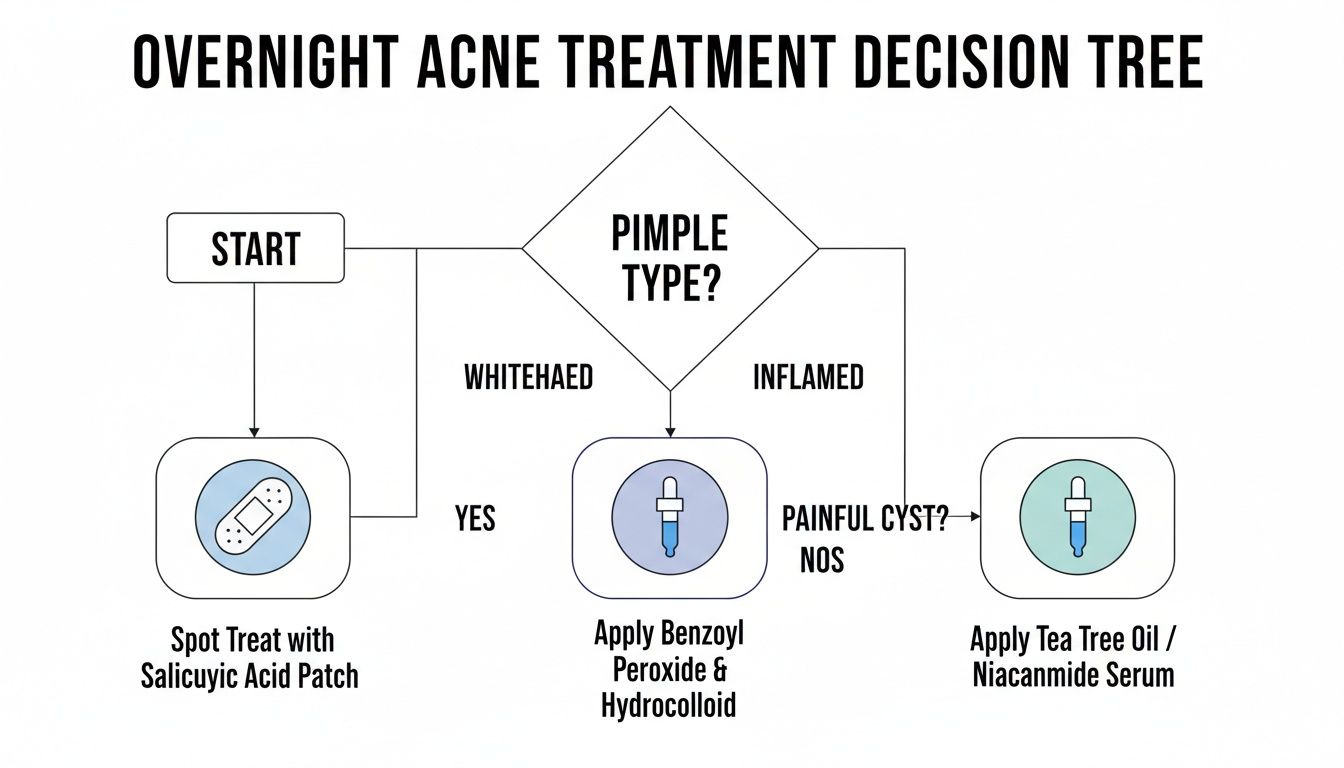
As you can see, a hydrocolloid patch is your go-to for a whitehead, but a more angry, inflamed spot might need a different plan. If you want to get into the nitty-gritty, we have a deep dive on how hydrocolloid pimple patches work that you might find interesting.
Key Takeaway: Seeing the patch turn white isn't just oddly satisfying - it's visible proof that it's pulled out all the impurities. This simple tool is a powerful player in your skincare arsenal.
What to Do the Morning After Your Treatment
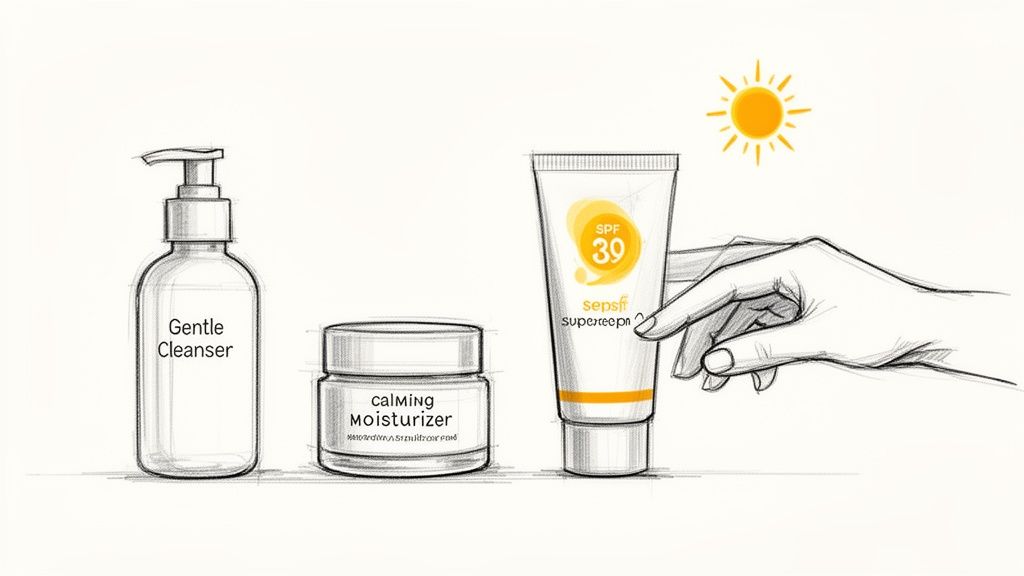
So, you made it through the night. The work of your overnight treatment doesn’t stop when the alarm goes off, though. Your morning-after routine is just as important for helping that spot heal properly and preventing pesky dark marks.
First up, a gentle cleanse. You need to wash away any leftover product from the night before, but this is not the time for scrubbing. A mild, non-stripping cleanser will do the trick without aggravating the already sensitive area.
Next, it’s all about putting moisture back in and supporting your skin barrier. Let’s be real - even the best spot treatments can be pretty drying. Fight back with a calming moisturizer or a simple hydrating serum. If your skin is feeling extra stressed, a quick spritz of a hydrating face mist with thermal spring water can do wonders to take down any lingering redness.
Your Most Important Morning Step
Now for the final, most critical part of your morning-after plan: sunscreen. This is absolutely non-negotiable. Many of those powerhouse acne fighters, like benzoyl peroxide and salicylic acid, make your skin much more sensitive to the sun.
Sun exposure on a healing blemish is a fast track to developing a dark mark that can linger for months. Protecting your skin with a broad-spectrum sunscreen of at least SPF 30 is your best defense against this.
Think of it this way: you did all the hard work overnight to shrink the pimple. Don't let five minutes in the sun create a whole new problem. Sunscreen shields that vulnerable skin, giving it a chance to heal properly and keeping the treated spot from turning into a stubborn dark mark.
Common Questions About Overnight Acne Treatments
When you're dealing with a surprise breakout, it's easy to have a million questions running through your head. Getting the right answers is crucial for treating that spot effectively without accidentally making things worse.
One of the biggest mistakes I see people make is going into panic mode and throwing everything at the pimple at once. It’s a tempting thought - more products, faster results, right? Unfortunately, skincare doesn't usually work that way.
Can I Use Multiple Spot Treatments on One Pimple?
It’s best to stick to just one. When you start cocktailing potent ingredients like benzoyl peroxide and salicylic acid right on top of each other, you’re basically asking for trouble. This can lead to some serious irritation, redness, and dryness.
Instead of helping, this chemical overload can make the pimple even angrier and actually slow down the healing process.
Think of it this way: you can totally use a salicylic acid cleanser during your routine and then apply a benzoyl peroxide spot treatment later, but never layer two heavy-duty leave-on treatments on the same spot.
The goal is to treat the spot, not attack it. Overwhelming the skin with too many actives will only compromise your skin barrier and delay healing. Choose one hero ingredient and let it work its magic.
How Do I Know if a Pimple Patch Is Working?
The proof is right on the patch! A hydrocolloid patch is doing its job when it turns from clear to an opaque, milky white. That's the visual cue that it has successfully sucked up all the gunk - like pus and oil - from the blemish.
If you want to get into the nitty-gritty, we have a full guide on how pimple patches work on unpopped pimples.
After you've worn it for about 6-8 hours (overnight is perfect), the pimple itself should look way less dramatic - smaller, flatter, and not nearly as red. If the patch is still clear when you peel it off, it just means the pimple probably didn't have a head yet or there wasn't enough fluid for the patch to absorb.