

Find the Best Drugstore Acne Treatments That Actually Work
The most effective drugstore acne treatments are powered by some seriously potent, science-backed ingredients like salicylic acid, benzoyl peroxide, and adapalene. And the best part? These affordable heroes - from cleansers to those clever little hydrocolloid patches - can manage mild to moderate acne incredibly well without making your wallet cry.
Your Guide to Finding Clear Skin in the Drugstore Aisle
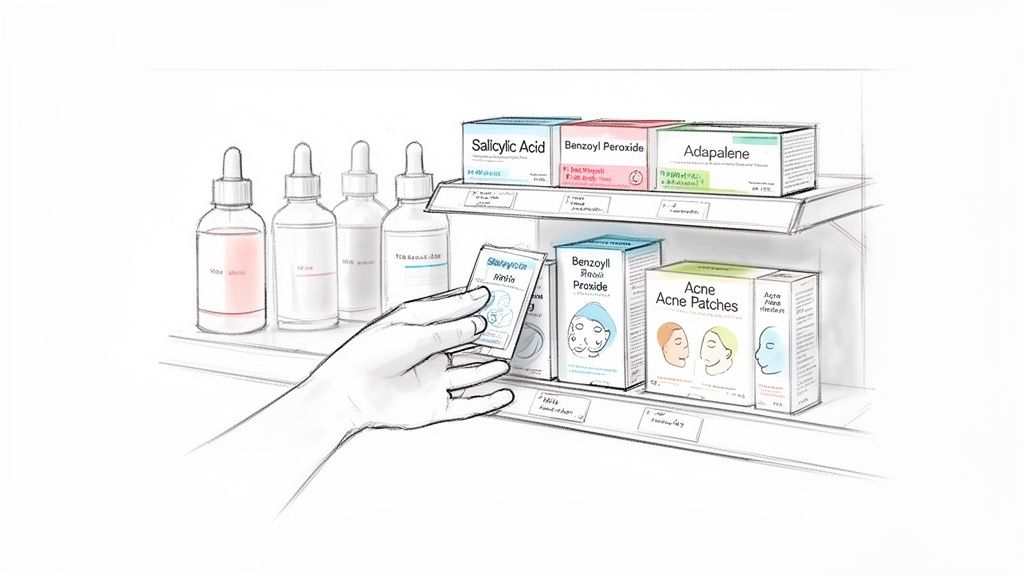
Walking down the skincare aisle can feel like a pop quiz you didn't study for. With a zillion products all screaming miraculous results, it's easy to assume clear skin costs a fortune. But the real secret isn't hiding in a fancy department store - it's right there in your local drugstore.
Forget the marketing hype. This guide is here to show you how to build a powerhouse anti-acne routine on a budget. The magic isn't in the brand name; it's all about the active ingredients working behind the scenes.
Why Drugstore Skincare Is a Smart Choice
This isn't just a fluke; accessible skincare has totally shaken up the industry. The global acne treatment market hit a staggering USD 11.6 billion and is still climbing. A massive 35.9% of that market share comes from over-the-counter (OTC) drugstore products, making them the go-to for most people. You can read more about acne treatment market trends to see just how big this is.
This boom is great news for us. It means more research, better formulas, and easier access to top-notch ingredients at prices that don't make you wince.
Here’s why starting your journey in the drugstore aisle just makes sense:
- Real, Science-Backed Ingredients: You can find the same stuff dermatologists recommend - like salicylic acid, benzoyl peroxide, and even retinoids like adapalene - right on the shelf.
- A Tool for Every Job: From gentle daily cleansers to heavy-hitting spot treatments and those amazing hydrocolloid patches that seem to work overnight, drugstores have it all.
- Consistency Without the Cost: Let's be real, clear skin is a marathon, not a sprint. Affordable products mean you can actually stick to your routine long-term, which is what really gets results.
Honestly, the key to winning with drugstore acne treatments is knowing what you're buying and how to use it. It all comes down to matching the right active ingredient to your specific skin situation.
To make that easier, here's a quick rundown of the main players you'll be meeting.
Quick Guide to Top Drugstore Acne Fighters
This table is your cheat sheet. Use it to quickly figure out which ingredient is the right match for the type of breakouts you're dealing with.
| Active Ingredient | Best For | How It Works |
|---|---|---|
| Salicylic Acid | Blackheads, whiteheads, and clogged pores (non-inflammatory acne) | An oil-soluble exfoliant that gets deep into pores to dissolve gunk and dead skin cells. |
| Benzoyl Peroxide | Red, angry pimples (inflammatory acne like pustules and papules) | Kills acne-causing bacteria on the surface of the skin and inside the pores. |
| Adapalene | Persistent acne, clogged pores, and preventing future breakouts | A retinoid that regulates skin cell turnover to stop pores from getting clogged in the first place. |
| Hydrocolloid | Pimples that have come to a head (pustules with visible pus) | A wound-healing material that absorbs fluid and pus, creating a moist environment to speed up healing. |
Think of these as your core toolkit. Once you know which ingredient to look for, shopping becomes a whole lot less intimidating.
What You Will Learn in This Guide
We’re going to break it all down. By the end, you'll be able to read an ingredient label like a pro and build a routine that actually works for your skin - whether it’s oily, dry, sensitive, or a little bit of everything.
Ready to get started on the path to clearer, happier skin? Let's go.
Understanding the Powerhouse Ingredients in Your Products
Walking down the drugstore aisle can feel completely overwhelming. But once you learn to speak the language of skincare, it all gets a lot easier. The secret to finding the best acne treatments isn't about the flashy brand name - it's about the powerhouse active ingredients listed on the back of the bottle.
Think of these ingredients as specialized tools in a toolkit, each designed to tackle a different aspect of a breakout. Picking the right one is your first step toward building an effective, budget-friendly routine. Let's decode the most common acne-fighting heroes so you can shop like a pro.
Salicylic Acid: The Pore Cleaner
If you're constantly battling blackheads and whiteheads, salicylic acid needs to be your new best friend. It’s a beta-hydroxy acid (BHA), which just means it's oil-soluble. This unique property lets it dive deep inside your pores to dissolve the gunk - like dead skin cells and excess oil - that causes clogs in the first place.
Imagine your pore is a clogged drainpipe. Salicylic acid is like a tiny, gentle pipe cleaner that works its way down to clear the blockage from the inside out. This makes it a rockstar for non-inflammatory acne, which is really just trapped debris. You'll find it in cleansers, spot treatments, and exfoliating pads. And if you're looking for another great exfoliating option, our guide to using glycolic acid peel pads can offer more insights for achieving smoother skin.
Benzoyl Peroxide: The Bacteria Eliminator
For those red, angry, and sometimes painful pimples, benzoyl peroxide is the gold standard. Unlike salicylic acid, its main job is to kill P. acnes, the specific bacteria that thrives in clogged pores and triggers all that inflammation.
Think of it as an oxygen bomb for your pores. Benzoyl peroxide releases oxygen, creating an environment where acne-causing bacteria simply can't survive. It's a fast-acting solution for inflammatory acne and comes in different strengths, usually from 2.5% to 10%.
Pro Tip: If you're new to benzoyl peroxide, always start with a lower concentration (like 2.5% or 5%) to see how your skin handles it. A higher strength isn't always better and can sometimes lead to serious dryness and irritation.
Adapalene: The Pore Trainer
Once a prescription-only ingredient, adapalene is now one of the most powerful acne fighters you can get over the counter. It's a type of retinoid that works on a cellular level to stop breakouts before they even have a chance to start.
Adapalene is like a "pore trainer." It gets your skin cell turnover on a regular schedule, making sure old cells shed properly instead of sticking together and forming clogs. This preventative action makes it a fantastic long-term solution for stubborn, persistent acne. In North America, which makes up over 53% of the global market, teens and young adults often start with drugstore staples. It's no surprise that FDA-approved OTC options like adapalene gel are used in 41% of treatments for mild cases. You can read more about the rise of OTC acne medication and its impact.
Gentler Alternatives for Sensitive Skin
The big three aren't for everyone. If your skin is sensitive or you find the go-to treatments too drying, there are some incredible, gentler alternatives that still get the job done.
- Sulfur: This ingredient works by drying out the skin's surface to soak up excess oil and slough off dead skin cells. It's especially good for whiteheads and has natural anti-inflammatory properties, making it a great choice for spot treatments.
- Niacinamide: A form of vitamin B3, niacinamide is a true multi-tasker. It helps regulate oil production, calm down inflammation and redness, and strengthen the skin's protective barrier. While it won't clear severe acne on its own, it’s a fantastic supporting player in any anti-acne routine.
- Azelaic Acid: Known for being both anti-inflammatory and antimicrobial, azelaic acid helps unclog pores and even out skin tone. It’s a gentler exfoliant that works on both blackheads and red pimples, making it a super versatile pick.
By understanding what these ingredients actually do, you can finally see past the flashy marketing claims and focus on what works. Reading that active ingredients list is your new superpower - use it to pick the product that will deliver the clear results you've been looking for.
Choosing the Right Product Format for Your Acne
Picking the right active ingredient is a huge win, but it's only half the battle. To truly get the best drugstore acne treatments working for you, you also need to choose the right product format.
Think of it this way: the same ingredient - say, salicylic acid - will act very differently in a daily cleanser versus a super-concentrated spot treatment. It's like cooking. You wouldn't use a giant chef's knife for delicate peeling; you'd grab a paring knife. Skincare works the same way. The format you choose dictates how intensely the ingredient works and where you apply it.
Getting a handle on these different product types helps you build a routine that not only works but actually fits into your life. Let's break down the most common options you'll find lining the drugstore shelves.
Daily Cleansers for Prevention
Acne-fighting cleansers are your first line of defense. They're designed for broad, preventative use across your entire face, making them a fantastic starting point for managing breakouts.
Because you wash them off after a minute or so, the concentration of active ingredients is usually lower. This makes them gentle enough for daily use without causing a ton of irritation. This "short contact therapy" is an excellent way to introduce your skin to actives without totally overwhelming it.
- When to Use Them: A medicated cleanser is perfect if you have mild but persistent acne, generally oily skin, or are prone to blackheads and clogged pores all over.
- How They Work: They deliver a low, consistent dose of an ingredient like salicylic acid to keep pores clear or benzoyl peroxide to keep bacteria in check day after day.
The decision tree below can help you zero in on the right active ingredient for your specific type of acne, which will make picking a cleanser (or any other product) much easier.
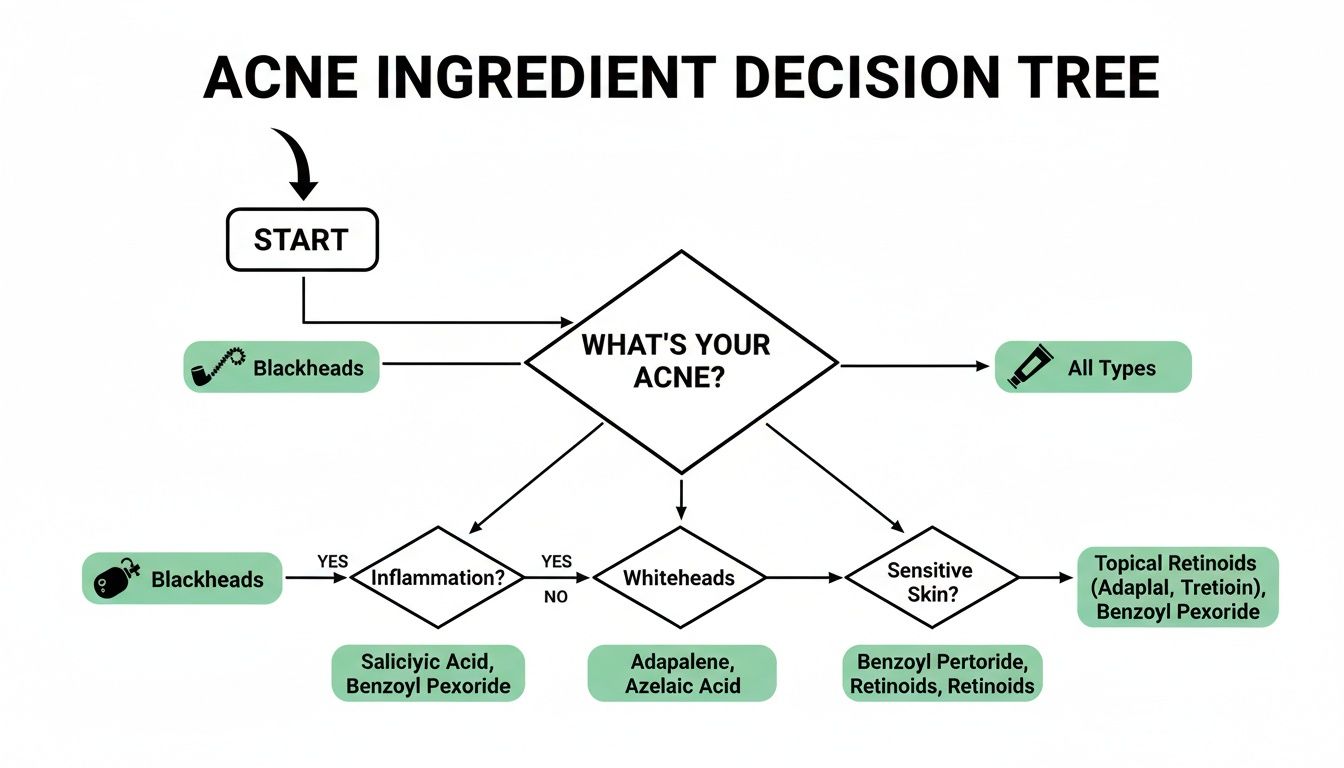
As you can see, the flowchart simplifies things. Got clogged pores? Salicylic acid is your friend. Dealing with red, angry pimples? Benzoyl peroxide is a better bet.
Serums and Gels for Widespread Treatment
When you need a more sustained attack on acne across larger areas, serums and gels are your go-to. These are leave-on products, meaning the active ingredients stay on your skin much longer to do their work.
For example, a serum or gel with adapalene is meant to be applied to the entire face (or at least all your breakout-prone zones). It works quietly in the background to regulate skin cell turnover and prevent pores from getting clogged in the first place. They’re usually lightweight and sink in quickly, so they layer beautifully under your moisturizer and sunscreen.
Targeted Spot Treatments for Emergencies
Spot treatments are the firefighters of your skincare routine. These are highly concentrated formulas designed to be dabbed directly onto a single pimple to knock down its size and redness - fast.
A good spot treatment is non-negotiable for anyone dealing with breakouts. It’s your emergency tool for tackling a surprise pimple before a big day, delivering a powerful punch of ingredients exactly where you need it most.
These power-packed treatments usually come as potent creams or gels. Because they're so strong, you should only use them on the blemish itself. Slathering them all over your face is a recipe for dryness and irritation on otherwise healthy skin.
Acne Patches for Healing and Protection
The newest star in the drugstore aisle is the acne patch, and for good reason. These little adhesive dots are typically made from hydrocolloid, a medical-grade material that was first used in wound care.
When you stick a hydrocolloid patch over a pimple, it does two incredible things:
- It Absorbs: The patch gently sucks out all the fluid and gunk from the pimple. That satisfying white spot you see on the patch after a few hours? That's proof it's working.
- It Protects: It creates a moist, clean barrier over the blemish. This shield keeps bacteria out, stops you from picking (we all do it!), and creates the perfect environment for the skin to heal faster with less risk of scarring.
These discreet little healers are becoming incredibly popular. In fact, the anti-acne dermal patch market hit USD 534.2 million and is expected to climb to USD 1.4 billion by 2035, as people everywhere look for simple, effective fixes.
Many modern patches are now infused with active ingredients like salicylic acid, combining the healing magic of hydrocolloid with proven acne-fighting power. Livaclean, for example, offers smart options that make treating pimples both effective and ridiculously easy. You can learn more about how hydrocolloid pimple patches work in our detailed guide. They are the perfect blend of active treatment and physical protection.
To help you figure out which product type is right for your daily routine versus a pimple emergency, here’s a quick breakdown.
Drugstore Treatment Formats At a Glance
| Treatment Format | Best For | Application Tip | Key Benefit |
|---|---|---|---|
| Cleanser | Mild, widespread acne; preventative care; oily or congested skin | Use daily, massaging for 60 seconds before rinsing | Gentle, consistent maintenance |
| Serum/Gel | Treating larger breakout-prone areas; preventing future acne | Apply a thin layer to affected zones before moisturizing | Sustained, all-over treatment |
| Spot Treatment | Individual, inflamed pimples that need to be zapped fast | Dab a tiny amount directly onto the blemish only | High-potency, targeted emergency relief |
| Acne Patch | Whiteheads or pimples with a head; protecting from picking | Apply to clean, dry skin and leave on for at least 6-8 hours | Absorbs gunk, speeds healing, prevents scars |
Ultimately, the best approach often involves using a combination of these formats. A daily cleanser for prevention, a serum for maintenance, and a spot treatment or patch for those unwelcome surprises.
How To Build Your Daily Anti-Acne Skincare Routine
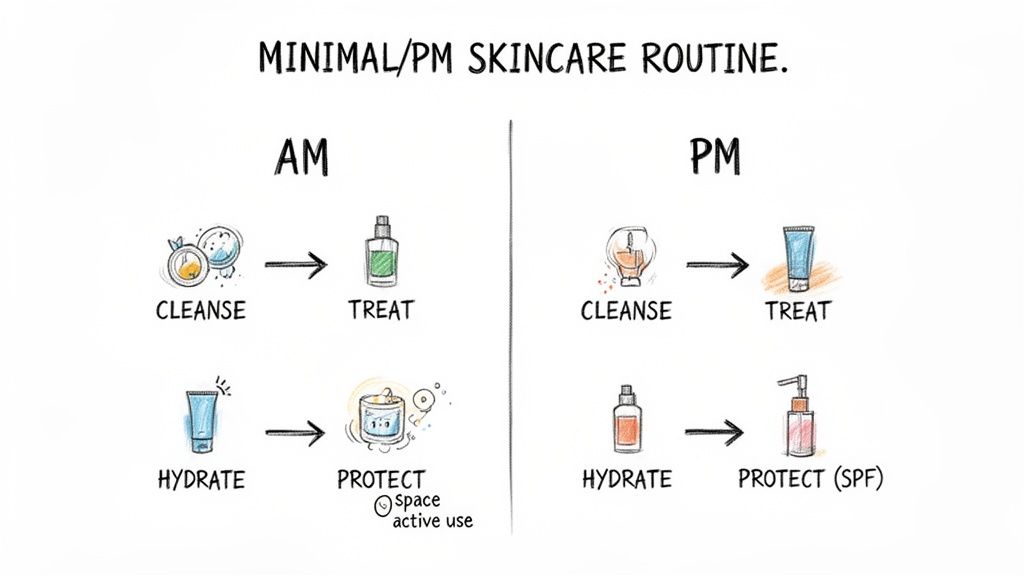
Knowing the difference between salicylic acid and benzoyl peroxide is a great start. But the real magic happens when you bring these ingredients together in a consistent, daily routine.
Building an effective skincare plan isn't about piling on a dozen different products. It's about using a few smart ones, in the right order, every single day. Think of it as a simple recipe for clear skin - one you can actually stick to. The goal is a balanced system that zaps active breakouts, stops new ones from showing up, and keeps your skin healthy without turning it into a red, flaky mess.
Your Foundational Morning Routine
The mission for your morning routine is twofold: protect your skin from whatever the day throws at it and create a smooth base for any makeup you might wear. It should be quick, effective, and all about defense.
- Cleanse: Start with a gentle, non-medicated cleanser. Your skin has been resting all night, so there’s no need to bring out the heavy-duty stuff. A simple wash removes overnight oil and leftover products, giving you a clean canvas.
- Treat (Optional): If you have a favorite lightweight serum - maybe one with an antioxidant like niacinamide - now's the time. But if your skin leans sensitive, you might want to save the more potent active ingredients for your evening routine.
- Hydrate: Next up is a lightweight, non-comedogenic moisturizer. Don't skip this, even if you have oily skin! Hydrated skin is happy, healing skin, and it's less likely to go into oil-production overdrive. Look for formulas with friends like hyaluronic acid or ceramides.
- Protect: This is, without a doubt, the most crucial step of your morning. Slather on a broad-spectrum sunscreen with at least SPF 30. Many of the best drugstore acne fighters, like retinoids and acids, make your skin extra sensitive to the sun. Sunscreen is your shield; it prevents sun damage and stops those dark spots left by old pimples from getting darker.
Your Powerful Evening Routine
Nighttime is when your skin switches into repair mode. This makes it the perfect opportunity to deploy your most powerful acne-fighting allies. Your PM routine is all about deep cleaning and targeted treatment.
Think of your evening routine as the main event. While your body rests, your active ingredients get to work unclogging pores, fighting bacteria, and accelerating cell turnover without interruption from sunlight or sweat.
Here’s how to set your skin up for success overnight:
- Cleanse: Give your face a thorough wash. If you wear makeup, a double cleanse is your best bet. Start with an oil-based cleanser or micellar water to melt everything off, then follow up with your regular face wash. This is a great time to use a medicated cleanser with salicylic acid.
- Treat: Now, bring in the big guns. Apply your adapalene gel, benzoyl peroxide spot treatment, or salicylic acid serum to clean, dry skin. Give it a few minutes to sink in completely before moving to the next step.
- Hydrate: Lock it all in with your moisturizer. This soothes any potential dryness from your treatments and helps keep your skin barrier strong. Remember, a healthy skin barrier is essential for fighting acne, and moisturizer is its best friend.
How to Layer Products Correctly
The golden rule of layering is simple: go from the thinnest texture to the thickest. This ensures every product can actually penetrate your skin instead of getting blocked by a heavier cream on top.
- Cleanser (always first)
- Toner or essence (if you use one)
- Thin, water-based serums
- Gels or spot treatments
- Lotions or creams (your moisturizer)
- Sunscreen (always the final step in the morning)
For those surprise pimple emergencies, hydrocolloid patches are a game-changer. You can find a complete guide on how to use pimple patches correctly to get the best results. The key is to apply them at night right after cleansing. Stick one directly onto a dry pimple before any serums or moisturizers. This direct contact lets the patch do its job and pull out all the gunk overnight.
Shopping Smart for Budget-Friendly Skincare
Let's be real: navigating the drugstore skincare aisle can feel like a skill you have to learn. You're hit with a wall of flashy packaging and bold promises, and it’s way too easy to get sidetracked by a fancy box. But becoming a savvy shopper just means learning to look past the marketing noise and focusing on what actually works - for your skin and your wallet.
The real secret to building one of the best drugstore acne treatments is simple: prioritize the ingredients, not the brand name. A store-brand salicylic acid cleanser often has the exact same active ingredient at the same concentration as its pricey, well-known counterpart. Don't let a slick logo convince you to pay more for the same science.
Become a Label Detective
Your first move should always be to flip the product over and find the "Active Ingredients" list. This is where the truth is. Look for the powerhouse ingredients we’ve already talked about - salicylic acid, benzoyl peroxide, or adapalene - and check their concentration.
A product's power comes from its active ingredients and their strength, not its price tag. Learning to read that label is the single most important tool you have for making smart, budget-friendly choices.
Once you’ve confirmed the product has the right stuff, it's time to think about value. A bigger bottle might seem more expensive at first glance, but it could save you a lot of money down the road.
Master the Price-Per-Ounce Game
To find the absolute best deal, you have to compare the price-per-ounce or price-per-unit. Most stores tuck this little number onto the shelf price tag, and it’s your key to unlocking serious savings. That bigger bottle of moisturizer might have a higher sticker price, but if its price-per-ounce is lower, it’s the smarter buy.
This is especially true for things you'll use all the time, like acne patches or pore strips. Buying in bulk almost always gives you a better deal.
- Single Packs vs. Multi-Packs: A small pack of 24 acne patches might seem cheap, but a value pack of 100 or more often brings the cost per patch way down.
- Loyalty Programs: Seriously, sign up for your drugstore’s loyalty program. The points, exclusive coupons, and members-only sales can lead to huge discounts on your go-to skincare.
- Online Deals: Don't forget to check the drugstore's website or app before you go. You can often find digital coupons or online-only sales that aren’t even advertised in the store. For targeted concerns beyond pimples, you might also want to check out our guide to using charcoal blackhead remover strips for clearer pores.
This global push for skincare that works and is affordable is a massive trend. The Asia-Pacific region, for instance, has become the fastest-growing hub for acne treatments, with a projected 10.7% CAGR for anti-acne patches alone. This boom is being driven by online shopping and a huge demand for value-focused options that deliver real results. You can read more about the growing anti-acne patch market on gminsights.com.
When you combine solid ingredient knowledge with these smart shopping tactics, you can build a killer routine that keeps both your skin and your bank account happy.
Knowing When It's Time to See a Dermatologist
Over-the-counter acne treatments are fantastic, and for many people, they're all that's needed to manage breakouts. But it’s just as crucial to know when you've hit the limits of what the drugstore aisle can do. Think of it this way: your drugstore routine is a powerful first line of defense, but some situations call for bringing in a specialist.
Seeing a dermatologist isn't a sign that you've failed - far from it. It’s simply the next logical step in getting your skin clear for good. It means you’re ready for a more targeted, and often stronger, approach to finally get the healthy skin you deserve.
Key Signs You Should Make the Call
So, when is it time to book that appointment? While over-the-counter products are amazing for mild to moderate acne, they have their ceiling. When breakouts become more stubborn or severe, getting professional medical advice is the best thing you can do for your skin's long-term health.
Catching these signs early can save you a ton of frustration and help you avoid potential scarring down the road. Keep an eye out for these red flags:
- Your Acne Is Severe and Painful: If you’re dealing with deep, sore cysts or nodules that feel like they're under the skin, drugstore products just aren't going to cut it. This type of acne is more aggressive and carries a much higher risk of scarring, making a dermatologist's care essential.
- Nothing You've Tried Is Working: You’ve been diligent. You've used a solid routine consistently for at least 8-12 weeks, and you’re still seeing little to no change. This is a clear signal that your acne likely needs prescription-strength ingredients to get it under control.
- You're Starting to See Scars: Are your breakouts leaving behind indented scars or stubborn dark spots (what the pros call post-inflammatory hyperpigmentation)? This is a major sign to see a professional. A derm can help clear the active acne and start treatments to minimize any lasting marks.
Reaching out for professional help is an act of self-care. When acne starts taking a toll on your confidence and mental health, it’s absolutely time to get support from a doctor who can give you a clear path forward.
A dermatologist has access to treatments you simply can't get over the counter, like prescription-strength retinoids (think Tretinoin), oral medications, and even in-office procedures. The best part? They often work with your existing routine, maybe suggesting you stick with your favorite gentle cleanser or moisturizer to complement the new prescription regimen. It's all about building the most effective, personalized plan for your unique skin.
Your Drugstore Acne Questions Answered
Walking down the skincare aisle can feel overwhelming. With so many products making big promises, it’s easy to get confused. Let's cut through the noise and tackle some of the most common questions people have about getting clear skin on a budget.
How Long Until I See Results?
This is the million-dollar question, isn't it? We all want that overnight miracle. While a great hydrocolloid patch can shrink a nasty pimple while you sleep, improving your skin's overall condition is more of a marathon than a sprint.
For active ingredients like salicylic acid or benzoyl peroxide, you've got to give them at least 6-8 weeks of consistent use. That’s the time it takes for your skin to really respond. Trying something for a week and giving up won't get you anywhere.
And for something like adapalene (a retinoid), which works preventatively by regulating skin cell turnover, you might need to hang in there for up to 12 weeks to see a major drop in new breakouts. Consistency is everything. Stick with it!
Can I Use Salicylic Acid and Benzoyl Peroxide Together?
You can, but you have to be smart about it. Think of them as two powerful players on the same team - you don't want them competing on the field at the exact same time, or they'll just cause chaos (in this case, irritation). Layering them one right after the other is a recipe for redness and peeling.
A much better game plan is to alternate them:
- Use a salicylic acid cleanser in the morning to keep pores clear.
- Dab a benzoyl peroxide spot treatment on active pimples at night to kill bacteria.
This approach lets you get the benefits of both ingredients without completely wrecking your skin barrier. Always pay attention to how your skin feels. If it's getting angry, back off.
Are Expensive Acne Products Better Than Drugstore Options?
Nope. Not even a little bit. A high price tag often just means you're paying for a fancy bottle, a celebrity endorsement, or a department store's rent. The effectiveness of any acne product boils down to two things: its active ingredients and formulation.
The truth is, many high-end products use the exact same active ingredients you can find in the drugstore aisle. A $15 benzoyl peroxide cream works the same way as a $75 one if the concentration and formula are effective.
Once you learn how to read an ingredient list, you unlock the secret. You can find incredibly effective products that work just as well as - and sometimes better than - their pricey cousins. It's amazing how simple ingredients in products like pimple patches deliver fantastic results without the luxury markup.
What Should I Do if My Skin Gets Dry and Irritated?
First off, don't panic! It's super common for active ingredients to cause some dryness and flaking, especially when your skin is just getting used to them. The key is not to push through the pain.
If your skin is staging a protest, your first move is to reduce how often you're using the treatment. Switch from daily use to every other day. Your second move is to load up on hydration. A gentle, non-comedogenic moisturizer is your new best friend. Look for ingredients like ceramides, hyaluronic acid, or niacinamide - they're all amazing at repairing and comforting a stressed-out skin barrier. Remember, a happy, hydrated barrier is your best defense against irritation.
For a simple, effective, and fun way to handle surprise breakouts, check out the hydrocolloid patches from Livaclean. They visibly absorb gunk, protect your pimples, and help them heal faster, all at a great value. Find your perfect pack at https://www.livaclean.com.