

How to Treat Cystic Acne at Home Proven Methods
When a deep, painful cyst starts brewing under your skin, the immediate goal is damage control. It’s all about calming the inflammation and protecting the area without making things worse. Forget aggressive treatments - your best first move is surprisingly simple.
Your First Steps for Calming a Cystic Breakout
You feel it before you see it: that tender, deep lump that signals a cystic breakout is on its way. Acting fast can make a world of difference in how painful it gets and how long it sticks around.
The key here is to be gentle. This isn't the time for harsh scrubs or, even worse, trying to squeeze it. That will only drive the inflammation deeper, leading to more pain and a much higher risk of scarring. Think of this as skin first aid - soothe, protect, and let your body start the healing process.
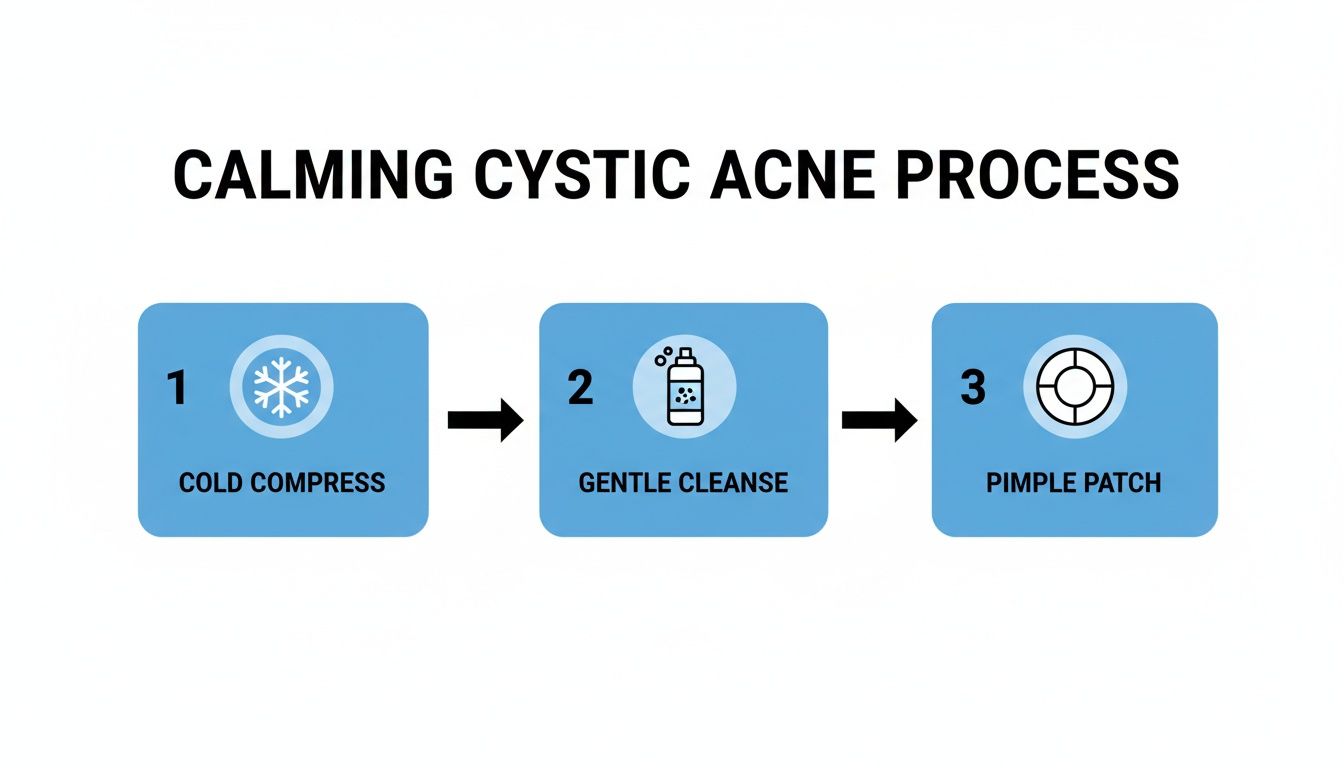
To help you decide the best course of action, here’s a quick breakdown of the go-to methods for immediate relief.
Immediate At-Home Cystic Acne Care
| Method | Primary Action | Best For | Expected Result |
|---|---|---|---|
| Cold Compress | Vasoconstriction | Reducing deep swelling and throbbing pain in a new, inflamed cyst. | Immediate, temporary relief from pain and noticeable reduction in swelling. |
| Gentle Cleanser | Surface Decontamination | Prepping the skin for other treatments without stripping natural oils. | A clean, non-irritated surface ready for a pimple patch or topical spot treatment. |
| Pimple Patch | Protection & Absorption | Cysts that are coming to a head or ones you're tempted to pick. | Creates a healing barrier, gently draws out fluid, and prevents picking. |
Each of these steps plays a specific role in managing the early, most frustrating stage of a cyst. They work together to minimize damage and set the stage for quicker healing.
Soothe with Cold Therapy
Your first line of defense against that angry, throbbing pain is a cold compress.
Grab an ice cube or a small ice pack, wrap it in a clean, soft washcloth (never apply ice directly to your skin!), and gently hold it on the cyst for about 10 minutes at a time. You can do this a few times a day, especially when it feels most tender. The cold helps shrink the blood vessels, which is fantastic for dialing down both the swelling and the pain. It’s a simple trick, but it provides real relief.
Protect and Heal with a Pimple Patch
After gently washing your face with a pH-balanced, non-exfoliating cleanser, let the area dry completely. Then, place a hydrocolloid patch directly over the cyst.
These little stickers are brilliant. They create a clean, moist environment that encourages healing while subtly pulling fluid and gunk out of the blemish. More importantly, they act as a physical shield, stopping you from mindlessly touching or picking at it - which is absolutely crucial for preventing infection and scars. If you want to dive deeper, you can learn more about how hydrocolloid pimple patches work their magic.
Getting That Pain and Inflammation Under Control
When a new cyst pops up, it’s not just a blemish - it’s a throbbing, painful intruder. Your first priority should be to calm everything down, bring down the swelling, and just get some relief. A few smart, immediate moves can make a world of difference in how the breakout plays out.
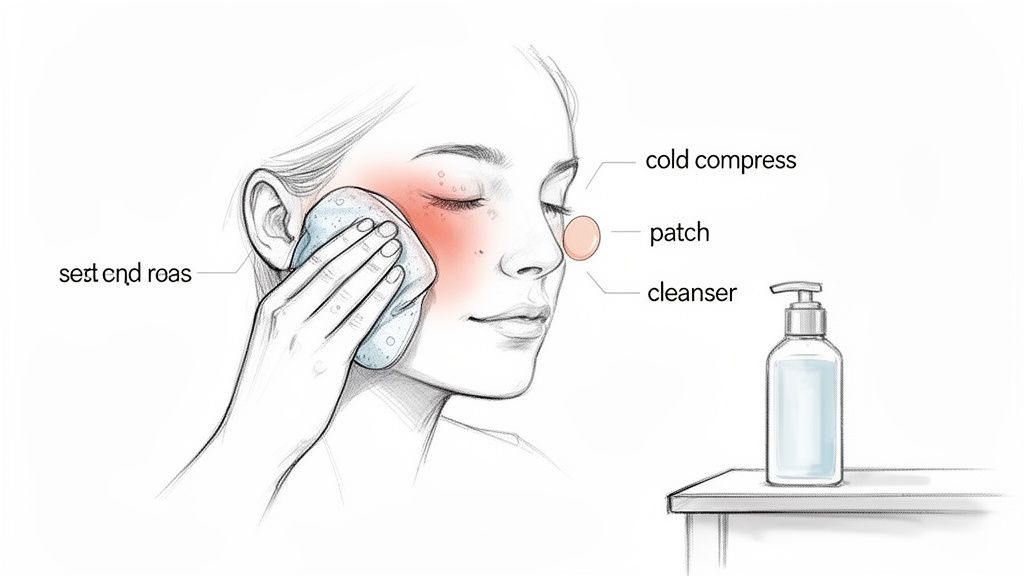
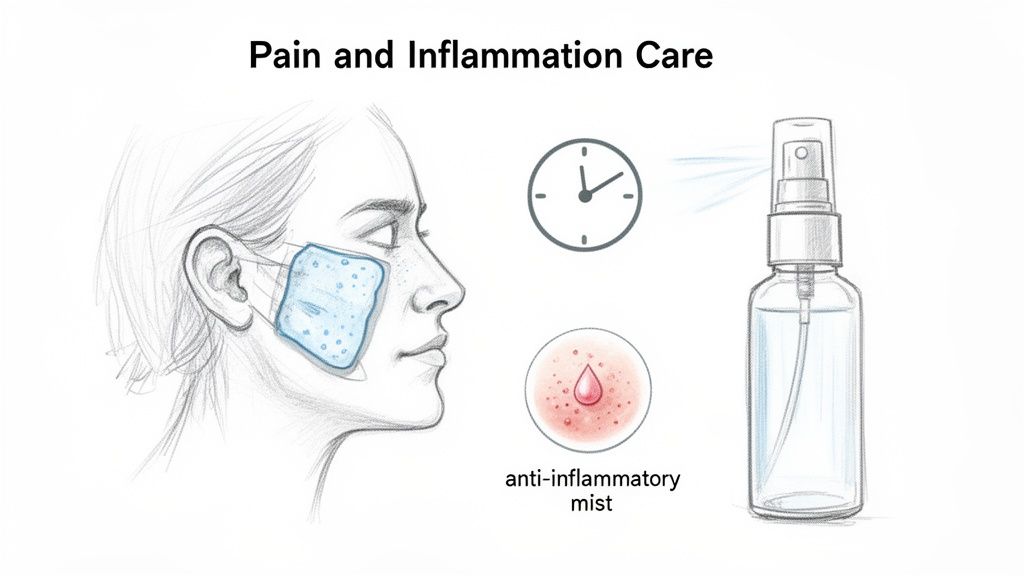
As we mentioned, grabbing a cold compress is a fantastic first-line defense. It helps constrict the blood vessels, which is a simple way to directly target that deep ache and angry redness. Think of it as hitting the mute button on the inflammation so you can move on to treatment.
The Magic of a Good Anti-Inflammatory Mist
After cooling the area, a soothing mist can be a surprisingly powerful next step. We're not talking about fancy water; the right formulas deliver calming ingredients straight to your irritated skin without you ever having to touch - and potentially anger - the cyst.
Look for mists with gentle, effective ingredients that are known for their soothing properties:
- Hypochlorous Acid: This is a brilliant little molecule. It’s fantastic for cleansing bacteria from the skin's surface without stripping it or causing irritation.
- Aloe Vera: A classic for a reason. Aloe is famous for its cooling and anti-inflammatory magic.
- Thermal Spring Water: Often packed with skin-friendly minerals, it’s great for calming sensitivity and toning down redness.
A quick spritz after cleansing or a cold compress helps keep your skin barrier happy and hydrated. A product like Livaclean's Hypochlorous Acid Mist is a perfect example of something that can slide right into your routine, providing gentle, continuous care to keep inflammation from flaring up.
Why Infused Pimple Patches Are a Total Game Changer
Regular hydrocolloid patches are great for protecting a spot. But for a stubborn cyst, patches infused with active ingredients offer a much more targeted attack. They aren't just a shield; they're a tiny, slow-release treatment that works for hours.
Think of it as a highly concentrated facial for a single, angry pore. The hydrocolloid base creates a moist healing environment and pulls out gunk, while the active ingredients dive deep to work on the inflammation.
Key Takeaway: The goal here is targeted treatment without collateral damage to the surrounding skin. An infused patch does just that, keeping potent ingredients exactly where you need them.
For cystic acne, you want patches that pack a punch. Look for ones containing:
- Salicylic Acid: This BHA is oil-soluble, which means it can actually get down into the pore to start dissolving the oil and debris causing the blockage.
- Tea Tree Oil: Known for its natural antibacterial muscle, it helps fight the specific bacteria contributing to the infection.
- Niacinamide: This form of vitamin B3 is a superstar at calming redness and helping to repair your skin’s natural barrier.
Pop one on overnight, and you can see a significant difference in the size and redness of a cyst by morning. It’s a smart, proactive way to treat it at home while also helping to prevent the scarring that can happen from picking or using overly harsh treatments.
Consistent Care Is What Really Delivers Results
Let’s be real: dealing with deep, painful cysts is a marathon, not a sprint. But consistent, targeted home care can truly lead to major improvements. Acne is incredibly common - it affects up to 85% of young people globally, making effective at-home strategies non-negotiable.
Even early research into non-invasive methods, like self-applied blue light therapy, has shown impressive results. One study documented a 39.1% reduction in total acne lesions after just 28 days of daily use. While you probably don’t have a medical-grade device at home, this proves how powerful consistent, targeted daily care can be. You can read more about these promising home therapy findings in the full study.
This is the same principle behind using affordable but effective spot treatments. Products like infused pimple patches, which combine ingredients like salicylic acid and tea tree oil, are designed for exactly this kind of targeted action. By consistently using them, you draw out impurities, reduce inflammation, and protect the blemish - leading to real, visible results without breaking the bank.
Choosing the Right Over-the-Counter Topicals
Stepping into the skincare aisle can feel overwhelming, especially when you're dealing with the deep, painful reality of cystic acne. The good news? You don't always need a prescription to get your hands on powerful, science-backed ingredients. The key is knowing what to look for and how to use it without wrecking your skin barrier in the process.
Let’s break down the heavy hitters you can find over-the-counter.
The Power of Benzoyl Peroxide
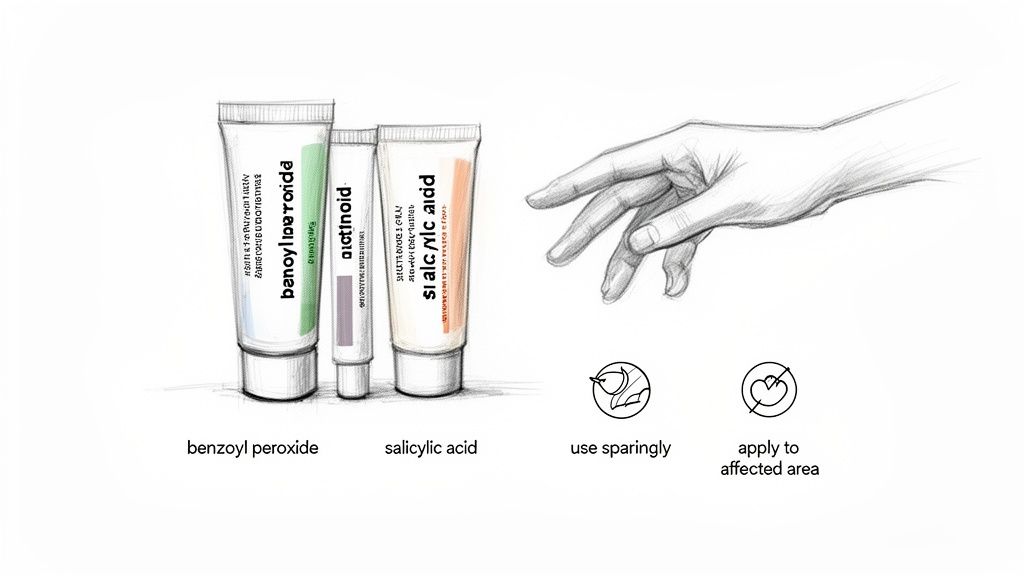
Benzoyl peroxide is a classic for a reason. It's one of the most reliable acne-fighting ingredients out there, working by killing the acne-causing bacteria burrowed deep inside the pore. This makes it a fantastic tool against the underlying infection that fuels a cystic breakout.
But here’s a common mistake: assuming a higher percentage is better. For stubborn cystic acne, a concentration between 2.5% and 5% is usually the sweet spot. It’s potent enough to do its job but far less likely to cause the intense dryness and irritation that often comes with 10% formulas.
Here's how to use it the smart way:
- Try short contact therapy first. After cleansing, apply a thin layer of a 2.5% benzoyl peroxide gel just to the cyst. Leave it on for only a few minutes, then rinse it off. This gives the ingredient time to work without sitting on your skin long enough to cause a reaction.
- Build up slowly. Over a couple of weeks, as your skin gets used to it, you can gradually increase the time you leave it on, maybe even working up to an overnight treatment.
- Never skip moisturizer. Always follow up with a good, non-comedogenic moisturizer to combat any potential dryness.
Salicylic Acid for Deep Pore Cleansing
While benzoyl peroxide handles the bacteria, salicylic acid goes to work on the clog itself. As a beta-hydroxy acid (BHA), its superpower is dissolving the oil and dead skin cells that plug up pores in the first place - the very origin of a cyst.
What makes salicylic acid so effective is that it's oil-soluble, meaning it can travel deeper into the pore lining than other acids. It gets right to the source, breaking down the gunk that leads to those deep, painful bumps.
I recommend looking for a 2% salicylic acid serum or a targeted spot treatment. A great strategy is to use it on alternating nights from your benzoyl peroxide to get the benefits of both without overloading your skin.
Expert Tip: A salicylic acid cleanser is great for daily maintenance, but when you're fighting an active cyst, a leave-on product is much more effective. A spot treatment or medicated patch provides the sustained, direct contact needed to really make a difference.
The Gentle Giant: Adapalene
Adapalene is a type of retinoid that used to be prescription-only but is now available over the counter - a huge win for acne sufferers. It works by regulating skin cell turnover, which stops dead skin cells from building up and clogging pores before a cyst can even form. Think of it as your best long-term prevention strategy.
Bringing a retinoid into your routine requires patience. It’s a marathon, not a sprint.
- Start slow. Use a pea-sized amount for your whole face just twice a week at night.
- Buffer it. Apply it after your moisturizer to create a gentle barrier and minimize irritation as your skin adjusts.
- Be patient. It can take 8-12 weeks of consistent use to see real, lasting improvement.
Adapalene won't zap an existing cyst overnight, but making it a regular part of your routine is one of the single best things you can do to prevent future breakouts. When you're learning how to treat cystic acne at home, this kind of preventative care is just as critical as spot-treating. If you want to explore other ways to manage cell turnover, our guide on incorporating glycolic acid peel pads could be a great next step.
Building a Daily Skincare Routine That Prevents Cysts
Here's the truth about managing cystic acne: it’s not about frantically zapping a new pimple. It's about playing the long game with a consistent, gentle routine that stops them from showing up in the first place.
Think of it as proactive defense, not reactive damage control. A solid daily plan will calm the inflammation you have now and strengthen your skin barrier, making it a much less inviting place for future cysts to form. This isn't some complex, 10-step ordeal. It's just about using the right products, in the right order, every single day. Consistency is your secret weapon.
Your Morning Routine Blueprint
Your morning routine is simple. It has two jobs: gently cleanse away anything from overnight and protect your skin from whatever the day throws at it.
Here’s a simple, effective plan:
- Gentle Cleanser: Start with a pH-balanced, non-foaming cleanser. You want ingredients like glycerin or ceramides that clean without stripping your skin’s natural oils. Harsh cleansers can backfire and actually make your skin produce more oil.
- Soothing Toner or Mist: After patting your skin dry, a quick spritz of something calming can be a game-changer for redness. Products like a thermal spring water mist are great for this.
- Lightweight Moisturizer: Yes, even oily, acne-prone skin needs moisture. A dry, compromised skin barrier is an angry, inflamed one. Look for a gel or lotion moisturizer that is non-comedogenic (a fancy way of saying it won't clog your pores).
- Sunscreen Always: This is the non-negotiable step. So many acne treatments make your skin more sensitive to the sun, and sun exposure can make those post-acne marks stick around for much longer. Use a broad-spectrum SPF of 30 or higher. Every. Single. Day.
Your Evening Routine for Repair and Treatment
Nighttime is when your skin switches into repair mode, which makes it the ideal time to bring out your heavy hitters - your active, treatment-focused products.
If you wear makeup or a heavy-duty sunscreen, you'll want to start with a double cleanse. Use an oil-based cleanser first to melt everything away, then follow up with your gentle, water-based cleanser. This gets your skin truly clean so your treatment products can actually sink in and do their job.
After cleansing, it’s time for your actives. This is where the ingredients that tackle inflammation and encourage cell turnover come into play.
Key Insight: Your evening routine is all about targeted treatment. By applying active ingredients to clean skin before bed, you give them a solid, uninterrupted 8-hour window to work their magic while your body is naturally healing itself.
Some ingredients have seriously impressive clinical backing. For instance, 15% azelaic acid gel has been shown to reduce inflammatory acne by a significant 20.1% on the Acne Severity Index - putting it on par with some prescription retinoids. Tea tree oil, a classic home remedy that’s been around since the 1920s, has shown in some trials it can cut down acne lesions by up to 43% after six weeks, holding its own against benzoyl peroxide for milder cases.
Layering Your Active Ingredients
How you put your products on really matters. The golden rule is to go from thinnest to thickest consistency. Give each product a minute or two to absorb before moving on to the next layer.
A simple evening layering routine could look like this:
- Cleanse: Start with a thoroughly clean face.
- Active Serum: Apply your chosen active, like an azelaic acid or salicylic acid serum, over your whole face or just in breakout-prone areas.
- Spot Treatment: If you're dealing with an active cyst, dab a targeted benzoyl peroxide cream or pop an infused pimple patch directly onto the spot.
- Moisturizer: Lock it all in with your non-comedogenic moisturizer. This seals in the treatments and keeps your skin hydrated overnight.
Sticking to a simple framework like this helps you build a sustainable habit that leads to clearer, more resilient skin.
Lifestyle Changes That Support Clearer Skin
What you do outside of your skincare routine plays a massive role in your skin's health. While topical treatments are your front line for dealing with active breakouts, your daily habits can help stop them from showing up in the first place. Think of it as supporting your skin from the inside out.
The key here isn't a massive life overhaul. Small, consistent tweaks are way more effective than trying to be perfect overnight. Let's dig into a few practical shifts that can seriously dial down cystic acne flare-ups and get you on the path to clearer skin.
Tweak Your Diet for Less Inflammation
The whole diet-and-acne conversation is complicated, and everyone's triggers are different. But a growing body of research points to certain foods that can kickstart or worsen inflammation. The goal isn't about restriction; it's about making smart additions and swaps to calm your system down.
A few simple changes can make a real difference:
- Boost Omega-3s: Think salmon, walnuts, and flaxseeds. These are loaded with omega-3 fatty acids, famous for their powerful anti-inflammatory benefits.
- Go Low-Glycemic: Foods that spike your blood sugar fast (like white bread, sugary drinks, and candy) can mess with your hormones and ramp up oil production. Try swapping white rice for quinoa or that sugary breakfast cereal for a bowl of oatmeal.
- Pack in the Antioxidants: Berries, leafy greens like spinach, and other colorful veggies are full of antioxidants that help shield your skin from damage and cool off inflammation.
This isn't about creating a strict "do not eat" list. It’s about arming your body with the nutrients it needs to fight back against inflammation.
Prioritize Quality Sleep
You’ve heard it a thousand times, and it's true: good sleep is non-negotiable for healthy skin. When you're asleep, your body flips into repair mode. Your primary stress hormone, cortisol, takes a nosedive, and your skin gets busy healing itself from the day's stressors.
When you skimp on sleep, cortisol levels can stay high, leading to more inflammation and more oil - a perfect recipe for a cystic acne disaster. Getting 7-9 hours of quality sleep a night is one of the best things you can do for your skin. It’s free, and it works.
A Practical Tip: Create a wind-down ritual. An hour before bed, put your phone away, dim the lights, and maybe read a book or listen to some chill music. This tells your brain it's time to power down, making it easier to fall asleep and stay asleep.
Get a Handle on Your Stress
Stress is a notorious acne trigger. When you're frazzled, your body pumps out hormones like cortisol and androgens, which basically tell your oil glands to work overtime. All that extra oil can clog your pores, leading to the deep, painful cysts we’re trying to avoid.
Finding healthy ways to manage stress is a critical piece of the puzzle when you're learning how to treat cystic acne at home.
You don't need to become a meditation guru overnight (unless that's your thing!). Simple, accessible techniques are often the most powerful:
- Just Breathe: Seriously. Take five minutes to just focus on slow, deep breaths. This can lower your cortisol levels almost instantly.
- Get Moving: You don't have to run a marathon. Gentle movement like a brisk walk, yoga, or stretching is fantastic for burning off stress hormones.
- Go Outside: Even a quick walk around the block can have a huge calming effect.
By weaving these small habits into your life, you're creating an internal environment that’s less likely to erupt in inflammation. This big-picture approach - combining a smart skincare routine with supportive lifestyle habits - gives you the absolute best shot at getting and keeping clear skin.
Knowing When to See a Dermatologist
Look, knowing how to handle your skin at home is a game-changer. It's empowering. But sometimes, even the best at-home routine hits a wall, and that’s okay. The key is knowing when to call in a professional before you get stuck in a frustrating cycle of breakouts and potential scarring.
Think of it this way: your home care is for maintenance and managing the day-to-day. A dermatologist has the heavy-duty tools for the deep, stubborn, and painful stuff. Making that appointment isn’t admitting defeat - it's being strategic about your skin's health.
The Tipping Point: Clear Signs You Need a Pro
If you find yourself nodding along with any of these scenarios, it’s a big flashing sign that it’s time to book a visit with a board-certified dermatologist. Don’t wait for it to get worse.
- You've Hit a Plateau After 3 Months: You’ve been consistent with an over-the-counter routine - diligently using benzoyl peroxide, salicylic acid, or adapalene - but your skin isn’t getting better. The cysts are just as frequent and just as angry.
- It’s a Constant Battle: This isn't about getting one random cyst before a big event. We're talking about a situation where as soon as one painful bump starts to heal, two more pop up to take its place. It feels relentless.
- The Breakouts Are Leaving Their Mark: You’re noticing that after a cyst finally goes away, it leaves behind an indented scar (what some people call pockmarks) or a stubborn dark spot that lingers for months. A derm can step in to prevent more permanent damage, which is a lot harder to fix later.
- It Genuinely Hurts: We're not just talking about being a little tender. If your cystic acne is causing real physical pain that makes it hard to sleep or even just go about your day, it's time for medical intervention.
- It's Affecting Your Well-Being: This is a huge one. If your skin is making you feel anxious, depressed, or causing you to cancel plans and avoid seeing people, that is a 100% valid reason to get professional help. Your mental health is just as important as your physical health.
What to Expect From Your Derm Appointment
Your first visit is mostly a fact-finding mission. Your dermatologist will want to know everything: what you've tried, for how long, your skin's history, and any patterns you've noticed. This isn't just small talk; it's how they build a treatment plan that’s right for you.
From there, they’ll likely introduce you to prescription-strength options that are in a completely different league than what you can buy at the store.
A dermatologist’s goal is to shut down inflammation fast, stop new cysts from forming, and prevent long-term scarring. They can offer treatments that work from the inside out, which is something a topical cream just can't do.
Here are some of the go-to treatments they might discuss:
- Prescription Retinoids: Think of these as the super-powered cousins of adapalene. Tretinoin is a common one that’s incredibly effective at keeping pores clear.
- Oral Antibiotics: For a really bad flare-up, a short course of an antibiotic like doxycycline can dramatically reduce inflammation and bacteria to calm things down quickly.
- Hormonal Regulators: If your cysts are clearly tied to your cycle, your doctor might suggest birth control pills or a medication called spironolactone to get the root hormonal triggers under control.
- Isotretinoin: You might know it by its old brand name, Accutane. This is a powerful oral medication for severe, persistent cases that haven't responded to anything else. It can be a true lifesaver and often leads to long-term remission.
- Cortisone Injections: Have a single monster cyst that’s throbbing and won’t quit? A derm can inject it with a diluted steroid to shrink it down in just 24-48 hours. It's an amazing in-office SOS treatment.
Frequently Asked Questions About Cystic Acne
Trying to figure out cystic acne can be frustrating. You're doing your best to manage it at home, but there's so much conflicting information out there. Let's cut through the noise and answer some of the biggest questions I hear all the time.
What Makes a Cyst Different From a Pimple?
The main difference is depth. A typical pimple, like a whitehead, hangs out near the surface of your skin when a pore gets clogged with the usual suspects: oil and dead skin cells. Easy enough.
A cyst, however, is a whole different beast. It's a severe infection that forms deep down, far below the surface. This is exactly why they're so painful, get so large, and never seem to form a "head" you can see.
Whatever you do, don't try to pop one. It's a one-way ticket to pushing the inflammation deeper, which almost guarantees a scar.
How Long Until I See Improvement?
I know you want a quick fix, but with cystic acne, patience is non-negotiable. This isn't something that clears up overnight.
If you’re starting a consistent over-the-counter routine with an ingredient like benzoyl peroxide or adapalene, you need to give it a solid 8-12 weeks to see a real, lasting difference. Seriously.
Sure, you might be able to calm down an individual cyst a bit faster with things like cold compresses and the right kind of patch, but improving your overall skin texture and preventing new breakouts takes time. If you’ve been diligent for three months and see zero change, that’s your cue to book an appointment with a dermatologist.
A Word on Realistic Timelines: Don't get discouraged if you don't see huge changes in the first month. The goal right now is to calm inflammation, stop new cysts from forming, and build a routine you can actually stick with. True progress is measured in months, not days.
Can I Combine Different Acne Treatments?
You can, but you have to be strategic. Throwing every active ingredient you own at your face is a recipe for disaster - it will wreck your skin barrier and make things much worse. A smarter approach is to alternate products or use them at different times of the day.
Here’s what that could look like in practice:
- Start your morning with a gentle salicylic acid cleanser.
- Use a benzoyl peroxide spot treatment only where you need it in the evening.
- Introduce a retinoid (like adapalene) just a few nights a week, making sure not to use it on the same nights as other strong exfoliants.
Using protective products can also be a huge help. For instance, understanding how pimple patches work on unpopped pimples can show you how they create a protective barrier while also delivering calming ingredients. The golden rule is to introduce one new active ingredient at a time and always, always focus on hydration to keep your skin strong.
Ready to take control of your breakouts with effective, fun, and affordable solutions? Livaclean offers value-packed hydrocolloid patches infused with salicylic acid and tea tree oil to visibly draw out impurities and calm inflammation. Check out our variety packs and start your journey to clearer skin today at https://www.livaclean.com.