

How to Treat Acne at Home for Clear and Healthy Skin
If you're struggling with breakouts, I get it. The temptation is to throw every harsh product you can find at the problem, but the real key to treating acne at home is surprisingly gentle: consistency and simplicity. A solid plan isn't about a dozen complicated steps; it's about combining a smart daily skincare routine with targeted treatments and healthy habits that tackle pimples from all sides.
Your Blueprint for At Home Acne Treatment
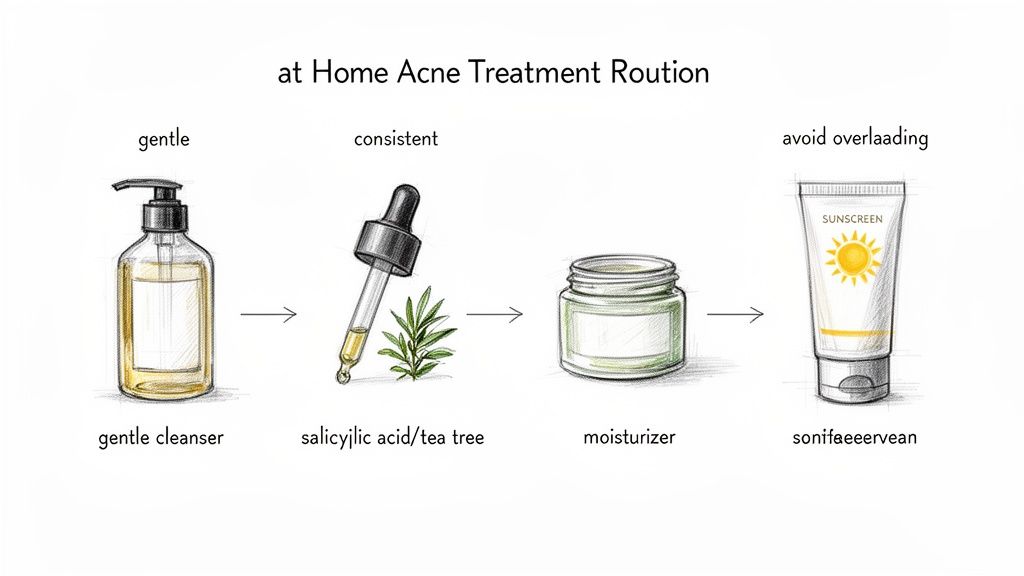
Walking down the skincare aisle can feel overwhelming. Every bottle promises a miracle. But the truth is, the foundation of successful acne care is pretty straightforward. It's less about a single magic potion and more about building a sustainable practice that actually respects your skin's natural barrier.
Going too aggressive with scrubbing or piling on potent ingredients often backfires, leaving you with irritation, dryness, and sometimes, even more breakouts.
The real goal is to create a supportive environment where your skin can heal itself. This guide will walk you through exactly how to do that. We’ll focus on the core principles that get results, whether you’re a teen just starting out or an adult dealing with stubborn blemishes.
Core Pillars of At Home Acne Care
Before we even talk about specific products, let's zoom out and look at the strategy. A successful plan to treat acne at home really boils down to just a few key actions. Think of these as the foundation of your routine - they all work together to clear up existing pimples and stop new ones from showing up.
Here's a quick breakdown of what we're aiming for.
| Pillar | Primary Goal | Key Action |
|---|---|---|
| Gentle Cleansing | Remove excess oil, dirt, and bacteria without stripping the skin. | Use a pH-balanced cleanser twice daily. |
| Targeted Treatment | Address individual blemishes and unclog pores. | Apply spot treatments like salicylic acid or hydrocolloid patches. |
| Consistent Hydration | Maintain the skin's moisture barrier to prevent irritation. | Use a non-comedogenic (non-pore-clogging) moisturizer. |
| Daily Protection | Prevent dark spots (post-inflammatory hyperpigmentation) and sun damage. | Apply a broad-spectrum sunscreen every morning. |
Each of these pillars is non-negotiable for getting your skin back on track.
Why This Approach Works
This balanced approach works because acne isn't a simple issue with a single cause. By cleansing properly, you manage the bacteria and oil that clog pores in the first place. Then, targeted treatments - like the infused hydrocolloid patches from Livaclean - deliver active ingredients right where you need them, speeding up healing for that one angry pimple. Finally, moisturizing keeps your skin barrier strong, which is your first line of defense against inflammation.
And it’s clear people are looking for solutions that work. The global acne treatment market hit a staggering $14.01 billion in 2023 and is expected to climb to $18.77 billion by 2032, with over-the-counter topicals leading the charge. With acne affecting nearly 50 million Americans annually, the demand for clear, reliable at-home guidance has never been higher. You can read the full market analysis to see just how much homecare is shaping the industry.
Consider this guide your starting point to join the millions who've found clear skin through a consistent, thoughtful routine.
Building Your Daily Acne Fighting Routine
The secret to winning the war against breakouts isn't some miracle product you use once. It’s all about consistency. Think of it like going to the gym - the small, simple actions you take every single day are what add up to real, lasting change. This is about building a solid foundation that cleanses, hydrates, and protects your skin, setting the stage for your targeted treatments to actually work.
You don't need a complicated ten-step routine. In fact, throwing too many active ingredients at your skin at once can backfire, leading to irritation that only makes things worse. We're going to focus on a simple, effective structure you can actually stick with.
Your Morning Skincare Mission
The goal for your morning routine is simple: cleanse away the oil and sweat that built up overnight, then protect your skin for the day ahead. This quick two-step process is non-negotiable for anyone serious about treating acne at home.
-
Gentle Cleanse: Start your day with a mild, pH-balanced cleanser. It's tempting to scrub your face raw, but aggressive soaps actually strip your skin's natural moisture barrier. That barrier is your first line of defense against bacteria, and when it's compromised, your skin can freak out and produce more oil to compensate. It’s a vicious cycle.
-
Hydrate and Protect: After patting your face dry, apply a lightweight, non-comedogenic moisturizer. Non-comedogenic is just a fancy way of saying it won't clog your pores. And yes, even oily skin needs hydration! Dehydrated skin often produces more oil to make up for the lack of moisture. Follow that up with a broad-spectrum sunscreen of at least SPF 30. This is probably the most critical step for preventing those dark spots (post-inflammatory hyperpigmentation) that pimples leave behind. Sun exposure makes them darker and helps them stick around for months.
Pro Tip: If you have super oily skin, look for gel-based moisturizers. They give you all the hydration you need without feeling heavy or greasy, making them the perfect base for your sunscreen.
Your Evening Skincare Reset
Nighttime is when the real repair work happens. Throughout the day, your skin collects a lovely mix of dirt, pollution, makeup, and oil. Your evening routine is your chance to wash it all away and apply treatments that can work their magic without interruption while you sleep.
This routine is designed to deep clean, repair your skin barrier, and let your active ingredients get to work.
- Double Cleanse (If You Need It): If you wear makeup or a heavy-duty sunscreen, you might want to double cleanse. Start with an oil-based cleanser to melt everything off, then follow up with your regular gentle cleanser. This ensures your pores are truly clean and ready for treatment.
- Apply Treatments: This is the perfect time to bring in some gentle exfoliants if your skin can handle them. If you're looking to promote cell turnover and keep pores clear, you might find our guide on the benefits of glycolic acid peel pads helpful.
- Moisturize to Seal: Always finish with your non-comedogenic moisturizer. This locks in hydration and supports your skin's natural repair process. A good moisturizer also helps soothe any potential irritation from your acne-fighting ingredients.
Ingredients That Make a Difference
When you're scanning product labels, knowing what to look for is half the battle. Keep an eye out for ingredients known to soothe, hydrate, and gently tackle acne.
- Hyaluronic Acid: This is a hydration superstar. It draws moisture into the skin without clogging pores, keeping your skin plump and balanced.
- Aloe Vera: Famous for its calming and anti-inflammatory properties, aloe is great for reducing the redness and swelling that comes with angry breakouts.
- Salicylic Acid: This is a beta-hydroxy acid (BHA) that works by exfoliating inside the pore. It's fantastic for clearing out existing clogs and preventing new ones from forming.
You're not alone in this. Acne affects a staggering 20.5% of people worldwide, meaning millions are right there with you, looking for effective home treatments. This is a big reason why the beauty e-commerce market has soared past $440 billion, with many people turning to online pharmacies for skincare solutions. One global study even found that 51.90% of acne sufferers rely on over-the-counter products and simple at-home care. It just goes to show how important getting this daily regimen right really is. You can discover more insights about dermatological care trends to see just how common these practices have become.
By building and, most importantly, sticking to this foundational routine, you create the ideal environment for your skin to heal and stay clear.
Mastering Targeted Spot Treatments for Pimples
A solid daily routine is your long-term strategy for clear skin, but what about when a single, angry pimple decides to show up unannounced? This is where targeted spot treatments come in. Think of them as your emergency response team, designed to calm inflammation, shrink a blemish, and speed up the whole healing process.
Instead of slathering a harsh product all over your face, spot treatments deliver a concentrated dose of active ingredients directly where you need it most. This approach is way smarter because it minimizes irritation to the surrounding healthy skin while effectively tackling the breakout. It’s a precise, strategic move that can make a huge difference in how quickly that pimple packs its bags.
Choosing Your Go-To Spot Treatment
Not all pimples are created equal, and neither are spot treatments. The right choice really depends on what kind of blemish you’re dealing with. A deep, painful, under-the-skin cyst needs a different battle plan than a whitehead that has already come to a head.
Getting to know the key players helps you build a versatile toolkit for any breakout situation. From classic creams to those little miracle patches, each has a unique way of working to bring your skin back into balance.
Let's break down some of the most effective options you can use at home.
| Treatment Type | Best For | How It Works | Pro Tip |
|---|---|---|---|
| Benzoyl Peroxide | Inflamed red pimples (papules and pustules). | Releases oxygen to kill acne-causing bacteria deep within the pore. | Start with a lower concentration (2.5% or 5%) to minimize dryness and irritation, applying a thin layer only on the blemish. |
| Salicylic Acid | Blackheads and whiteheads. | A beta-hydroxy acid (BHA) that exfoliates inside the pore, dissolving the gunk and dead skin cells causing the clog. | Look for it in gel or liquid formulas for easy application. It's great for preventing future breakouts in congestion-prone areas. |
| Tea Tree Oil | Mild to moderate inflammatory pimples. | A natural anti-inflammatory and antimicrobial that helps reduce redness and swelling. | Always dilute it with a carrier oil (like jojoba or coconut) before applying to avoid potential skin irritation. |
| Hydrocolloid Patches | Pimples that have come to a head (pustules). | A moisture-absorbing material that gently draws out pus and fluid, creating a protected, moist environment for faster healing. | Apply to clean, completely dry skin for the best adhesion. These work wonders overnight. |
This infographic is a great visual for structuring your daily routine to keep breakouts from happening in the first place.
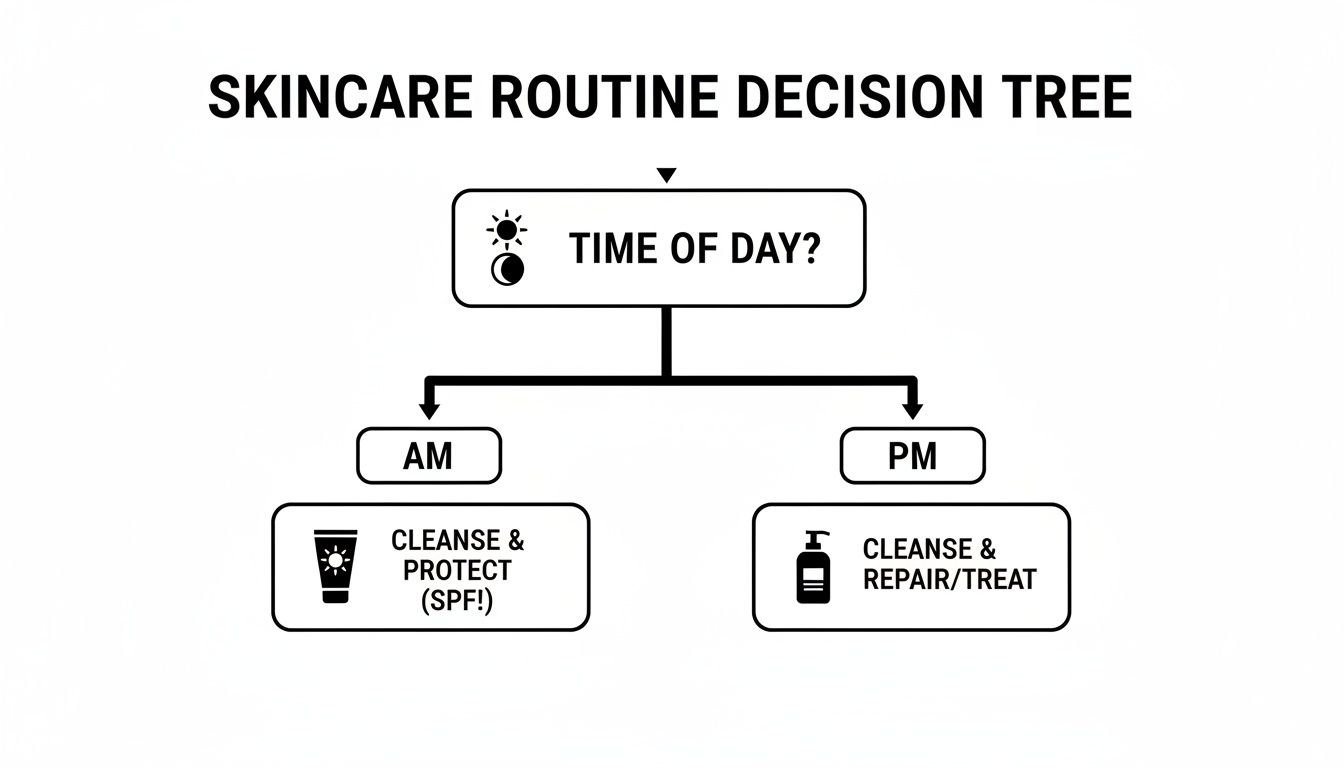
Notice how it separates the goals for morning (protection) and night (treatment and repair). That distinction is crucial for getting acne under control.
The Rise of Hydrocolloid Pimple Patches
While creams and gels have been staples for decades, hydrocolloid patches are the true game-changer in at-home acne care. These little sticky dots were originally used in medical settings for wound healing, and it turns out they create the perfect microenvironment for a pimple to heal, too.
They act like a tiny vacuum, gently pulling the gunk (pus and oil) out of a whitehead. At the same time, they shield the spot from bacteria and - just as importantly - your own fingers. This protection is key for preventing picking, which almost always leads to scarring and can make the infection worse.
By creating a sealed, moist barrier, a hydrocolloid patch not only absorbs impurities but also reduces inflammation and helps flatten the blemish significantly faster - often in a single night.
The demand for easy, effective home treatments is massive. The acne treatment market was valued at $10 billion in 2022 and is expected to jump to $16.65 billion by 2032, driven by people looking for reliable solutions they can use themselves. It’s no surprise that topical medications led the market in 2023; they're just so straightforward to use daily.
Infused Patches: The Next Level of Spot Treatment
The evolution of the pimple patch didn't stop with simple hydrocolloid. Smart brands like Livaclean have taken this technology a step further by infusing their patches with proven acne-fighting ingredients. This brilliant move combines the physical barrier of the patch with the chemical power of an active spot treatment.
- Salicylic Acid: When you infuse a patch with this BHA, you’re not just drawing out gunk; you’re also actively dissolving the clog from within the pore.
- Tea Tree Oil: Adding this natural antiseptic helps calm the inflammation and redness, soothing the skin while it heals.
Here’s a compelling fact: clinical data has shown that tea tree oil can be as effective at fighting bacteria as 5% benzoyl peroxide but with 40% less irritation. This makes it an amazing choice for sensitive or teen skin. When you combine this gentle power with a protective patch, you get a dual-action treatment that works smarter, not harder. You can learn more by checking out our guide on the science behind hydrocolloid pimple patches.
How to Use Pimple Patches for Maximum Results
Applying a pimple patch seems simple, but a few small details can make a huge difference in how well they work. Getting this right ensures the patch sticks properly and can do its job without any issues.
- Start with a Clean Slate: Always apply a patch to freshly cleansed and completely dry skin. Any leftover moisture from water, serum, or moisturizer will keep it from sticking properly.
- Choose the Right Size: Pick a patch that’s big enough to cover the entire blemish with a little border around it. This creates a secure seal.
- Press, Don't Rub: Place the patch directly over the pimple and gently press down for a few seconds. Make sure the edges are sealed flat against your skin.
- Let It Work: Leave the patch on for at least 6-8 hours, or just pop it on overnight. You’ll know it’s working when the patch turns an opaque white - that’s all the fluid it has absorbed!
- Peel and Reveal: Gently peel off the patch. Cleanse the area again before continuing with your regular skincare routine.
Using an infused patch from Livaclean with salicylic acid and tea tree oil gives you a powerful, one-step solution. It shrinks the pimple, reduces redness, and protects it from further aggravation, all while you sleep.
Lifestyle Changes That Support Clear Skin
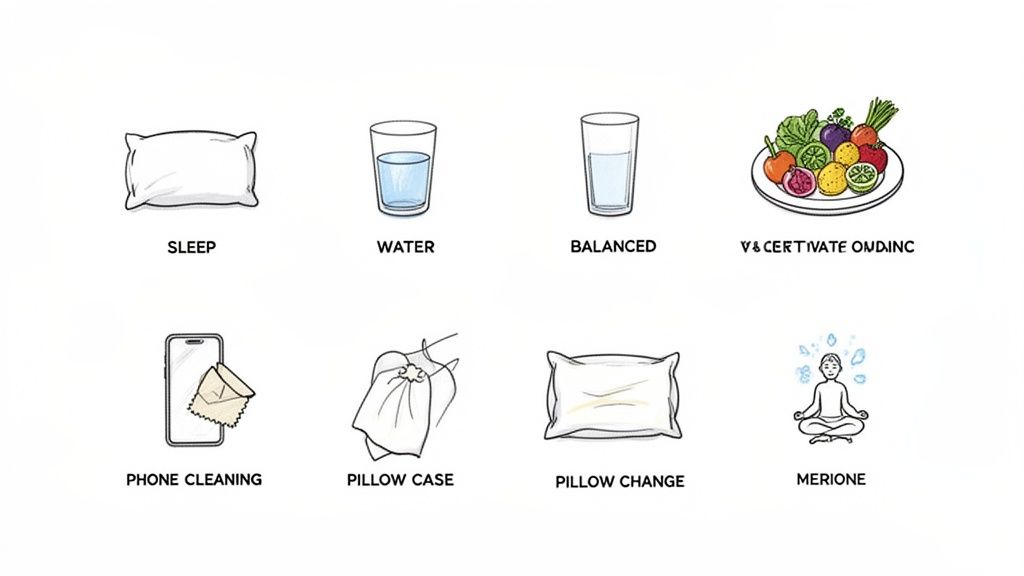
You can have the best cleanser and the most powerful spot treatment in the world, but if that’s all you’re relying on, you’re only fighting half the battle. Real, lasting clear skin comes from a combination of what you put on your skin and how you treat your body from the inside out.
Think of it this way: your skincare is your frontline defense, but your daily habits are the reinforcements. The small, consistent choices you make every day can either support your routine or sabotage it. This is about making smart, sustainable tweaks to your lifestyle that create an environment where clear skin can finally thrive.
The Diet and Skin Connection
You’ve probably heard it a million times: "You are what you eat." When it comes to acne, there’s definitely some truth to it. While everyone’s skin reacts differently, some foods are common culprits for triggering breakouts.
The main offenders are often foods with a high glycemic index - things like sugary drinks, white bread, and heavily processed snacks. These cause your blood sugar to spike, which can kickstart inflammation and send your oil glands into overdrive. It’s the perfect storm for clogged pores.
But instead of focusing on what to cut out, let's talk about what to add in.
- Antioxidant-Rich Foods: Think berries, spinach, and other colorful veggies. They’re packed with antioxidants that help calm inflammation from the inside.
- Omega-3 Fatty Acids: Found in fatty fish like salmon, plus walnuts and flaxseeds, these healthy fats are famous for their inflammation-reducing properties.
- Zinc-Rich Foods: Pumpkin seeds and legumes are great sources of zinc, a mineral that helps regulate oil production and soothe irritated skin.
You don't need a massive diet overhaul. Simply swapping white bread for whole grain or adding a side of greens to dinner can make a surprisingly big difference over time.
Taming Stress for Clearer Skin
Ever notice a massive pimple popping up right before a big interview or a first date? That’s not a coincidence. Stress is a huge acne trigger. When you're stressed, your body pumps out cortisol, a hormone that tells your skin to produce more oil.
Managing stress is absolutely crucial for getting acne under control. You can’t eliminate it completely (that's just life!), but finding healthy ways to cope can calm both your mind and your skin.
Key Insight: Simple activities like yoga, meditation, or even a brisk 15-20 minute walk can significantly lower cortisol levels. Building these moments into your day helps regulate your body's stress response and can head off those hormonally-driven breakouts.
Find what works for you. Maybe it's putting on a great playlist and zoning out, or maybe it's spending five minutes journaling before bed. The "how" doesn't matter as much as the "doing."
Clean Habits for a Clean Face
Sometimes the most overlooked acne triggers are the things our face touches every single day. We don't even think about it, but bacteria, oil, and product residue can easily transfer to your skin, clogging pores and causing new spots to appear.
Here are a few game-changing habits that are easy to adopt:
- Clean Your Phone Screen: Your phone is a magnet for germs. Get in the habit of wiping it down daily with an antibacterial wipe. Your cheeks and jawline will thank you.
- Change Your Pillowcase Often: Your pillowcase soaks up oil, sweat, and hair products while you sleep. Switch it out at least twice a week to keep your face resting on a clean surface.
- Choose Makeup Wisely: If you wear makeup, look for products labeled non-comedogenic. It's a fancy way of saying they’re formulated specifically not to clog pores.
- Hands Off!: This is the simplest rule, but also the hardest to follow. Consciously avoid touching your face throughout the day to stop the spread of bacteria.
These little adjustments can be the missing piece of your clear-skin puzzle. To take it a step further, keep a gentle, refreshing spray handy for a quick cleanse on the go. Our Hypochlorous Acid Mist for Face & Body is perfect for this - it soothes and hydrates without any irritation. By bringing these lifestyle changes into your routine, you’re supporting your skin from every angle and setting yourself up for long-term success.
Common At-Home Acne Care Mistakes to Avoid
Trying to treat acne at home can feel like walking through a minefield. With so much conflicting advice out there, it's incredibly easy to make a few wrong turns that can stall your progress or, even worse, aggravate your skin. Honestly, knowing what not to do is just as important as knowing what to do.
Steering clear of these common pitfalls will help keep your journey to clear skin smooth and frustration-free. Think of this as your essential checklist to make sure your efforts are actually helping, not hurting.
Mistake 1: Overdoing It with Products
When a new breakout pops up, the gut reaction is often to throw the entire skincare arsenal at it. You might layer on a salicylic acid toner, follow it with a benzoyl peroxide cream, and then maybe a sulfur mask just for good measure. While the intention comes from a good place, this "more is more" approach almost always backfires.
Piling on multiple active ingredients at once can completely wreck your skin's moisture barrier. This protective layer is what keeps the bad stuff (like bacteria) out and the good stuff (like moisture) in. When it's compromised, you're left with redness, peeling, and irritation - which can trigger even more inflammation and breakouts.
Key Takeaway: Stick to one or two active ingredients in your routine and introduce anything new slowly. In skincare, consistency with a gentle routine will get you much better results than an aggressive, all-out assault.
Mistake 2: Popping or Picking Pimples
It’s the ultimate temptation, I get it. That whitehead is just sitting there, practically begging to be squeezed. But trust me, popping pimples is one of the most damaging things you can do to your skin. When you squeeze a blemish, you risk pushing bacteria and pus even deeper into the pore.
This can turn a small, manageable pimple into a much larger, more painful cyst. Worse, it dramatically increases the odds of developing post-inflammatory hyperpigmentation (those stubborn dark spots) or permanent acne scars.
Instead of picking, slap a hydrocolloid patch over the blemish. It will gently draw out the fluid and protect the spot from your fingers, letting it heal cleanly without the risk of scarring. And while you're at it, keeping pores clear is a great preventative move. For blackheads, you might be interested in our guide on using charcoal pore strips effectively.
Mistake 3: Believing Common Skincare Myths
The internet is swimming with well-meaning but totally misguided advice. Falling for these myths can send you down the wrong path, wasting your time and potentially harming your skin. Let's bust a few of the most common ones right now.
-
Myth: Sunbathing clears up acne.
- The Truth: A tan might hide the redness for a minute, but sun exposure actually damages your skin barrier, can make dark spots worse, and often leads to more breakouts down the road. Always, always wear a non-comedogenic sunscreen.
-
Myth: Toothpaste is a great spot treatment.
- The Truth: Please don't do this. Toothpaste contains harsh ingredients like menthol and alcohol that can cause severe irritation and even chemical burns on delicate facial skin. Stick to treatments actually formulated for acne.
-
Myth: You should scrub your face vigorously to get it clean.
- The Truth: Harsh scrubbing just irritates the skin, spreads bacteria around, and makes inflammation worse. Be gentle. Use a mild cleanser and pat your skin dry with a clean towel.
Mistake 4: Lacking Patience and Consistency
This is the big one. The single biggest mistake is giving up too soon. At-home acne treatments need time to work their magic - you won’t see clear skin overnight. It typically takes a solid 4-8 weeks of consistent, daily use to see a real, noticeable improvement.
It’s so easy to get discouraged after a week or two and jump to a new product, but this cycle of inconsistency is a huge barrier to getting results. Find a simple, gentle routine you can stick with and commit to it. When it comes to skincare, patience truly is everything.
Knowing When to See a Dermatologist
https://www.youtube.com/embed/k3aIeabBnvy
While a solid at-home routine can work wonders for mild to moderate acne, it isn't a silver bullet. A huge part of getting control over your skin is knowing when to call for backup. And let’s be clear: there's absolutely no shame in seeing an expert. It’s actually the smartest, most proactive thing you can do for your skin's long-term health.
Sometimes, no matter how hard you try, your skin just isn't responding. Those are the moments when it's sending you a clear signal that it needs more help than the drugstore aisle can offer. Pushing through on your own can lead to more frustration, inflammation, and even permanent scarring.
Key Signs It’s Time for a Visit
If you've been consistent for a few months and things aren't getting better, it's time to book that appointment. Don't wait until you're at your wit's end.
Here are the biggest red flags that mean it's time to see a dermatologist:
- You have deep, painful breakouts. If you’re getting those hard, sore lumps under your skin that never really come to a head, you're probably dealing with cystic or nodular acne. This type of acne forms deep in the skin and has a super high risk of scarring. Honestly, over-the-counter products just can't touch it.
- Your acne is leaving scars. Notice any pitted marks or stubborn dark spots (what we call post-inflammatory hyperpigmentation) after a pimple heals? A derm can step in with stronger treatments to get the inflammation under control before the damage becomes permanent.
- Nothing has changed after 8-12 weeks. You’ve been so diligent with your routine, but your skin is either stuck in the same place or getting worse. This is a classic sign you need a professional to figure out what's really going on and prescribe something with more power.
A trip to the dermatologist isn't admitting defeat. Think of it as upgrading your toolkit. They have access to prescription-strength options like retinoids (think Tretinoin) or oral medications that can tackle stubborn acne at its source and save your skin from lasting damage.
Their whole job is to figure out a plan that’s tailored specifically for you and your skin.
A Few Common Questions About At-Home Acne Care
When you're starting a new routine to clear up your skin, a lot of questions can pop up. Let's tackle some of the most common ones I hear.
How Long Until I See Results?
This is the big one, and the honest answer is: patience is everything.
While something like a hydrocolloid patch can dramatically shrink a pimple overnight (which is incredibly satisfying), you're looking at a longer game for overall skin improvement. It typically takes a solid 4-8 weeks of sticking to your daily cleansing and moisturizing routine to see a real, lasting difference. Real clarity comes from consistency, not just quick fixes.
Are Pimple Patches Safe For Sensitive Skin?
For the most part, yes. Your standard hydrocolloid patches are fantastic for sensitive skin because they're non-medicated. They just create a clean, moist environment that helps your skin heal itself, without any harsh or irritating ingredients.
If your skin is especially reactive, I always recommend starting with a plain, non-medicated patch first. For the ones infused with active ingredients like salicylic acid, do a quick spot test. Just pop one on a small, out-of-the-way area to see how your skin reacts before putting it on your face. You can dive deeper into how pimple patches work in our full guide.
Pro Tip: Modern pimple patches, like the ones from Livaclean, are super thin and almost invisible, so you can easily wear them under makeup. Just make sure you apply any treatments and the patch itself to clean, completely dry skin. Give your moisturizer a minute to fully absorb before gently applying any non-comedogenic makeup over the top.
Ready to zap those zits with a smarter, more targeted approach? The infused hydrocolloid patches from Livaclean are designed to pull gunk out of pores and calm down angry spots fast. Check them out and find your new secret weapon for clear skin at https://www.livaclean.com.