

How to Get Rid of Pimples Fast With Proven Strategies
Waking up to a huge pimple right before a big day? We've all been there. That initial wave of panic is real, but the key is not to freak out. It's time for a rapid-response mission.
While there's no magic wand to make a pimple disappear instantly, your actions in the first few hours can make a world of difference. A smart, immediate three-step plan can seriously reduce redness, swelling, and how long that unwelcome guest sticks around.
Your Immediate Game Plan for a Sudden Pimple
Think of this as damage control. The goal is to calm the inflammation and help your skin heal without making things worse.
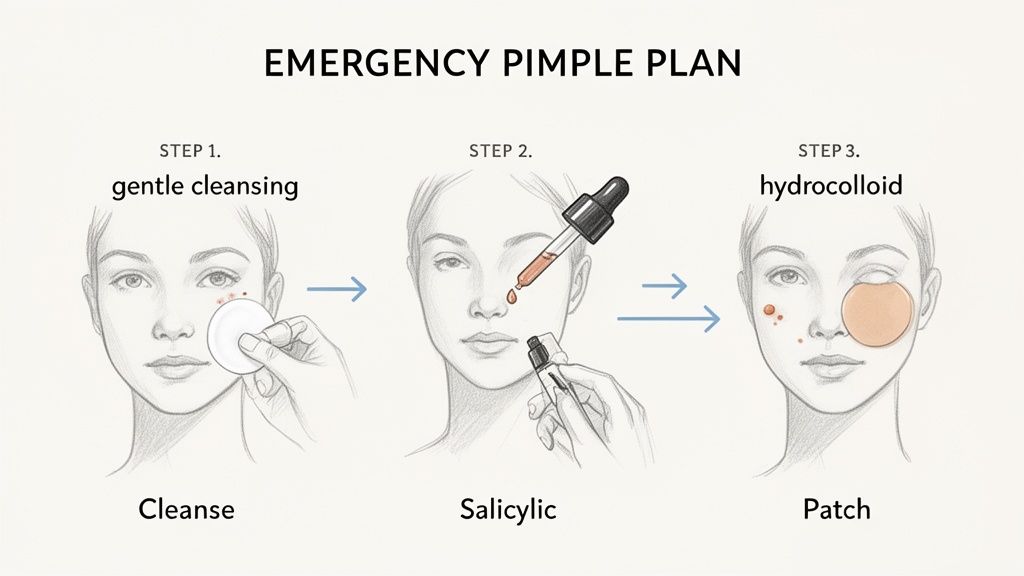
Start with Gentle Cleansing
Okay, first rule: step away from the harsh scrubs. The urge to scrub a pimple into oblivion is strong, but it's the worst thing you can do. Aggressive scrubbing just irritates the skin, making the pimple angrier and redder.
Instead, wash your hands, then grab a gentle, pH-balanced cleanser. Carefully clean the area to get rid of any surface bacteria and oil without stripping your skin's natural defenses. When you're done, gently pat it dry with a clean towel. No rubbing!
Apply a Targeted Spot Treatment
Now that you have a clean canvas, it's time to call in the big guns. A spot treatment with either salicylic acid or benzoyl peroxide is your best bet for quick action.
Salicylic acid is a pro at getting deep into the pore to break up the gunk, while benzoyl peroxide focuses on killing off the bacteria that causes acne in the first place.
A little goes a long way here. Just dab a tiny amount directly onto the pimple. Piling it on will only lead to a dry, flaky mess that's even harder to cover up later.
Key Takeaway: The goal is to treat the pimple, not punish your skin. Over-applying harsh treatments can backfire, leading to a longer healing time and potential post-inflammatory hyperpigmentation (the dark spots left behind).
Deploy a Hydrocolloid Pimple Patch
This might just be the most crucial step in your emergency plan. Once your spot treatment has fully dried, stick a hydrocolloid patch right on top. These little dots are absolute game-changers.
Originally used in the medical field for wound healing, hydrocolloid technology creates the perfect environment to gently pull all the pus and fluid out of a blemish.
It's no surprise that hydrocolloid pimple patches, like the ones from Livaclean, own the anti-acne patch market with a massive 54.1% share. They just work. The patch acts like a mini vacuum, and you’ll often wake up to a noticeably smaller, less angry pimple. This tech can slash inflammation by up to 50% in just 6-8 hours.
Plus, it forms a physical shield that keeps you from picking - a habit we all know is a fast track to scarring. To get the most out of every patch, make sure you're applying them correctly with our guide on how to use our pimple patches correctly.
Pimple Emergency Do's and Don'ts
When a pimple pops up, your first reaction matters. Here's a quick guide to what you should and shouldn't do.
| What to Do (The Smart Moves) | What to Avoid (The Common Mistakes) |
|---|---|
| Gently cleanse the area with a mild face wash. | Squeezing or popping the pimple. |
| Apply a spot treatment like salicylic acid. | Scrubbing the area aggressively. |
| Use a hydrocolloid patch to draw out impurities. | Piling on harsh treatments or toothpaste. |
| Keep your hands off your face to prevent bacteria transfer. | Skipping moisturizer, which can cause dryness. |
| Stay hydrated and eat anti-inflammatory foods. | Using dirty makeup brushes or applicators. |
Following the "do's" helps calm inflammation and speeds up healing, while avoiding the "don'ts" prevents scarring and further irritation.
Why Pimple Patches Actually Work So Well
It’s tempting to write off pimple patches as another skincare fad, but these little stickers are the real deal, backed by some serious science. They're not just a trend; their effectiveness is rooted in medical-grade technology that’s been cleverly adapted for fighting breakouts. Think of them as your secret weapon for making a pimple vanish, fast.
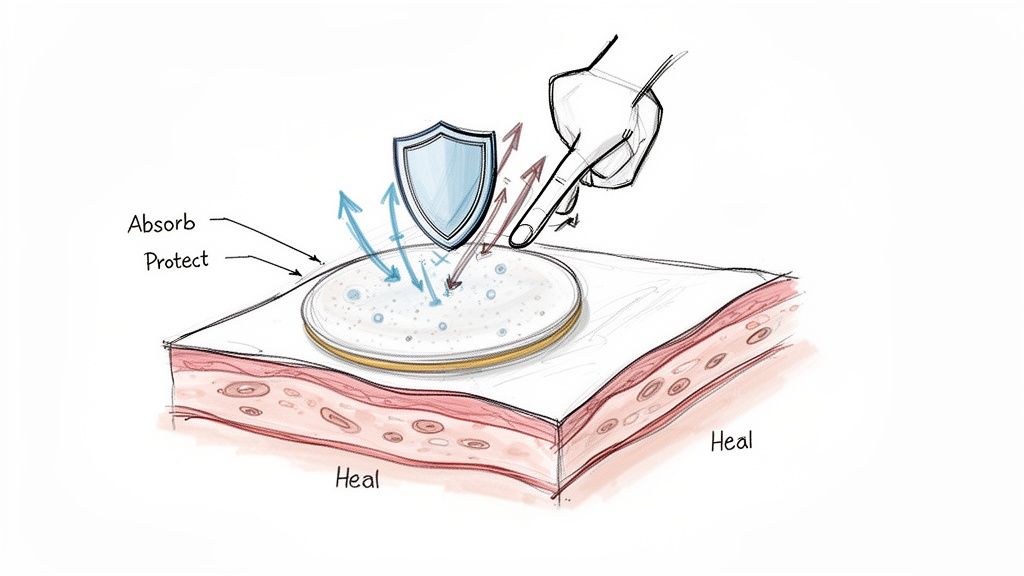
The magic is all in the material: hydrocolloid. This wasn't invented in a beauty lab - it was first developed to dress wounds in hospitals. It's a gel-like substance that is incredible at absorbing excess fluid.
When you stick a hydrocolloid patch over a pimple, it creates a sealed, moist little bubble perfect for healing. This environment does two amazing things. First, it gently sucks all the pus and oil out of the blemish (that’s the white gunk you see on the patch when you peel it off). Second, it walls off the pimple from outside bacteria and dirt, cutting down the risk of making things worse.
The Protective Shield Your Pimple Needs
Let's be honest, one of the biggest enemies of a healing pimple is our own hands. We all subconsciously touch, poke, and pick at spots. This just invites in more bacteria, aggravates inflammation, and can lead to permanent scarring.
A pimple patch is basically a tiny, physical barrier - a polite "do not touch" sign for your fingers. This might be its most underrated superpower. By stopping you from picking, it lets your skin do its job and heal uninterrupted. That’s huge for preventing post-inflammatory hyperpigmentation, those annoying dark spots that hang around long after the pimple is gone.
Expert Insight: The difference between healing a pimple with a patch versus without one is night and day. The patch keeps the area moist and clean, which clinical studies show can speed up cell repair and drastically lower the chances of scarring compared to just letting a pimple dry out and scab over.
Next-Generation Patches with Active Ingredients
While a plain hydrocolloid patch is great on its own, many brands like Livaclean are taking it to the next level. They're infusing the patches with powerful, acne-fighting ingredients. This creates a one-two punch that delivers targeted treatment right where you need it.
Here are a few common active ingredients you'll find:
- Salicylic Acid: This is a beta-hydroxy acid (BHA) that gets deep into the pore to break up the clog of dead skin cells and oil.
- Tea Tree Oil: Famous for its natural antimicrobial and anti-inflammatory properties, it helps knock out acne-causing bacteria.
- Niacinamide: A true skincare hero, this ingredient calms redness and inflammation while also helping to strengthen your skin's natural barrier.
This combination of absorption, protection, and active treatment is what makes these patches so incredibly effective. It's why so many people wake up to a pimple that’s flatter and way less angry than it was the night before. The numbers don't lie: the 18-44 age group now makes up 49.4% of the entire anti-acne patch market. The demand is fueled by hydrocolloid's proven ability to absorb gunk, while ingredients like salicylic acid can shrink a pimple's size by 30-50% overnight, according to user trials.
Want to dive deeper into the science? Check out our complete guide on how hydrocolloid pimple patches work.
Safe and Effective At-Home Pimple Remedies
When a surprise pimple pops up, your first instinct might be to raid the kitchen or medicine cabinet for a quick fix. I get it. But before you do, just know that navigating at-home remedies is a minefield. While some tricks can genuinely calm things down in a pinch, others are just skincare myths that can seriously backfire and make that spot way worse.
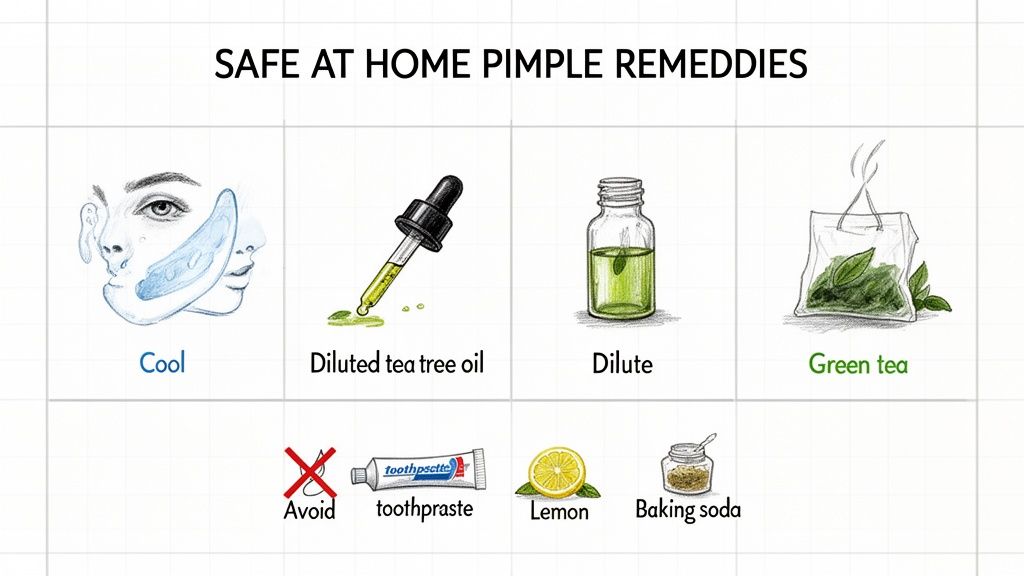
Before you reach for something aggressive, try a simple cool compress. Seriously. Just wrap an ice cube in a clean, soft cloth and hold it on the pimple for a few minutes. The cold constricts the blood vessels, which immediately dials down the redness and swelling, making the whole situation much less obvious.
Evidence-Backed Natural Options
If you're looking for something with a bit more oomph, a couple of natural ingredients have actually stood the test of time - and have the science to back them up. When used correctly, they can be surprisingly effective.
- Tea Tree Oil: This stuff is famous for its powerful antimicrobial and anti-inflammatory properties. But - and this is a big one - never apply it directly to your skin. It’s way too potent and can cause irritation or even burns. You have to dilute it first. A good rule of thumb is to mix one or two drops into a teaspoon of a carrier oil like jojoba or coconut oil before dabbing it onto the spot.
- Green Tea Compress: Don't just drink it! Green tea is packed with anti-inflammatory compounds called catechins that can help soothe an angry blemish. Just steep a green tea bag in hot water, let it cool down completely, then rest the damp bag on your pimple for about 10-15 minutes.
A Word of Caution: Just because something is "natural" doesn't automatically mean it's good for your skin. Always do a quick patch test on a small area (like behind your ear) before putting any new substance on an active breakout. You want to make sure you won't have a bad reaction.
Kitchen Remedies You Must Avoid
The internet is a wild place full of bad advice. Some of the most popular DIY "cures" are actually skin disasters waiting to happen. It's just as important to know what not to do.
Keeping your skin's protective barrier happy and healthy is the key to healing. This is why incorporating something gentle and hydrating into your routine, like the Livaclean Hypochlorous Acid Mist, can be a game-changer for maintaining a calm, balanced complexion.
Now, for the stuff to keep far, far away from your face. These are the top offenders:
| Remedy to Avoid | Why It's Harmful |
|---|---|
| Toothpaste | It's full of harsh ingredients like peroxide and baking soda that are designed for teeth, not delicate facial skin. It will cause severe irritation, dryness, and can even lead to chemical burns. |
| Lemon Juice | The super high acidity (a very low pH) completely disrupts your skin's natural barrier. This can cause major irritation, make your skin sensitive to the sun, and potentially burn it. |
| Baking Soda | This ingredient is highly alkaline, which throws your skin’s natural pH way off balance. Using it strips away your skin's protective oils, leading to extreme dryness, redness, and even more breakouts. |
Small Lifestyle Tweaks for Faster Healing
Sometimes, the quickest way to deal with a monster pimple isn't about dabbing on more spot treatment. It’s about stepping back and looking at the bigger picture. While you can't snap your fingers and make a blemish vanish, a few tiny adjustments to your daily routine can seriously speed up the healing game and stop future breakouts in their tracks.
The absolute number one rule? Hands off. I know, it’s almost a reflex to touch, poke, or try to pop a pimple, but that’s like pouring gasoline on a fire. Squeezing a blemish just shoves bacteria deeper into the pore, cranks up the inflammation, and pretty much guarantees you’ll be left with a stubborn scar or a dark spot that lingers for weeks.
Think of it this way: your body is already on the job, working hard to heal that spot from the inside. When you pick at it, you’re creating a whole new wound it has to deal with. This easily doubles the recovery time and opens the door for a nasty infection.
Practice Smarter Skin Hygiene
Take a second to think about all the stuff that touches your face every day. Your phone, your pillowcase, even your own hands are basically magnets for oil, dirt, and the exact kind of bacteria that loves to clog pores. A few simple swaps can make a huge difference.
- Wipe Down Your Phone Screen: Your phone is probably one of the grimiest things you touch all day. Give it a quick wipe with an antibacterial cloth daily to stop transferring all that gunk to your cheek and jawline.
- Swap Your Pillowcase Often: Try to change your pillowcase at least twice a week. As you sleep, oil and bacteria from your hair and skin build up on the fabric, creating the perfect environment for new breakouts to form.
- Wash Your Hands First: This one is so simple but so important. Before you even think about starting your skincare routine or touching your face for any reason, make sure your hands are clean.
Hydration Is Your Skin's Best Friend
Finally, never underestimate the power of good old water. Staying hydrated is absolutely essential for your body’s natural repair and detox processes. When you're dehydrated, your skin can get dry and flaky, which can trap oil and dead cells inside your pores - the perfect recipe for a breakout.
Drinking enough water helps your skin cells turn over more efficiently, flushing out toxins and giving your skin the support it needs to repair itself. Aim for at least eight glasses of water a day to keep everything running smoothly. If you want to dive deeper into how your overall well-being affects your skin, check out the connection between your health and skincare right here on our site. It's not just about healing one pimple faster; it’s about building a foundation for a healthier, clearer complexion long-term.
Building a Routine to Prevent Future Breakouts
Zapping a single pimple feels like a victory, but let’s be real - the ultimate goal is preventing them from crashing the party in the first place. This means switching your mindset from emergency damage control to building a smart, consistent skincare routine. A solid regimen doesn't need a dozen steps or a hefty price tag; it just needs to be consistent.
Think of it less like a chore and more like a daily habit that keeps your skin balanced and resilient. When your skin is healthy, it’s much better at defending itself against breakouts.
The Core Pillars of Clear Skin
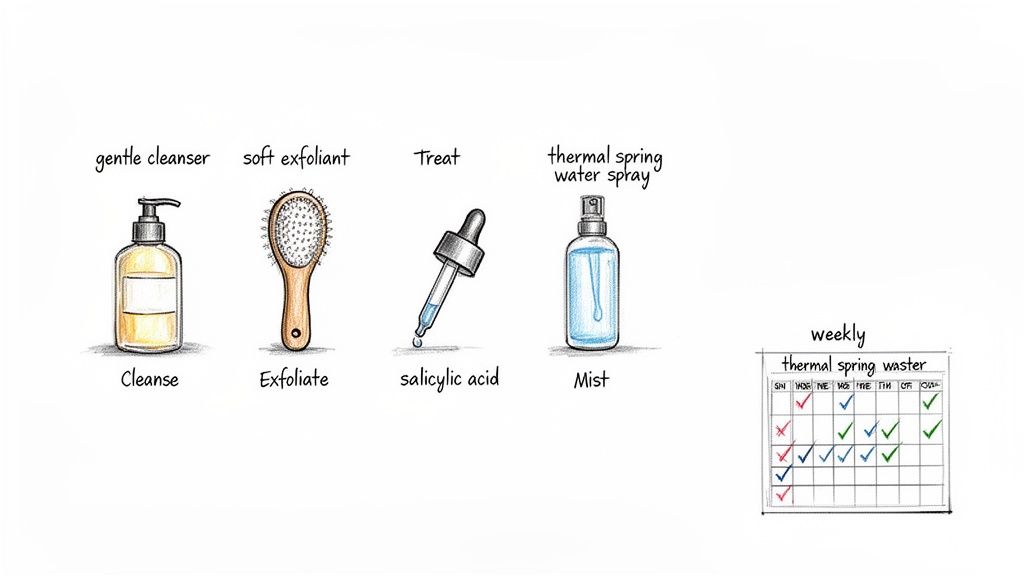
Your daily routine really boils down to three non-negotiables: cleansing, exfoliating, and hydrating. Each one plays a unique and vital role in keeping your pores clear and your skin happy.
- Consistent Cleansing: It’s simple but crucial. Wash your face twice a day - morning and night - with a gentle cleanser that doesn’t leave your skin feeling tight or stripped. This gets rid of the daily gunk (oil, dirt, bacteria) that loves to clog pores.
- Gentle Exfoliation: Forget those harsh, scratchy scrubs. A couple of times a week, use a chemical exfoliant with salicylic acid. This ingredient is the MVP for acne-prone skin because it’s oil-soluble, meaning it can get deep into your pores to dissolve the buildup where breakouts start.
- Proper Hydration: This is the step everyone with oily skin wants to skip, but it’s so important. When your skin gets dehydrated, it panics and actually produces more oil to compensate. It's a vicious cycle. A lightweight, non-comedogenic (aka non-pore-clogging) moisturizer is your best friend.
I see this all the time: people attack breakouts with harsh, drying products and then skip moisturizer. This just wrecks your skin’s protective barrier, leading to more irritation, redness, and - you guessed it - more pimples. A healthy barrier is your first line of defense.
Incorporating Soothing and Balancing Products
Once you've got the basics down, adding a soothing element can be a game-changer, especially if your skin gets red and angry easily. These are the products that calm everything down and help maintain a healthy skin environment without feeling heavy.
A perfect example is something like Livaclean's Thermal Spring Water Mist. A quick spritz of this throughout the day can calm redness and take the edge off inflammation. It delivers a quick hit of hydration with ingredients like hyaluronic acid and aloe vera but feels like nothing on the skin. It just reinforces your skin barrier, helping it stay comfortable and less reactive over time.
And for those moments when a stubborn blemish still manages to push through, having the right tools on standby is everything. You can check out targeted options like our deep treatment medicated pimple patches. They deliver concentrated ingredients right where you need them, stopping a pimple in its tracks without messing up the rest of your routine.
Ultimately, the goal is to create a simple, sustainable regimen you can actually stick with. That consistency is what turns skincare from a reaction into a prevention strategy, making clear, healthy skin your new normal.
Knowing When to See a Dermatologist
While at-home remedies, pimple patches, and a consistent routine are fantastic for handling most breakouts, they aren’t a cure-all. Sometimes, your skin sends out an S.O.S. that calls for professional backup.
Knowing when to stop the DIY battle and call in a dermatologist is a huge part of winning the war against acne for good. It's easy to get stuck in a cycle of trying product after product, hoping the next one will be the magic bullet. But if your efforts aren't making a dent - or if the breakouts are getting worse - that's a clear signal you need a more powerful strategy. A dermatologist can offer a real diagnosis and access to treatments that are way more targeted than anything on a store shelf.
Red Flags That Signal It's Time for a Pro
If you’re on the fence, there are a few definitive signs that you should book an appointment. Ignoring these can lead to more frustration, wasted money, and even permanent skin damage. Don't wait if you're experiencing any of this.
- Deep, Painful Cystic Acne: These aren't your average whiteheads. Cysts are large, painful, hard bumps deep under the skin that never seem to come to a head. They are notoriously tough to treat at home and have a high risk of causing atrophic scars (those indented "ice pick" or "boxcar" marks).
- Breakouts That Leave Scars: If every single pimple, big or small, leaves behind a dark mark (post-inflammatory hyperpigmentation) or a pitted scar, a dermatologist can intervene. They'll help you manage the active acne while also creating a plan to fade the marks it leaves behind.
- Acne That Doesn't Respond to Anything: You've been diligent with salicylic acid, benzoyl peroxide, and pimple patches for months, but nothing changes. When over-the-counter treatments fail, it’s a sign that the root cause requires a prescription-strength approach.
Acne is not just a skin condition; it's an emotional one. If your breakouts are causing significant distress, anxiety, or making you avoid social situations, that alone is a valid reason to seek professional help. Your mental well-being is just as important as your physical health.
What to Expect From a Dermatologist Visit
Seeing a specialist isn't intimidating; it’s empowering. Your dermatologist will look at your skin type, figure out the severity of your acne, and ask about your history to create a truly personalized treatment plan. This is where you gain access to a whole new level of effective solutions.
A pro can prescribe powerful treatments that are actually tailored to your skin's needs, like:
- Topical Retinoids: These are vitamin A derivatives (like tretinoin) that are masters at speeding up cell turnover to keep pores from clogging in the first place.
- Oral Medications: For more stubborn or widespread acne, you might discuss antibiotics to reduce bacteria and inflammation, or hormonal regulators if your breakouts are tied to your cycle.
- In-Office Procedures: A well-timed cortisone shot can shrink a massive, painful cyst within 24-48 hours, giving you quick relief and helping prevent a scar from forming.
Making that appointment is a proactive step toward finally getting the clear skin you deserve.
For those everyday blemishes that don't require a doctor's visit, having the right tools is key. Livaclean provides effective, affordable solutions like our infused hydrocolloid patches to help you manage breakouts and keep your skin looking its best. Explore our full range of gentle, powerful skincare at https://www.livaclean.com.