

How to Reduce Acne Inflammation for Clearer Skin
When a red, angry pimple shows up, how you react in those first few hours can make all the difference. The best first move to reduce acne inflammation isn't complicated: apply a cold compress to calm things down, then cover it with a hydrocolloid patch to protect it while it heals. This simple, hands-off strategy is your best bet to prevent scarring and help your skin get back to normal, faster.
Your First Move to Calm an Angry Pimple
That throbbing, red bump isn't just a minor annoyance - it's your body's immune system jumping into action. When a pore gets clogged with oil and dead skin, it becomes a breeding ground for bacteria, which triggers an inflammatory response. Your body rushes white blood cells to the scene to fight the infection, and that's what causes the classic redness, swelling, and pain.
Knowing what's happening under the skin is the first step to working with it, not against it.
If you're dealing with breakouts, you're definitely not alone. Acne is a reality for a staggering 20.5% of people worldwide, making it one of the most common skin conditions out there, especially for teens and young adults. A global study by Pierre Fabre Laboratories really put that into perspective, showing that about one in five people are managing breakouts at any given time.
The good news? Calming that inflammation down doesn't require harsh chemicals or complicated routines.
An Immediate Relief Protocol
The moment you spot an angry pimple, your goal is to soothe it, not attack it. The absolute worst thing you can do is try to pop or pick at it. Squeezing can just push bacteria deeper into the skin, making the inflammation worse and risking permanent scars.
Instead, let's take a calm, strategic approach.
First, gently wash the area with a mild, non-stripping cleanser. You just want to remove any surface oil and dirt without causing more irritation. Then, pat - don't rub - the skin dry with a clean towel.
Next, reach for a simple but incredibly effective tool: a cold compress. Just wrap an ice cube in a thin cloth or paper towel and hold it against the pimple for 5-10 minutes. This little trick helps constrict the blood vessels, which immediately dials down the redness and swelling and provides some much-needed relief from the throbbing.
The key is to manage inflammation without disrupting the skin's natural healing process. A cold compress and a protective barrier are your best allies in the first few hours.
Here’s a quick look at how simple this process is.
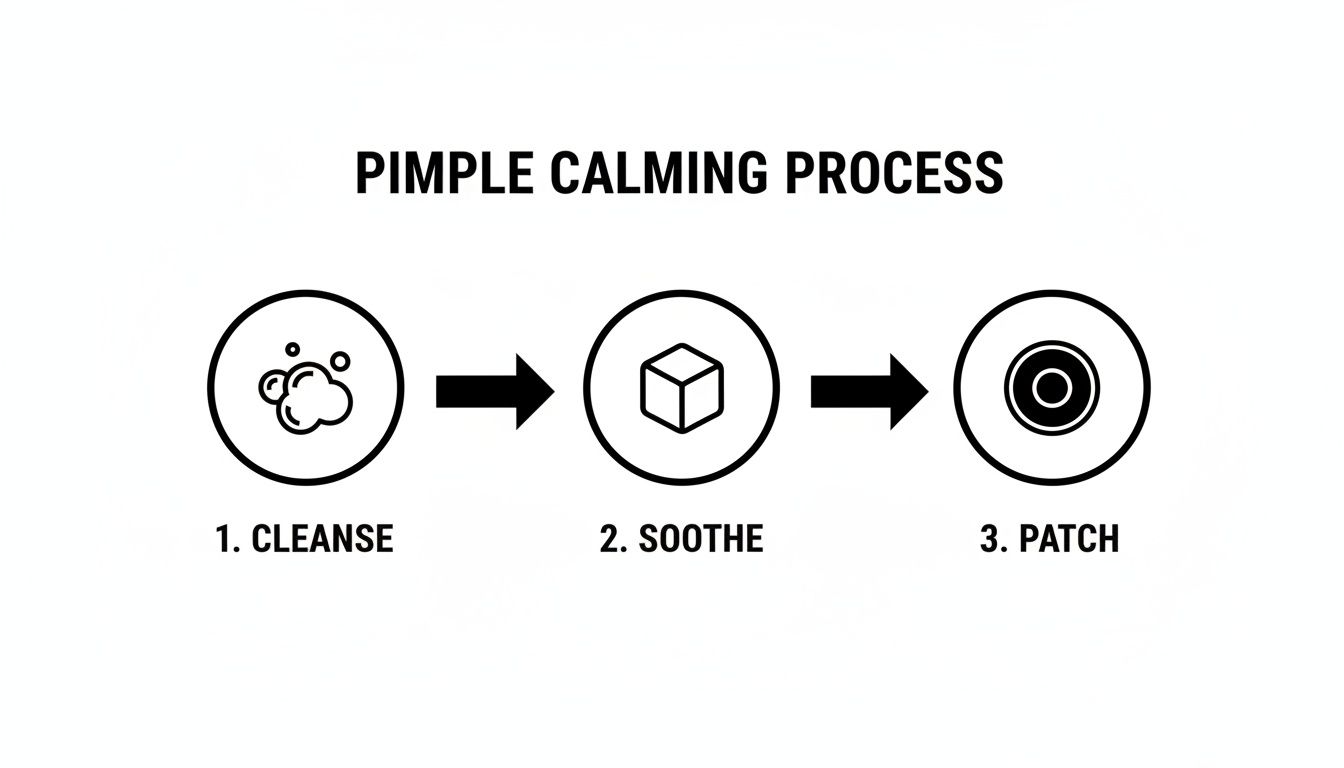
This gentle, protective flow is all about immediately reducing that visible inflammation and setting the stage for much faster healing.
When a new, angry pimple pops up, it’s easy to feel a little frantic. But having a clear, simple plan can make all the difference. Here’s a quick-glance table of what to do right away.
Quick Guide to Reducing Pimple Redness and Swelling
| Action | Why It Works | Pro Tip |
|---|---|---|
| Gently Cleanse | Removes surface bacteria and oil without causing further irritation. | Use a pH-balanced, sulfate-free cleanser to avoid stripping the skin's moisture barrier. |
| Apply a Cold Compress | Constricts blood vessels, immediately reducing swelling and redness. | Wrap an ice cube in a paper towel. Apply for 5-10 minutes, take a 10-minute break, and repeat once more if needed. |
| Apply a Hydrocolloid Patch | Creates a protective barrier, absorbs pus and fluid, and stops you from picking. | Make sure the skin is completely dry before applying the patch, otherwise it won't stick well. |
This three-step response replaces panic with a controlled, effective game plan that truly supports your skin.
Finally, cover the spot with a high-quality hydrocolloid pimple patch. A good patch, like the ones from Livaclean, acts as a physical shield against bacteria and keeps your fingers off it (we all subconsciously touch our faces).
Even better, it creates a moist healing environment, gently drawing out all the gunk - pus and oil - overnight. You’ll often wake up to find the pimple is visibly flatter and way less angry. For a full tutorial, check out our guide on how to use our pimple patches.
Building Your Anti-Inflammatory Skincare Routine
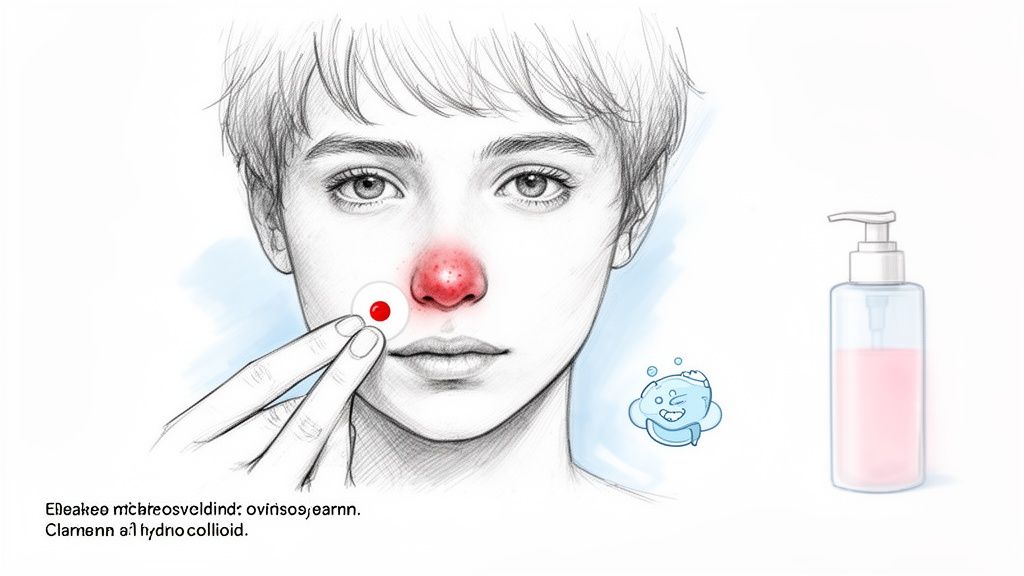
While zapping a single pimple is satisfying, the real win is keeping your skin calm long-term. This isn't about throwing a dozen products at your face. It's about creating a smart, consistent routine with a few key players that prevent inflammation before it even starts. Think of it as proactive defense - the cornerstone of learning how to reduce acne inflammation for good.
This isn't just in your head; inflammatory acne is a growing issue. We've seen a staggering 38% jump in acne cases globally, from 65 million to nearly 90 million people. To make matters worse, the bacteria that cause acne are getting smarter. Antibiotic resistance is now over 50%, which is why effective, non-antibiotic skincare is more critical than ever.
Core Ingredients for Calmer Skin
Learning to read an ingredient label is your best defense. You want ingredients that tackle the root causes of acne without completely stripping your skin, which only leads to a damaged moisture barrier and more inflammation.
Here are the heroes to look for in your lineup:
- Salicylic Acid (BHA): This is a true game-changer. Because it’s oil-soluble, it can get deep into your pores and dissolve the gunk - oil, dead skin, and bacteria - that leads to clogs in the first place.
- Tea Tree Oil: A natural powerhouse, tea tree oil is known for its antimicrobial and anti-inflammatory abilities. It’s pretty potent, so always look for it in diluted formulas or use it carefully as a spot treatment.
- Hyaluronic Acid: Don't let the word "acid" fool you. This is a moisture magnet (a humectant) that pulls water into the skin, keeping it plump and hydrated. Well-hydrated skin has a stronger barrier and is much less prone to getting irritated.
- Aloe Vera: Famous for a reason! Aloe has an instant cooling effect that helps calm down redness and sensitivity. It’s a fantastic supportive ingredient you'll often find in cleansers, mists, and moisturizers.
These ingredients work together to clear congestion while hydrating and supporting your skin's natural defenses. It's a balanced approach.
Pro Tip: When you're adding a new active ingredient like salicylic acid, ease into it. Start by using it just 2-3 times a week. This gives your skin time to adjust and helps you avoid that initial dryness and irritation that can happen if you go all-in too fast.
Smart Application and Layering Techniques
What you use is only half the battle; how you apply your products matters just as much. Layering products correctly ensures each one can do its job without being blocked by another. The simplest rule to follow is to apply products from the thinnest to the thickest consistency.
A solid, calming evening routine might look something like this:
- Gentle Cleanser: Start by washing away makeup, dirt, and oil from the day.
- Soothing Face Mist: A quick spritz adds a layer of hydration and calms the skin right away.
- Spot Treatment: Apply your go-to spot treatment or a hydrocolloid patch directly onto any active breakouts.
- Lightweight Moisturizer: Lock everything in and give your skin barrier the support it needs to repair overnight.
A soothing mist is an especially handy tool for managing inflammation, even in the middle of the day. A product like the Livaclean Hypochlorous Acid Mist can be spritzed over makeup to refresh skin, calm down midday redness, and provide a gentle antibacterial boost without drying you out. It’s like a quick, calming reset button for stressed-out skin.
The Real Magic Behind Pimple Patches
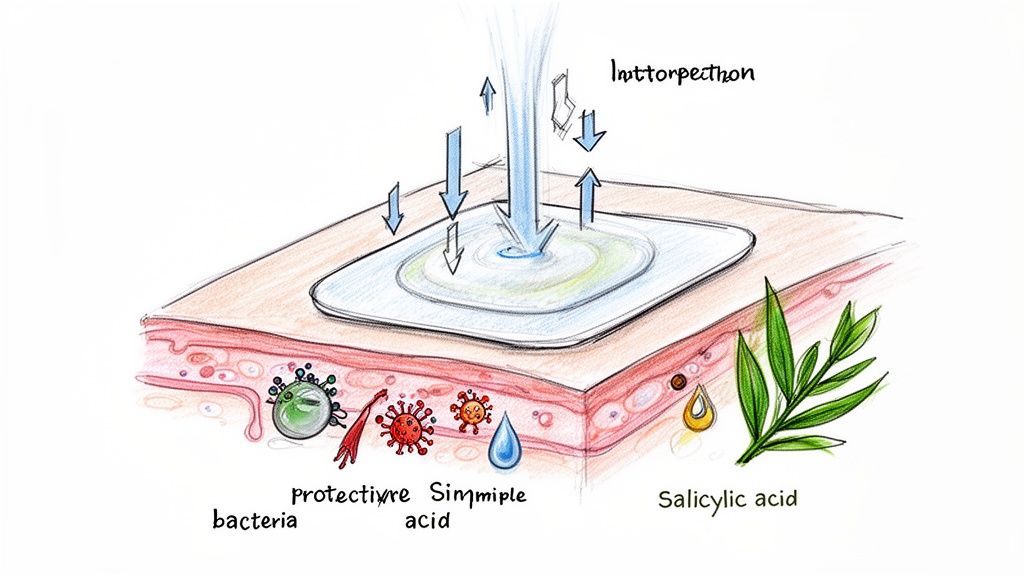
Hydrocolloid patches might look like simple little stickers, but how they calm down an angry pimple is actually pretty smart. At their core, they create a moist, protected environment for the blemish, which is the gold standard for healing any kind of wound. This little micro-environment stops a dry, crusty scab from forming, letting your skin do its repair work much more efficiently and lowering the chances of a scar sticking around.
The hydrocolloid material itself is a type of super-absorbent gel. As soon as you stick a patch on a pimple, it gets to work gently drawing out all the fluid inside - we're talking pus, oil, and all that other gunk. That white stuff you see on the patch after a few hours? That's the proof. By pulling out all that inflammatory fluid, the patch helps flatten the spot and takes down the redness and swelling in a big way.
More Than Just a Cover
But these patches are doing more than just soaking up pimple fluid. They serve a couple of other really important purposes. For one, they’re a physical barrier, like a tiny shield for your skin. This protects the breakout from dirt, bacteria, and whatever else is floating around, stopping the inflammation from getting any worse.
And maybe most importantly for a lot of us, it stops the picking. We all do it, sometimes without even realizing. Slapping a patch on a pimple makes it physically impossible to mindlessly touch or squeeze it, which is one of the biggest reasons a small spot turns into a full-blown disaster and leaves a dark mark behind.
For a deep, under-the-skin spot that feels painful and swollen, applying an infused patch before bed can make a huge difference. By morning, it's often noticeably less tender and much flatter.
Infused Patches for an Extra Boost
While a plain hydrocolloid patch is a hero in its own right, some are infused with active ingredients to pack an even stronger punch. This is where you can really level up your spot-treating game.
- Salicylic Acid: This classic BHA (beta-hydroxy acid) gets inside the pore to exfoliate and help break up the clog that's causing the problem in the first place.
- Tea Tree Oil: Famous for its natural antimicrobial properties, it helps fight the bacteria that are contributing to the pimple's angry state.
Livaclean's patches, for instance, often use ingredients just like these. This combo means you’re not just absorbing the gross stuff; you're also delivering calming, clarifying ingredients right where they're needed most. To really get into the nitty-gritty, you can explore a full breakdown of how pimple patches work.
For teens and young adults, dealing with acne can feel like a total drag. The rise of fun, colorful, and shaped patches has completely reframed the experience. Instead of trying to hide a pimple, you can decorate it. It’s a small shift, but turning that moment of frustration into one of self-expression gives you back a little bit of control.
How Your Diet and Lifestyle Affect Your Skin
What you put on your skin is only half the battle. To really get a grip on acne inflammation, we have to look at what's happening inside your body. Your daily habits, from the food on your plate to how much you sleep, can either pour fuel on the fire or help calm things down for good.
The idea that diet and lifestyle mess with your skin isn't some old myth - it's a cornerstone of modern skincare. And it’s more relevant than ever. Adult acne isn't just a small issue anymore; from 1990 to 2021, cases jumped by a staggering 66.4% to 49.4 million globally. Inflammation is the main culprit, and it can lead to scarring in up to 25% of those cases. That’s a huge concern for a lot of people. You can dig into more of the data on adult acne's rise in this comprehensive study.
Fueling Your Skin From Within
Think of your skin as a mirror for your overall health. When you eat foods that send your blood sugar on a rollercoaster, your body pumps out more insulin to compensate. That hormonal surge can crank up oil production and inflammation, basically rolling out the red carpet for breakouts.
Switching to a low-glycemic diet can make a real, visible difference. It's not as complicated as it sounds - it just means picking foods that don't cause those intense sugar spikes and crashes.
- Try swapping this: White bread, sugary cereals, and soda.
- For this: Whole grains, lots of veggies, and lean proteins like fish and chicken.
Even better, you can actively fight back by incorporating anti-inflammatory foods. Anything rich in omega-3 fatty acids is your skin's best friend. We're talking salmon, walnuts, and flaxseeds. They work systemically to reduce inflammation everywhere, including your face.
Your gut health is also directly wired to your skin. A happy, balanced gut microbiome helps keep inflammation in check. Simple things like adding yogurt with live cultures or other probiotic-rich foods can give your gut the support it needs.
Master Your Stress and Sleep Habits
Ever notice a monster pimple showing up right before a big presentation or a first date? That’s not a coincidence. Stress unleashes cortisol, a hormone that tells your oil glands to work overtime and dials up inflammation across the board.
Finding a stress-management technique that actually works for you is a non-negotiable part of an anti-inflammatory lifestyle. This doesn't mean you need to start meditating for an hour every day. It could be as simple as:
- A quick 10-minute walk to get some fresh air.
- Blasting your favorite playlist for a few minutes.
- Scribbling in a journal for five minutes before you crash.
And speaking of crashing, sleep is just as critical. While you're sleeping, your body shifts into repair mode, lowering cortisol levels and healing inflammation. Seriously, aiming for 7-9 hours of quality shut-eye is one of the most powerful things you can do for your skin.
Finally, don't forget to hydrate. Guzzling enough water helps flush out toxins and keeps your skin cells plump and happy. An easy win is to just replace one sugary drink a day with a glass of water. It all adds up. Small, consistent changes are what lead to lasting results and the calm, clear skin you're after.
A Simple Routine to Keep Skin Calm and Clear
Knowing which products can help calm angry skin is a great first step. But the real magic happens when you build them into a daily habit.
If you're a busy teen or young adult, a complicated, 10-step routine just isn't going to stick. The secret to learning how to reduce acne inflammation isn't about complexity - it’s all about consistency.
A simple morning and evening plan takes the guesswork out of skincare. It focuses on gentle, effective steps that soothe your skin right now and help prevent future irritation. This approach is designed to be affordable, easy to follow, and centered on products that work without wrecking your skin barrier.
Your Daily Blueprint for Calm Skin
The entire goal here is to protect your skin during the day and help it repair itself at night. Every step has a clear purpose, and they all work together to keep your complexion balanced and less reactive.
Think of it as a one-two punch against inflammation.
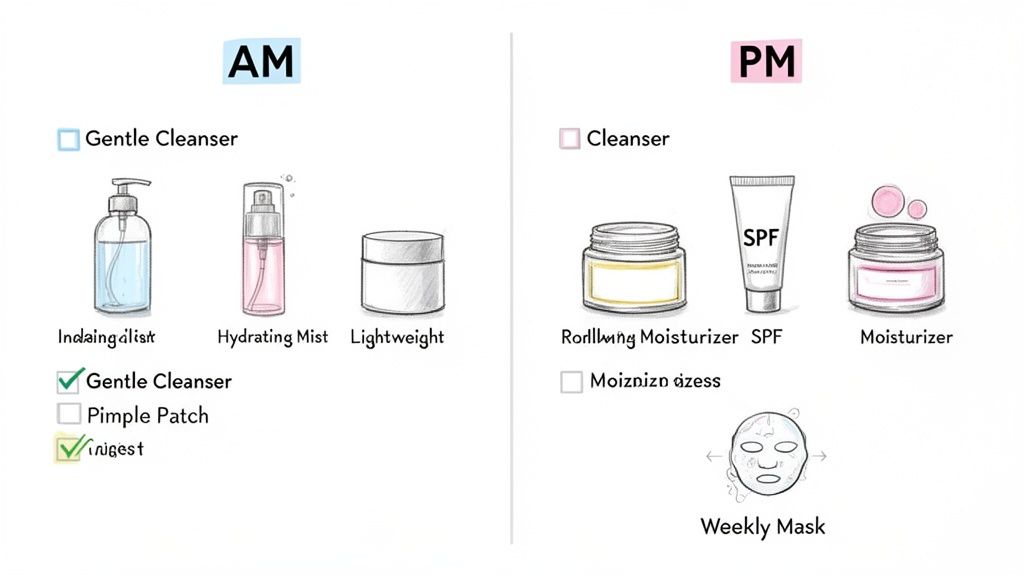
AM vs PM Anti-Inflammatory Skincare Routine
Here’s a comparative look at the essential steps for a morning and evening routine designed to calm acne-prone skin.
| Step | Morning (AM) Routine | Evening (PM) Routine |
|---|---|---|
| Cleanse | Start with a mild, non-stripping formula to wash away overnight oil and bacteria. | A thorough cleanse is key to wash away the day's grime, makeup, and sunscreen. |
| Treat | Keep it simple. Focus on hydration and protection for the day ahead. | Apply a hydrocolloid patch to any inflamed spots to absorb impurities and protect them. |
| Hydrate | Use a lightweight, non-comedogenic (won't clog pores) moisturizer to lock in moisture. | Finish with your moisturizer to support your skin’s healing cycle while you sleep. |
| Protect | SPF 30+ is non-negotiable. Sun exposure makes inflammation worse and can cause dark spots. | N/A |
This straightforward plan ensures you're giving your skin exactly what it needs, when it needs it, without overdoing it.
Diving Deeper: Your Routine Breakdown
Morning (AM) Routine
Your morning routine is all about prepping your skin to face the day's environmental stressors.
- Gentle Cleanser: Start by washing away any oil and bacteria that built up while you slept.
- Hydrating Mist: A quick spritz of a soothing mist, like a Thermal Spring Water Face Mist, adds a layer of lightweight hydration and calms any redness. It’s a great way to refresh skin throughout the day, too.
- Lightweight Moisturizer: Lock everything in with a moisturizer that won't clog your pores.
- SPF 30+: I can't say it enough - this is the most crucial step. The sun can seriously aggravate inflammation and is a major cause of post-inflammatory hyperpigmentation (those stubborn dark spots left after a pimple heals).
Evening (PM) Routine
Nighttime is when your skin goes into repair mode. Your job is to cleanse, treat, and support that process.
- Gentle Cleanser: You need to get everything off - sunscreen, makeup, dirt, oil. A clean canvas is essential.
- Targeted Spot Treatment: Now's the time to tackle active breakouts. Pop a hydrocolloid patch on any inflamed spots. It'll absorb all the gunk and protect the pimple from bacteria (and your fingers!) overnight.
- Moisturizer: Finish with your moisturizer to help your skin heal while you sleep.
Weekly Boost: Once or twice a week, slip a gentle, calming face mask into your PM routine after cleansing. Look for masks with ingredients like aloe vera, chamomile, or green tea to give your skin an extra dose of soothing, anti-inflammatory care.
This practical template makes consistent skincare feel totally achievable, helping you get that calm, clear complexion without the stress.
Knowing When to See a Dermatologist
A solid, consistent routine with the right products can be a game-changer. But let's be real - sometimes, at-home care just doesn't cut it when you're trying to reduce acne inflammation.
Knowing when to call in a professional is a crucial part of taking care of your skin. If your breakouts are starting to affect your self-esteem or leaving behind stubborn marks, it might be time to get some expert advice. The goal is always to get ahead of the inflammation before it has a chance to cause lasting damage.
Key Signs It’s Time for a Visit
Some types of acne are notoriously stubborn and simply respond better to medical intervention. It’s probably time to book an appointment if you’re dealing with any of these issues:
- Deep, Painful Bumps: Are you getting those cysts that feel like they're deep under the skin, are painful to the touch, and never seem to form a head? This is a classic sign you need a dermatologist. These are the ones most likely to scar.
- Widespread Breakouts: If acne is covering large areas of your face, chest, or back, it often requires a more systemic treatment than over-the-counter products can offer.
- Scarring: Noticing pitted scars or dark spots that hang around for months after a pimple finally heals? A professional can help manage your current acne and, just as importantly, prevent future scarring.
- No Improvement: You’ve been diligent with a good routine for several months, tried everything, and your skin still isn't getting better (or it’s getting worse). Don't keep struggling alone.
Seeing an expert isn't a sign of failure - it's a smart, proactive step. A dermatologist can give you a precise diagnosis and access to prescription-strength treatments that can make a world of difference.
Products like our deep treatment medicated pimple patches are a fantastic tool in your skincare arsenal, but sometimes the best strategy involves combining them with expert medical advice for truly clear, healthy skin.
Your Top Questions About Acne Inflammation, Answered
When you're dealing with angry, swollen breakouts, it's easy to get overwhelmed. Let's clear up some of the most common questions we hear about tackling acne inflammation head-on.
Should I Pop a Painful Pimple to Relieve the Pressure?
I get it. The temptation to pop a big, painful pimple is almost irresistible. But trust me on this: you should never, ever pop a pimple.
When you squeeze an inflamed spot, you risk tearing the follicle wall deep under the skin. All that bacteria and gunk gets pushed even deeper, which just makes the inflammation a hundred times worse. You're also opening the door to infection and practically guaranteeing a scar or a dark spot (post-inflammatory hyperpigmentation) that will linger for months.
Your best move? Slap a hydrocolloid patch on it. These little stickers are miracle workers. They'll gently pull out the fluid, protect the spot from your fingers, and create the perfect healing environment.
Here's a simple rule to live by: If it’s red, swollen, and hurts, it's a strict hands-off situation. The safest way to relieve that pressure is to calm things down from the outside with a quick cold compress and then cover it with a patch.
How Long Does It Take for Acne Inflammation to Go Down?
This is the million-dollar question, isn't it? With the right game plan, you can see a major reduction in redness and swelling within 24 to 48 hours.
A quick hit with a cold compress can help shrink the pimple's size right away, and a good pimple patch can often flatten it out while you sleep.
But we have to be realistic. A deeper, more stubborn cyst might take a week - or even longer - to fully go away. The absolute key here is consistency. Stick with your gentle, calming skincare routine to help speed up the healing process and, more importantly, stop new flare-ups before they start.