

How to Prevent Acne Breakouts for Consistently Clear Skin
Let’s get right into it. The secret to preventing breakouts isn't some miracle product; it's a smart mix of a consistent skincare routine, mindful daily habits, and knowing exactly what to do when a surprise pimple shows up. This guide is designed to cut through all the noise and give you practical advice that actually works.
Decoding the Causes of Acne Breakouts
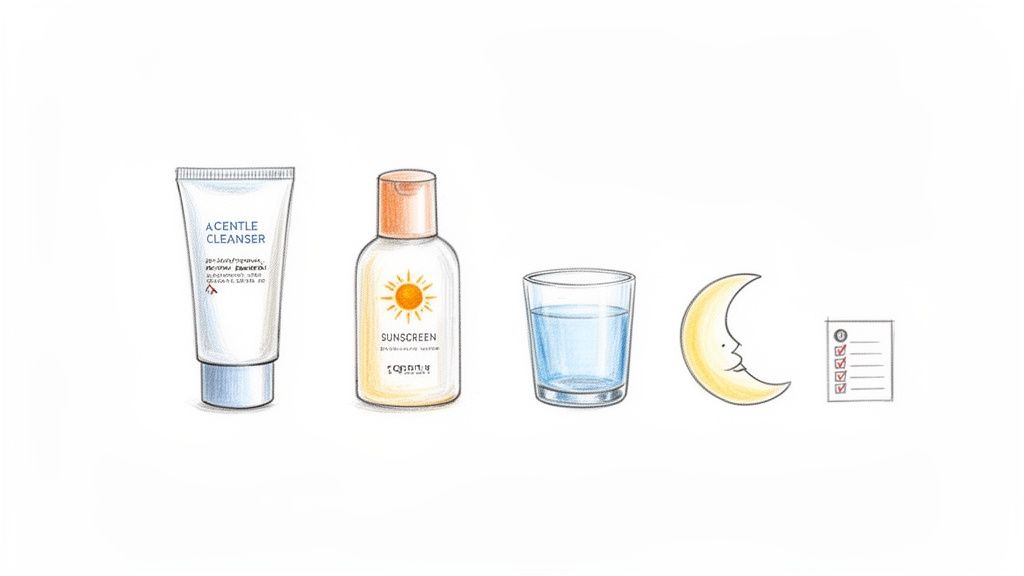
Before you can stop acne, you have to understand what you're up against. Pimples don't just appear out of nowhere - they're the end result of a specific chain reaction happening just under the surface of your skin. Once you know the culprits, you can build a much smarter defense.
It all starts in your pores, those tiny openings around every hair follicle. A breakout begins when a pore gets clogged with a sticky combination of excess oil (sebum) and dead skin cells. This plug creates the perfect breeding ground for bacteria - specifically Cutibacterium acnes - to multiply, which triggers the inflammation, redness, and pus we all recognize as a pimple.
To really get a handle on acne, we need to look at the four main things that set this process in motion. Think of these as the building blocks of a breakout.
The Four Pillars of Acne Prevention
A quick look at the core strategies that build an effective acne prevention plan. Use this as a guide as we explore each element in detail.
| Pillar | Key Action | Why It Works |
|---|---|---|
| Control Oil Production | Use ingredients like salicylic acid and maintain a balanced diet. | Reduces the amount of excess sebum that can clog pores in the first place. |
| Keep Pores Clear | Cleanse daily and exfoliate regularly to remove dead skin cells. | Prevents the formation of the initial "plug" where bacteria can grow. |
| Reduce Bacteria | Incorporate antibacterial ingredients like benzoyl peroxide. | Minimizes the bacteria that feed on sebum and cause inflammation. |
| Calm Inflammation | Soothe skin with non-comedogenic moisturizers and spot treatments. | Tames the body's immune response, reducing redness and swelling. |
By tackling each of these pillars, you’re not just treating pimples - you’re stopping them before they even have a chance to form.
Beyond the Basics: What Else Contributes?
While those four triggers are the main event, a few lifestyle factors can definitely make you more prone to breakouts. Stress, for example, can spike cortisol levels, which in turn can kick your oil glands into overdrive. For some people, certain foods like those high on the glycemic index have also been linked to flare-ups.
Even seemingly innocent habits can be part of the problem. Think about it: using dirty makeup brushes, not changing your pillowcase often enough, or resting your face on your hands can all transfer oil and bacteria right where you don't want them.
This is why looking at your whole routine matters. Something as simple as switching to clean, disposable skin towels instead of reusing a hand towel can make a surprising difference.
The search for clear skin is huge. The global acne treatment market hit about $4.7 billion in 2024 and is expected to climb past $7.2 billion by 2030. What’s driving this? A big shift in how people, especially teens, shop for skincare. They're moving away from expensive appointments and toward effective, affordable products they can buy themselves. This guide is built on that same smart, budget-conscious mindset.
Building Your Daily Skincare Routine for Clear Skin
When it comes to preventing acne, consistency is everything. A great daily skincare routine doesn't have to be complicated or break the bank, but you do have to stick with it. Think of it as building a strong foundation for your skin, day in and day out.
This is where you take back control. By establishing a few simple morning and evening habits, you can actively manage oil, keep your pores clear, and calm down inflammation before it ever becomes a full-blown breakout. Let's build a routine that actually works for you.
Your Morning Mission: Protection and Preparation
The morning routine is all about two things: gently cleansing away anything from the night and protecting your skin from the day ahead. You don’t need a ten-step process; just a few key moves can make a world of difference.
Start with a gentle, non-comedogenic cleanser to wash off any oil and sweat that built up while you slept. This gives you a clean canvas to work with. After that comes the most critical step: sunscreen. Sun exposure can make inflammation worse and lead to those stubborn post-acne marks, so a broad-spectrum SPF of 30 or higher is a must, even on cloudy days.
- Gentle Cleanser: Find one that cleans your skin without stripping away its natural moisture. Over-drying can actually signal your skin to produce even more oil to compensate.
- Lightweight Moisturizer: Yep, even oily skin needs hydration. A non-comedogenic, oil-free moisturizer helps keep things balanced.
- Broad-Spectrum Sunscreen (SPF 30+): This is your best defense against post-inflammatory hyperpigmentation - the dark spots left behind after a pimple heals.
Your Evening Strategy: Cleanse and Correct
Your evening routine is where the real work happens. Throughout the day, your skin collects a layer of makeup, sunscreen, pollution, and general grime. A single wash often just doesn't cut it.
This is where the magic of a double cleanse comes in. Start with an oil-based cleanser or micellar water to melt and lift away everything on the surface. Then, follow up with your regular water-based cleanser to get deep into your pores. This two-step method ensures you’re not trapping gunk under your treatment products.
After cleansing is the perfect time to apply your targeted treatments. Ingredients like salicylic acid or benzoyl peroxide can really get to work overnight while your skin is in its natural repair cycle.
Once your skin is truly clean, it’s ready for treatment. This is your window to use active ingredients that directly fight the causes of acne.
Decoding Key Acne-Fighting Ingredients
Walking down the skincare aisle can feel overwhelming, but for acne, a few key ingredients do most of the heavy lifting. Knowing what they do helps you pick the right products for your skin's specific freak-outs.
Salicylic Acid (BHA) This is an oil-soluble exfoliant, which is just a fancy way of saying it can get deep inside your pores to dissolve the gunk (dead skin cells and sebum) that causes clogs. It’s a rockstar for blackheads and whiteheads and even helps calm redness.
Benzoyl Peroxide This one is a powerhouse when it comes to killing the C. acnes bacteria that leads to those angry, inflamed pimples. It comes in different strengths, but research shows that lower concentrations - around 2.5% to 5% - can be just as effective as higher ones, but with way less irritation.
Glycolic Acid (AHA) As an alpha-hydroxy acid, glycolic acid works on your skin's surface, dissolving the "glue" holding dead skin cells together. This helps stop pores from getting clogged in the first place and can also improve your skin's texture and fade dark spots over time. For an easy boost, you could try something like weekly 20% glycolic acid peel pads to ramp up cell turnover.
The Importance of Hydration and Balance
One of the biggest mistakes people make when fighting acne is trying to dry their skin out with harsh products. This almost always backfires. When your skin gets too dry, it can kick into emergency mode and pump out even more oil to compensate, leading to - you guessed it - more breakouts.
Hydration is non-negotiable for everyone, even if your skin is oily. Using a lightweight, non-comedogenic moisturizer helps keep your skin's protective barrier strong. A healthy barrier is much better at healing itself and fighting off bacteria.
Another great tool for calming down angry skin is a thermal spring water mist. A quick spritz can reduce redness and feel incredibly soothing, especially if your skin is feeling sensitive from active treatments. It’s a simple step that helps keep your skin balanced and happy.
Mastering the Art of Spot Treating Breakouts
Even with the most dialed-in routine, a random pimple can still pop up. It happens. The key is not to freak out but to have a smart emergency plan ready to go. Think of spot treatment as your secret weapon for damage control - it lets you tackle individual blemishes without throwing your whole face out of whack or, worse, making things angrier.
Your game plan will depend entirely on what kind of blemish you're dealing with. A tiny whitehead needs a totally different approach than a deep, painful cyst that feels like it has its own zip code. Acting fast and using the right tools can seriously shorten a pimple's lifespan and stop it from leaving a pesky dark mark behind.
But first, the golden rule: Keep your hands off. Seriously. Picking or squeezing just shoves bacteria deeper into the pore, cranks up inflammation, and is a one-way ticket to scarring. We're going to use targeted ingredients, not brute force.
Choosing Your Spot Treatment Weapon
When a pimple makes an appearance, you’ve got a few fantastic options in your arsenal. Each one works a bit differently, so it’s all about picking the right tool for the job. And please, forget those old-school myths like dabbing on toothpaste; modern spot treatments are way more effective and much kinder to your skin.
Here are the top players in the spot-treatment world:
- Salicylic Acid Gels: These are brilliant for dissolving the gunk - oil and dead skin cells - that clogs pores. That makes them perfect for blackheads and small whiteheads. They get right to the source of the blockage.
- Benzoyl Peroxide Creams: This ingredient is a powerhouse against acne-causing bacteria. It kills the germs inside the pore, making it the hero for those red, angry pimples (papules and pustules).
- Hydrocolloid Patches: Absolute game-changers. These are little sticky bandages you pop over a pimple. They create a protected, moist environment that puts the healing process on fast-forward.
The Power of Hydrocolloid Patches
There's a reason hydrocolloid patches have become everyone's go-to: they just work, especially on pimples that have come to a head. These patches were first used in medical settings to help wounds heal, and they’re made of a gel-like material that gently pulls fluid and pus out of a blemish.
Imagine a tiny vacuum cleaner for your pore. It sucks up all the gunk while shielding the spot from outside bacteria and - most importantly - your own fingers. This little protective bubble helps calm down redness and inflammation way faster than just leaving a pimple out in the open. Of course, knowing how to use pimple patches correctly is crucial to getting those amazing results.
And the science is there to back it up. One pilot study showed that people using hydrocolloid patches saw big improvements in redness, oiliness, and dark spots in just one week compared to those who didn't. You can dig into the hydrocolloid patch findings on PubMed if you want to see the research for yourself.
This decision tree helps you visualize how to build a daily routine that fits your skin's unique needs.
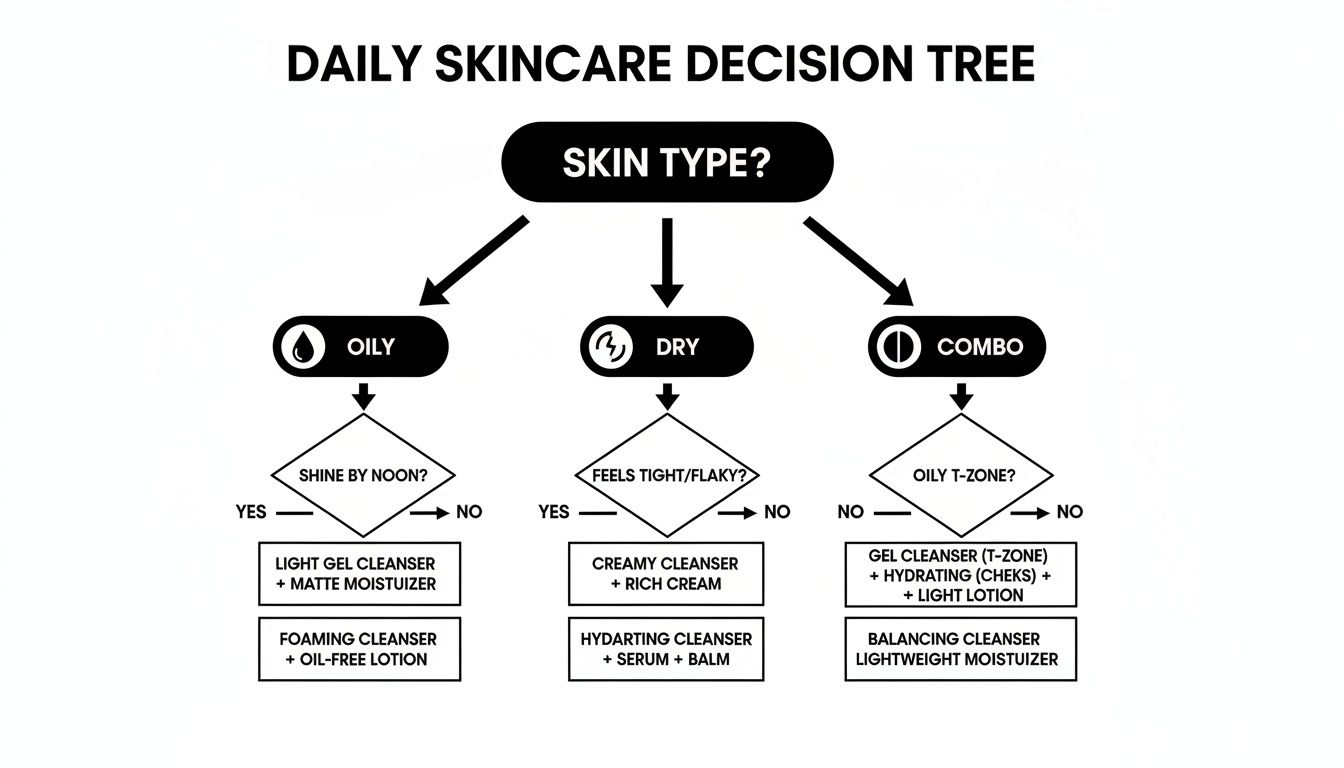
As the flowchart shows, the path to clearer skin starts with figuring out if you're oily, dry, or combination and then picking products that speak that language.
Your Spot Treatment Action Plan
Okay, so what do you actually do when you feel that familiar bump starting to form? Let's walk through a couple of real-life scenarios.
Scenario 1: You See a Whitehead You wake up, look in the mirror, and there it is: a small pimple with a visible white head. This is prime time for a hydrocolloid patch.
- Start by gently cleansing your face like you normally would.
- Pat the area completely dry. A patch just won’t stick to damp skin.
- Pop a pimple patch right over the whitehead.
- Leave it on overnight (or for at least 6-8 hours). When you peel it off in the morning, you’ll probably see all the gunk it pulled out. So satisfying.
Scenario 2: You Feel a Deep, Painful Bump This is likely a cystic blemish, the kind that camps out deep under the skin and never comes to a head. Do not - I repeat, do not - try to pop these.
- Dab on a spot treatment with benzoyl peroxide to help kill the bacteria and bring down the inflammation.
- If it’s really swollen and sore, you can apply a cool compress for a few minutes to help with the pain and redness.
- Avoid piling on heavy creams or makeup over the area. Just let the spot treatment do its thing.
Key Takeaway: The goal of spot treating isn't just to zap a pimple away. It's about helping it heal cleanly to prevent a scar from taking its place. A smart approach turns a potential skin crisis into a minor, totally manageable inconvenience.
Lifestyle and Diet Habits That Affect Your Skin
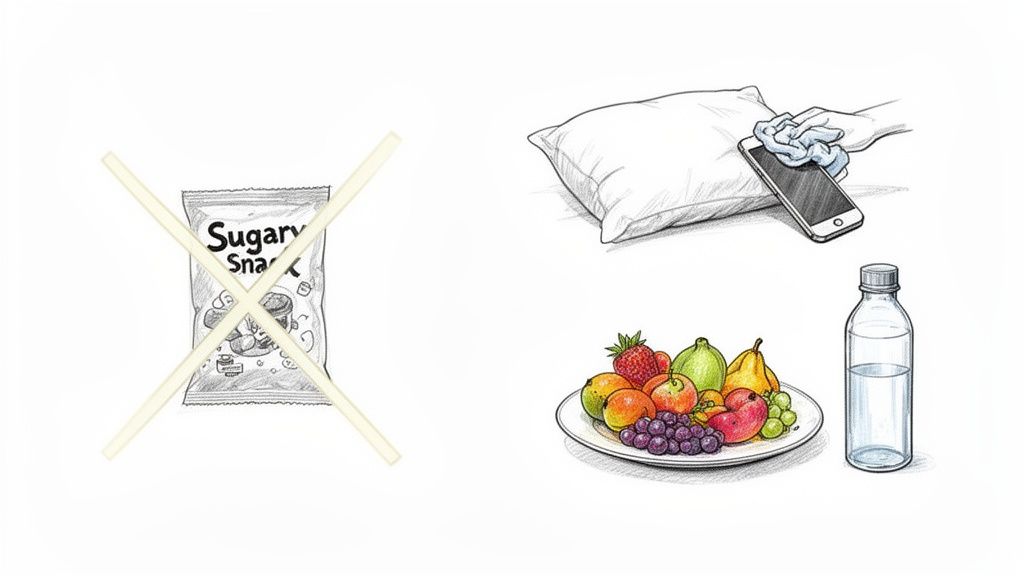
A killer skincare routine is your front line of defense, but what you do all day long can be just as crucial as what you put on your face at night. Truly preventing acne often means taking a step back and looking at the whole picture - how your daily habits, your diet, and your skin are all connected.
Think of your skin as a mirror reflecting what’s going on inside. When things like stress, a rough night’s sleep, or certain foods throw your body off balance, your skin is usually the first to send up a flare. Making a few mindful adjustments to your lifestyle can be the secret weapon that supports your skincare from the inside out.
How Food Choices Influence Your Skin
The whole diet-and-acne debate has been swirling for years, but more and more, we're seeing that what you eat really can play a part. The goal here isn’t some crazy restrictive diet. It’s about becoming a detective, figuring out your personal triggers, and making smart swaps you can actually stick with.
The two usual suspects? High-glycemic foods and dairy.
Foods high on the glycemic index - think sugary sodas, white bread, candy - make your blood sugar skyrocket. This can kick off a hormonal chain reaction that ramps up oil production and inflammation, basically creating the perfect environment for a breakout.
Similarly, some studies have found a link between dairy and acne, possibly because of hormones in milk that can send oil glands into overdrive. This isn't the case for everyone, but if you notice new pimples popping up after a few days of extra cheese or lattes, it's something to consider.
Instead of banning foods, try a simple observation experiment. If you suspect a certain food is a trigger, try reducing it for a few weeks and see how your skin responds. It’s about finding a personal balance, not about rigid rules.
For example, you could try these simple, practical swaps:
- Instead of sugary cereal, go for oatmeal topped with fresh berries.
- Instead of white bread, choose a whole-grain or sourdough option.
- Instead of cow's milk in your coffee, give unsweetened almond or oat milk a try.
These small changes can help keep your blood sugar stable and might just calm down some of that diet-related inflammation.
The Impact of Stress and Sleep on Breakouts
Ever notice a huge pimple showing up right before a big presentation or final exam? It’s not just bad luck. When you're stressed, your body pumps out cortisol, a hormone that basically tells your oil glands to work overtime.
Managing stress is a huge - and often forgotten - part of any plan for how to prevent acne breakouts. You can't eliminate stress entirely (if only!), but finding healthy ways to cope can make a visible difference in your complexion.
Sometimes just a few minutes of mindfulness is all it takes. You could try a short guided meditation on your phone, go for a quick walk without your headphones, or just take five slow, deep breaths when you feel that tension building.
Just as critical as managing stress is getting enough sleep. Your skin literally repairs itself while you're sleeping. When you skimp on sleep, you interrupt that crucial process and, you guessed it, your cortisol levels can rise.
Aim for a solid 7-9 hours of quality sleep a night. It's one of the best things you can do for your skin.
Sneaky Habits That Secretly Cause Acne
Sometimes, the culprit behind our breakouts is hiding in plain sight. We all have these little unconscious habits that transfer oil, dirt, and bacteria right onto our faces. Becoming aware of them is one of the easiest wins for clearer skin.
Here are a few common offenders to look out for:
- Your Phone Screen: Just think about all the surfaces your phone touches. Now, picture pressing it against your cheek. Yikes. Get into the habit of wiping your screen down daily with an antibacterial wipe.
- Dirty Pillowcases: While you sleep, your pillowcase soaks up oil, sweat, and yesterday's hair products. Swapping it out every 2-3 days stops you from rolling your face around in all that gunk night after night.
- Touching Your Face: We all do it - resting our chin in our hands, rubbing our forehead. Every time you do, you're giving bacteria from your fingers a direct ride into your pores. Try to make a conscious effort to keep your hands away.
And don't forget the simple stuff, like staying hydrated. Drinking plenty of water helps your body flush out toxins and keeps your skin cells working properly. Aim for about eight glasses a day to keep your skin looking and feeling its best. To learn more about how your daily choices impact your well-being, you can check out our resources on holistic health and wellness.
Tailoring Acne Prevention for Your Age and Budget
Acne prevention is definitely not a one-size-fits-all deal. What works for a teenager dealing with hormonal chaos is going to be worlds away from what a budget-conscious adult needs. The real secret is finding a strategy that fits your life and your wallet without becoming another source of stress.
Good acne care should be accessible, not exclusive. You absolutely do not need a bathroom counter cluttered with pricey products to get clear skin. It's all about knowing where to invest your money and where you can save, letting you build a powerhouse routine no matter your age or budget.
Smart Skincare for Teens
For teenagers, the name of the game is building simple habits that actually stick. Hormonal shifts can kick oil production into high gear, making a consistent routine more critical than ever. But let's be realistic - it has to be straightforward enough to manage, even after a long day of school and homework.
The absolute foundation is a gentle, non-comedogenic cleanser, used morning and night. This is non-negotiable. It's the only way to wash away the excess oil, sweat, and daily grime that loves to clog pores. The simpler the routine, the higher the chance a teen will actually follow through.
Here's a look at a basic-but-mighty starter kit for any teen:
- Gentle Cleanser: Find one with salicylic acid to help keep pores clear from the get-go.
- Lightweight Moisturizer: An oil-free, non-comedogenic formula is key. It provides the hydration skin needs without adding any extra grease to the situation.
- Spot Treatment: A small tube of benzoyl peroxide or a pack of hydrocolloid patches is perfect for zapping individual pimples when they pop up.
- Daily Sunscreen (SPF 30+): This is arguably the most important step for preventing those dark post-acne marks from hanging around long after a breakout has healed.
Parenting Tip: Try framing skincare as a simple act of self-care, just like brushing their teeth, rather than another chore. Keep the products out and visible in the bathroom and lead by example with your own routine.
Acne Prevention on a Budget
You don't have to spend a fortune to get clear skin. The trick is to become a smart shopper and focus on powerful, proven ingredients instead of getting distracted by fancy packaging or big brand names. Honestly, the drugstore aisles are loaded with incredibly effective products if you just know what to look for.
A great strategy is to save on the basics so you can spend a little more on products where it really counts. Think about your cleanser - its main job is to clean your face for about 60 seconds before it gets washed down the drain. You can find a fantastic, effective option for under $15.
The same logic applies to your daily moisturizer. Look for simple, fragrance-free formulas with powerhouse ingredients like ceramides or hyaluronic acid that support your skin's natural barrier. There's just no need to break the bank here.
Where to Splurge and Where to Save
Knowing where to put your skincare dollars is a total game-changer. It makes sure every penny is working hard to keep your skin clear and healthy.
SAVE on these items:
- Cleansers: Their job is quick and simple. Affordable workhorses from brands like CeraVe, Cetaphil, or La Roche-Posay get the job done just as well as their high-end counterparts.
- Basic Moisturizers: You can find excellent, no-frills moisturizers that hydrate beautifully without clogging pores.
SPLURGE (or invest) in these items:
- Targeted Treatments: A well-formulated serum, maybe with vitamin C, or a potent leave-on exfoliant can make a huge difference in your skin's texture and clarity. These are often worth the extra cost.
- Sunscreen: This is a worthy investment. Finding a sunscreen with a texture you actually enjoy wearing every single day is your best defense against long-term sun damage and post-acne marks.
- Pimple Patches: A quality hydrocolloid patch can stop a pimple in its tracks and prevent you from picking, which is a major cause of scarring. Stocking up on a value pack, like our variety pack bundles, means you’re always ready when a surprise breakout appears.
Your Top Acne Questions, Answered
Even with the perfect routine, you're bound to have questions. Let's be honest, the world of skincare is overflowing with conflicting advice, making it tough to know what's real and what's a myth. This is where we clear the air.
Think of this as your personal cheat sheet for those moments you're wondering, "Is this supposed to be happening?" or "Am I even doing this right?" We'll bust some common myths and give you the straightforward answers you need to feel confident about your skincare journey.
How Long Does This Actually Take to Work?
This is the big one, isn't it? You've committed to a new routine, you're doing everything right, and you're staring in the mirror every morning wondering when you'll see a change.
The honest answer? It takes time. Your skin needs a chance to adapt to new products and go through its natural cell turnover cycle. You generally need to give any new acne plan at least four to six weeks before expecting to see a real difference. For some, it might be a bit sooner, but for others, it could take up to eight weeks. The real magic ingredient here is consistency.
Don't lose hope if your skin isn't crystal clear after a week. Real, lasting progress is a slow burn. Ingredients like salicylic acid and benzoyl peroxide need time to get in there, clear out existing clogs, and stop new ones from even thinking about forming.
If you hit the three-month mark and have seen zero improvement despite being consistent, that’s your cue. It’s probably time to switch up your products or chat with a dermatologist.
Can I Still Wear Makeup If My Skin Is Freaking Out?
Yes, absolutely! The old idea that you need to ditch makeup completely to clear up your skin is a total myth. It's not about wearing makeup; it's about how you wear it and what you're putting on your face. A few smart habits can be the difference between a great makeup day and a new breakout.
The number one rule is to hunt for products labeled "non-comedogenic." This just means they've been formulated specifically to avoid clogging your pores. Thankfully, you can find incredible non-comedogenic options for everything from foundation to blush.
Here are a few other golden rules for wearing makeup with acne-prone skin:
- Wash Your Brushes: Seriously. Makeup brushes are a breeding ground for oil, bacteria, and dead skin. Give them a good wash at least once a week to stop spreading that gunk all over your clean face.
- Never, Ever Sleep in It: This one is non-negotiable. Think of it as an engraved invitation for clogged pores and morning-after pimples. Always cleanse thoroughly before your head hits the pillow.
- Create a Barrier: A clean, moisturized, and sun-screened face creates a helpful barrier between your skin and your makeup.
Should I Pop My Pimples? Please Say Yes.
I know, the temptation is almost unbearable. But the answer is almost always no. That fleeting moment of satisfaction just isn't worth the fallout.
When you squeeze a pimple, you can accidentally push bacteria and inflammation deeper into the skin. This can turn a tiny spot into a giant, angry volcano. Worse, aggressive squeezing is a fast track to post-inflammatory hyperpigmentation (those stubborn dark marks) and permanent scars.
So, what do you do instead?
- Spot Treat It: A dab of a targeted treatment with salicylic acid or benzoyl peroxide can work wonders.
- Stick a Patch on It: If you see a whitehead, a hydrocolloid patch is your new best friend. It gently pulls out all the gunk without any squeezing required.
- Walk Away: Just let the spot treatment and your body’s own healing powers do their thing.
When Is It Time to See a Dermatologist?
Over-the-counter products and a solid routine are fantastic for handling mild to moderate acne. But sometimes, you need to bring in the big guns. If your acne is severe, painful, or just won't quit, a dermatologist has access to treatments you can't find in stores.
It's probably time to book an appointment if you're dealing with:
- Deep, Painful Cysts: These are the large, sore bumps that live under the skin, never seem to come to a head, and have a high risk of scarring.
- No Progress After 3 Months: You've been diligent with your drugstore routine and have seen absolutely no change. This is a clear sign you might need something stronger.
- Acne Is Hurting Your Self-Esteem: Your mental health is just as important as your physical health. If your skin is making you miserable, a dermatologist can help you find a plan to get you back to feeling good.
A dermatologist can offer prescription-strength options like topical retinoids or oral medications that can finally get stubborn acne under control.
Ready to arm yourself against surprise breakouts? The best defense is a great offense. Having a stash of effective, easy-to-use pimple patches means you're always prepared. At Livaclean, our hydrocolloid patches are designed to gently absorb gunk and protect your blemishes, helping them heal faster without the risk of scarring. Explore our collection and find the perfect patch for your skin at livaclean.com.